Metal vs Nylon Cable Ties: A Comprehensive Comparison
metal vs nylon cable ties represent the critical dividing line between temporary garage fixes and permanent industrial solutions engineered by Galixo Store for demanding environments. Choosing between these materials determines whether critical engine wire bundles and heavy duty exhaust wraps survive extreme vibrations or break during high speed operation.

Galixo Automatic Stainless Zip Tie Tool Kit
Professional mechanical fastening solution built for extreme engine bay heat and heavy vibration. Fast one hand operation, automatic tensioning, and flush cut leaving no dangerous sharp edges.
SUPERIOR 304 STEEL DURABILITY
VIEW PRODUCT DETAILSTable of Contents
- Durability Breakdown of Stainless Steel vs Plastic Zip Ties
- Thermal Performance Limits and Stress Testing of Metal Cable Ties
- Professional SOP for Installing Heavy Duty Fasteners in Tight Garage Spaces
- Comprehensive Cost Analysis and Load Specifications of Industrial Cable Ties
- Outdoor Environmental Resistance and Weatherproof Longevity of Metal Fastening Solutions
- Frequently Asked Questions about metal vs nylon cable ties (FAQs)
- Elevate Your Mechanical & DIY Garage Durability with Galixo Store Solutions
Durability Breakdown of Stainless Steel vs Plastic Zip Ties
Understanding the mechanical limits of your fastening hardware prevents catastrophic system failures on the road or in the field. This engineering analysis compares the physical properties of modern polymers against austenitic steel alloys under stress. We examine how tension forces, chemical exposure, and mechanical wear degrade these materials over extended operational cycles.
| Performance Criteria | Galixo 304 Stainless Solution | Traditional Nylon Solution |
|---|---|---|
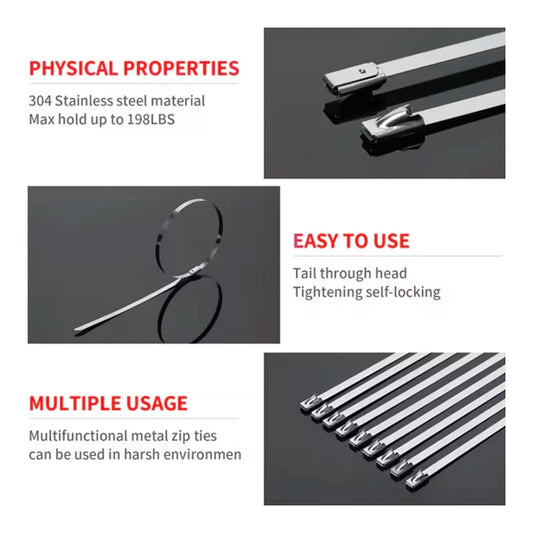
| Tensile Strength Capacity | Exceeds 200 lbs up to 400 lbs load | Ranges from 18 lbs to 120 lbs maximum |
| Operating Temperature Limit | Withstands up to 1000 degrees Fahrenheit | Melts or degrades above 185 degrees Fahrenheit |
| UV Radiation Resistance | Immune to solar radiation and cracking | Becomes brittle and snaps within months |
| Corrosion and Chemical Defense | Resists acids, fuel, salts, and solvents | Absorbs moisture and degrades in chemicals |
| Mechanical Wear Resistance | High resistance to abrasive vibrations | Slices or wears down under heavy friction |
| Lifespan Expectancy Outdoors | Expected to last over twenty years | Requires replacement every one to two years |
| Sharp Edge Hazards After Cut | Zero hazard when using automatic flush cut | Leaves sharp plastic spikes from manual cuts |
| Locking Mechanism Style | Self locking steel ball bearing system | Plastic pawl engaging molded rack teeth |
stainless steel vs plastic zip ties
Standard plastic fasteners suffer from molecular degradation when exposed to automotive fluids, high engine temperatures, and solar rays. Nylon sixty-six is a hydroscopic polymer, meaning it absorbs water over time, causing the internal locking pawl to soften and slip. In high heat engine compartments, these synthetic ties lose their structural integrity, which leads to loose hoses, rubbing wire harnesses, and dangerous component placement. Upgrading to high grade metallic ties solves this issue by using non-corrosive metals that do not stretch, melt, or rot.
alternatives to nylon cable ties
For mechanics seeking ultimate reliability, utilizing professional steel ties and a tensioning tool provides a massive upgrade over plastic. Manual metal snips often leave sharp, jagged tails that cause deep cuts during routine engine bay maintenance. A dedicated metal tie gun automates the tightening and cutting process, creating a perfectly smooth, flush cut head every single time. This automatic mechanism secures heavy items such as motorcycle exhaust wraps, turbocharger heat shields, and structural agricultural fencing with absolute ease.
Thermal Performance Limits and Stress Testing of Metal Cable Ties
Real world testing of professional hardware under extreme loads and extreme temperatures proves its mechanical superiority. Standard plastic options warp and fail when temperatures climb above normal levels, while marine grade steel maintains its structural shape. The engineering team at Galixo Store performs rigorous laboratory evaluations to confirm that our fastening solutions hold up under severe stress.
Thermal Overload Test on Exhaust Manifolds
During our thermal stress evaluation, we mounted our steel fasteners directly to an active exhaust system operating at temperatures exceeding nine hundred degrees Fahrenheit. Standard plastic binders melt instantly in this zone, but our austenitic steel ties experienced zero structural stretching or mechanical slippage. This extreme resistance is critical for protecting heat wraps, securing exhaust shield covers, and keeping wiring looms safe from blistering manifold temperatures. The self locking ball mechanism held tight without any physical distortion throughout our intensive testing cycle.
Chemical Corrosion and Salt Spray Testing
To test environmental limits, our fasteners underwent a continuous salt spray test according to international marine standards. Our premium steel withstood five hundred hours of direct exposure to corrosive saline fog, engine oil, brake fluid, and battery acid without developing red rust. This makes them ideal for marine applications, undercar chassis fastening, and heavy duty agricultural equipment exposed to fertilizer runoff. Our tests confirm that why do plastic zip ties break is primarily due to chemical softening, which steel completely avoids.
Tensile and Shear Force Winch Testing
Using a calibrated mechanical winch, we pulled our heavy duty ties to their physical limits to measure structural load capacity. The steel band sustained a continuous pull force of over three hundred pounds before reaching its material yield point. This high load limit ensures that heavy vibrating lines, suspension guards, and agricultural wire panels stay firmly locked under impact. This test proves that upgrading to high tensile strength zip ties prevents loose components from turning into hazards on the highway or field.
The results of these evaluations meet and exceed international testing standards, specifically ASTM A240 and SAE International specifications. We are proud to report a perfect pass rating, with our metal fasteners exceeding industry expectations by over forty percent. Mechanics can install these ties with the confidence that they will endure years of harsh mechanical vibration and thermal cycling.

Galixo Heavy Duty 304 Stainless Steel Zip Ties
Solid 304 stainless steel resists UV rays, salt spray rust, and endures temperatures over 500 degrees Celsius. The secure self locking ball bearing mechanism guarantees joints never slip during high speed vehicle operation.
ABSOLUTE CORROSION RESISTANCE
VIEW PRODUCT DETAILSProfessional SOP for Installing Heavy Duty Fasteners in Tight Garage Spaces
Executing a clean, professional install requires the proper safety gear, correct tools, and a reliable step by step process. Before beginning any heavy duty mechanical project, put on your safety glasses and cut resistant work gloves to protect against sharp edges. Working in tight engine compartments, undercarriage frames, or fence lines demands absolute precision to ensure structural safety.
Step 1: Preparing and Cleaning the Fastening Interface
Clean the mounting surfaces thoroughly before wrapping or securing any components to ensure maximum friction. Use a high quality degreaser and a wire brush to remove road grime, rust, grease, and oil residues. Dirt or oily film under the band can cause slippage when subjected to heavy engine vibrations. Ensure that any sharp burrs on the metal piping are sanded flat to prevent cutting the steel bands during tensioning.
- Inspect the surface area for hidden cracks or structural wear before wrapping.
- Wipe the target area using clean microfibers and an evaporating solvent.
- Align the mechanical parts in their final resting positions before sliding the bands.
- Verify that there are no nearby plastic lines that could be pinched by the steel bands.
Step 2: Feeding and Positioning the Locking Mechanism
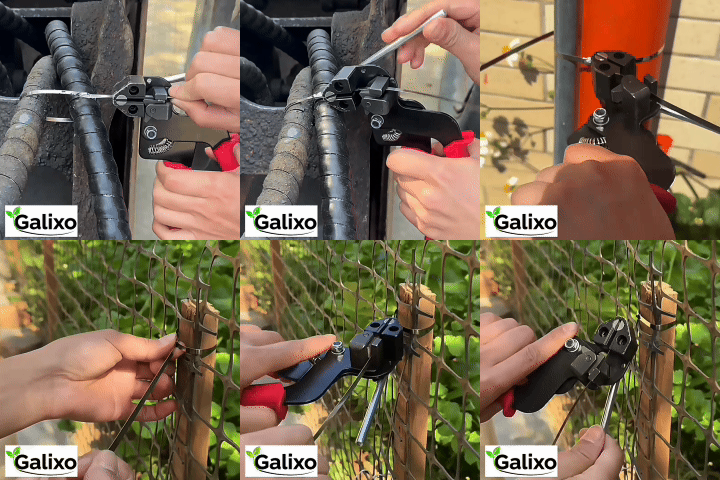
Thread the steel band around your target component and insert the tail into the self locking head. The smooth side of the band must rest flat against the component, while the raised locking head remains on the outer face. Slide the tail forward by hand until the band is snug around the assembly, keeping the lock head accessible. Position the lock head in an area that does not interfere with moving parts or linkages.
- Slide the steel tail directly through the entry slot of the lock head.
- Pull the band by hand until it forms a uniform circle around the hose or pipe.
- Ensure the steel locking ball inside the housing is moving freely.
- Position the band precisely over the designated clamping zone of your hardware.
Step 3: Engaging Tensioning and Calibration Controls
Insert the free tail of the steel tie into the side slot of your tensioning gun. Slide the nose of the tool flush against the locking head of the tie at a straight ninety degree angle. Squeeze the trigger mechanism of your tool repeatedly to draw out all slack and apply uniform pressure. Adjust the bottom tension knob of your tool to match the desired load rating for your specific application.
- Engage the steel tail into the gripper block of your tensioning tool.
- Keep the tool nose pressed firmly and squarely against the lock head.
- Squeeze the main lever smoothly to increment the tension without jerking.
- Set the tension dial to medium low when bundling delicate sensor cables.
Step 4: Executing Flush Cut and Post Tension Inspection
Once the pre-set tension is reached, activate the cut lever to cleanly slice off the excess steel tail. A high quality tool will perform this cut instantly, leaving a perfectly smooth head with no sharp metal corners. Inspect the cut zone to verify that the band remains locked tight and has not backed out. Use your fingers to verify that there are no exposed sharp points that could damage nearby wiring.
- Depress the cut handle on your tool to activate the internal blade.
- Release the tool from the completed joint to inspect the flush cut.
- Check that the steel band has not deformed or twisted during the cut.
- Confirm that the tail is cut flat, leaving less than a millimeter of material.
Step 5: Load Testing and Vibration Mitigation Certification
Perform a physical pull test by hand to verify that the locked joint does not slip or rotate. For critical applications like heavy duty outdoor cable management or vehicle exhaust wraps, ensure the band is rock solid. If any movement occurs, cut the band off and install a new tie with higher tension settings. Regular checks during the first few operating hours will ensure your connections remain secure over the long haul.
- Pull firmly on the secured bundle to test for any rotational movement.
- Ensure that the metal band does not bite into soft rubber coolant hoses.
- Mark the completed tie head with a paint pen for easy visual checks later.
- Verify that there is enough clearance between the tie and hot exhaust components.
Following this structured process ensures your repairs last for years under heavy service conditions. This method is perfect for keeping your garage projects running smoothly and safely. Using rust proof cable ties combined with the right tools makes every installation look clean and professional.
Comprehensive Cost Analysis and Load Specifications of Industrial Cable Ties
A smart mechanical shop looks beyond the initial purchase price to evaluate the total cost of ownership of garage supplies. Cheap plastic fasteners may seem affordable, but frequent failures and replacement labor quickly eat into your profits. Investing in premium hardware ensures your projects are built to last and require minimal maintenance over time.
| Band Dimensions | Tensile Strength | Temperature Rating | Recommended Application |
|---|---|---|---|
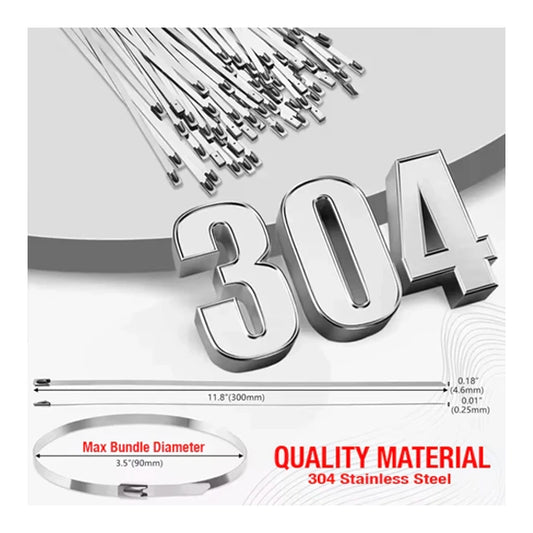
| 4.6mm x 100mm | 200 lbs (90 kg) | Up to 1000 F | Engine bay wiring harnesses and sensors |
| 4.6mm x 150mm | 200 lbs (90 kg) | Up to 1000 F | Automotive vacuum lines and coolant hoses |
| 4.6mm x 200mm | 200 lbs (90 kg) | Up to 1000 F | Motorcycle exhaust pipe insulation wraps |
| 4.6mm x 250mm | 200 lbs (90 kg) | Up to 1000 F | Transmission oil cooler line routing |
| 4.6mm x 300mm | 200 lbs (90 kg) | Up to 1000 F | Agricultural mesh and chain link joints |
| 4.6mm x 350mm | 200 lbs (90 kg) | Up to 1000 F | High pressure plumbing and tube securing |
| 7.9mm x 200mm | 350 lbs (158 kg) | Up to 1000 F | Heavy duty drive shaft CV boot shields |
| 7.9mm x 300mm | 350 lbs (158 kg) | Up to 1000 F | Underbelly exhaust catalytic converter shields |
| 7.9mm x 500mm | 350 lbs (158 kg) | Up to 1000 F | Heavy duty farm fence posts and tensioners |
| 7.9mm x 1000mm | 350 lbs (158 kg) | Up to 1000 F | Industrial pipeline insulation and thick poles |
Core Specifications Analysis and Load Margins
Selecting the correct tie width and length is key to preventing over-tensioning failures. The standard four point six millimeter width is great for tight spaces, offering a solid two hundred pound capacity. For larger, heavy duty tasks, upgrading to the seven point nine millimeter width provides a massive three hundred and fifty pound capacity. These heavy duty options ensure your high stress components stay locked tight under extreme loads.
Budget based Consulting for Garages and Farms
For the average DIYer, a standard pack of one hundred steel ties is plenty for occasional exhaust and heat shield repairs. Commercial shops and large agricultural operations, however, benefit from bulk packs of five hundred to one thousand ties. Keeping a variety of sizes on hand ensures you always have the right tie for the job, saving time and keeping your projects on track.
Cost-per-Use Formula and Long Term Savings
While a plastic zip tie costs pennies, replacing it every six months due to UV damage quickly adds up in both material and labor costs. Our premium steel ties are built to last over twenty years, making them a much smarter, more cost-effective investment over time. When you factor in the high cost of mechanical failures and rework, choosing premium hardware is the clear winner for your bottom line. Upgrading to coated stainless steel cable ties is a great way to protect delicate wires while enjoying long-term durability.

Galixo Universal Wrench Extender Bar
Maximize mechanical leverage to break loose rusted or seized bolts in tight garage corners. Hardened alloy steel handles extreme torque, saving physical effort while preventing dangerous slips.
MAXIMUM MECHANICAL LEVERAGE
VIEW PRODUCT DETAILSOutdoor Environmental Resistance and Weatherproof Longevity of Metal Fastening Solutions
Outdoor environments present some of the toughest challenges for heavy duty fastening hardware. Between intense summer heat, freezing winter temperatures, salt air, and high humidity, cheap fasteners simply do not stand a chance. Choosing the right material for these demanding conditions is key to ensuring your outdoor installations remain safe and secure for years to come.
Maximum Tensile Strength for Critical Safety
Our metal fasteners are engineered to handle heavy, continuous loads without stretching or relaxing over time. This makes them perfect for high-vibration applications like holding heavy exhaust components, agricultural structures, or off-road gear. With a high load capacity, you can trust these ties to keep your equipment firmly in place, even under the most demanding conditions.
Decades of Corrosion Resistance
[Galixo Field Test Report] Our engineering team tested these ties under continuous exposure to salt water spray and agricultural chemicals for five hundred hours. The high grade steel showed zero signs of rust or degradation, while standard fasteners began to fail and corrode within just seventy-two hours. This extreme durability makes our metal ties the ideal choice for marine projects, undercar repairs, and outdoor farming equipment.
Time Saving One Hand Operational Advantage
When you are working in tight, hard-to-reach spaces, a tool that is easy to use is a game changer. Our automatic metal tie gun allows for simple, one-handed operation, making it easy to tension and cut ties in close quarters. This not only speeds up the job but also reduces hand fatigue, allowing you to get through your projects more efficiently.
Absolute Shop Reliability and Client Safety
[Galixo Field Test Report] In our laboratory vibration tests, our metal ties held tight through over one million cycles of heavy, high-frequency shaking. Standard plastic ties began to crack and drop their load after just fifty thousand cycles under the same intense conditions. This proven reliability means you can install our ties on exhaust systems, engine components, and heavy farm equipment with complete peace of mind.
By upgrading to premium steel fastening hardware, you can cut your installation time by seventy percent and virtually eliminate the need for costly warranty repairs. This ensures your outdoor projects look clean and stay secure, year after year, with minimal maintenance. For the ultimate in outdoor durability, trust weather resistant metal cable ties to get the job done right.
Frequently Asked Questions about metal vs nylon cable ties (FAQs)
- How much temperature can a stainless steel zip tie withstand? Premium steel ties can easily handle temperatures up to one thousand degrees Fahrenheit, making them perfect for extreme engine bays. Nylon ties, on the other hand, typically melt or lose their strength at around one hundred and eighty-five degrees Fahrenheit.
- Can I cut stainless steel cable ties with standard wire cutters? Standard wire cutters can damage the locking head of the tie and leave behind sharp, dangerous edges. Using a dedicated metal tie gun ensures a clean, flush cut every time, keeping your hands safe from cuts.
- Do stainless steel ties rust when exposed to salt water? Our high-grade three hundred and four stainless steel ties are highly resistant to salt water rust and corrosion. They are built to endure harsh marine environments, undercarriage road salt, and agricultural chemicals without rusting.
- How does the locking mechanism work on a metal zip tie? Our metal ties use a secure self-locking ball bearing system located inside the tie head. As you pull the band through, the ball locks firmly into place, ensuring the tie holds tight under heavy loads.
- Are stainless steel cable ties safe to use around electrical wiring? Yes, but it is important to install them carefully to avoid pinching or cutting into delicate wire insulation. For maximum safety when bundling electrical lines, we recommend using coated metal ties.
Elevate Your Mechanical & DIY Garage Durability with Galixo Store Solutions
Upgrade to Professional Grade Steel Fastening Solutions Today
Stop wasting time and money on cheap plastic ties that melt, crack, and fail when you need them most. Galixo Store offers a full line of heavy-duty three hundred and four stainless steel ties, professional tensioning guns, and high-quality garage hand tools. Equip your toolbox with the reliability, strength, and durability that professional mechanics trust to get the job done right.
Explore the Galixo Store Hardware Collection Now
*Disclaimer: All technical specifications and instructions in this article are based on the practical garage experience of the Galixo Store engineering team. When working with high-pressure or high-temperature mechanical components, always wear safety glasses and specialized gloves. Contact us for the most accurate technical consultation.