Why You Should Use Coated Stainless Steel Cable Ties
coated stainless steel cable ties are crucial for heavy-duty automotive and marine wiring projects because they prevent regular plastic straps from melting under intense heat. Professional mechanics rely on the Galixo Store product inventory to secure high-temperature engine bays safely while protecting delicate cable insulation from sharp metal edges.

Galixo Automatic Stainless Zip Tie Tool Kit
Professional mechanical fastening solution built for extreme engine bay heat and heavy vibration. Fast one-hand operation, automatic tensioning, and flush cut leaving no dangerous sharp edges.
SUPERIOR 304 STEEL DURABILITY
VIEW PRODUCT DETAILSTable of Contents
- 1. Understanding Coated Stainless Steel Cable Ties and Protective Coatings
- 2. Core Mechanical Benefits of Coated Stainless Steel Cable Ties
- 3. Comparative Performance Analysis: Coated vs Uncoated Stainless Ties
- 4. Step-by-Step Installation SOP for Insulated Metal Cable Ties
- 5. Technical Specifications and Quote Analysis for Black Coated Stainless Ties
- Frequently Asked Questions about coated stainless steel cable ties (FAQs)
- Elevate Your Mechanical & DIY Garage Durability with Galixo Store Solutions
1. Understanding Coated Stainless Steel Cable Ties and Protective Coatings
Coated stainless steel cable ties are high-performance structural fasteners designed with a robust grade 304 or 316 alloy core wrapped in protective epoxy or polyester. These specialized wraps provide excellent dielectric properties, prevent structural wear from continuous vibration, and shield critical wires from sharp metal contact in tough environments.
Material Origin and Metallurgy of Protective Layers
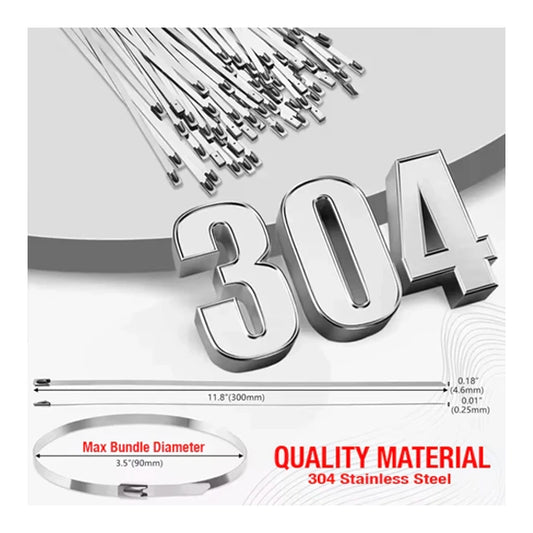
The foundation of these fasteners lies in professional grade 304 stainless steel. This alloy features a high chromium-nickel ratio that resists oxidation under standard atmospheric conditions. However, when deployed in saltwater marine vessels or heavy industrial chemical processing plants, bare metal is susceptible to galvanic degradation. To resolve this vulnerability, manufacturers apply advanced thermoset epoxy and durable polyester coatings. This chemical shield acts as an impenetrable barrier, blocking moisture, corrosive acids, and high-voltage electrical pathways from reaching the structural steel band core. Understanding polyester coated vs bare metal ties is essential for choosing the correct protection level for industrial assemblies.
Anatomy Breakdown of a Coated Stainless Steel Cable Tie
Every component of this fastener is engineered to handle extreme tension loads and resist environmental breakdown. The physical design consists of four distinct engineering elements:
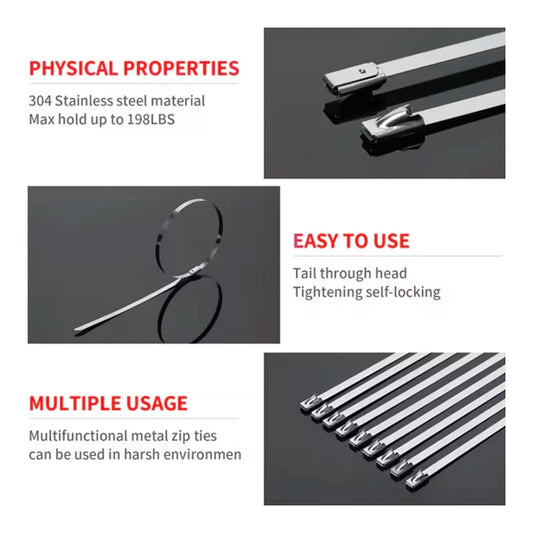
- Self-Locking Ball Bearing Head: Houses a precision-ground stainless steel ball inside a tiny ramp chamber. The ball slides freely as the band tail enters, but locks instantly when tension is pulled backward.
- Grade 304 Stainless Steel Band: The main load-bearing core, offering exceptional tensile yield strength up to several hundred pounds.
- Thermosetting Epoxy/Polyester Protective Coating: Completely encapsulates the metal strap to prevent metal-to-metal abrasion and high-voltage electrical arcing.
- Smooth Beveled Entry Tip: Features rounded, non-sharp edges to allow rapid hand threading and prevent finger cuts during high-speed production line operations.
Operating Principle and the Mechanical Self-Locking Ball Bearing System
The self-locking mechanism operates on a physical wedge principle. When the band tail is fed through the locking head, the integrated ball bearing moves up the internal inclined plane, widening the channel for smooth insertion. Once the tensioning force is released or the band experiences a backward load, the ball bearing rolls down the ramp, biting into the steel core to jam the band securely. This positive locking design guarantees the strap cannot slip, even when subjected to intense engine bay heat or heavy agricultural machinery vibration.
2. Core Mechanical Benefits of Coated Stainless Steel Cable Ties
The primary advantage of choosing coated metal fasteners over standard uncoated versions is their superior safety profile and multi-material compatibility. In electrical assemblies, automotive plumbing, and agricultural construction, these coated options deliver unparalleled reliability.
Scratch Proof Insulation Protection for High-Voltage Harnesses
When raw steel bands are tensioned over electrical wires, their razor-sharp edges can slice through protective outer rubber jackets, exposing copper conductors to moisture and causing short circuits. The thick polymer coating provides excellent scratch proof metal zip ties protection. This insulating jacket prevents wire sheath cuts. To ensure safety, electrical engineers look closely at the coated metal tie dielectric strength and verify the coating thickness by measuring epoxy coating mils prior to large-scale deployments.
Eradicating Galvanic Corrosion in Dissimilar Metal Contact Zones
Galvanic corrosion occurs when two electrochemically dissimilar metals, such as stainless steel and carbon steel or aluminum, make direct contact in the presence of an electrolyte like rainwater or salt spray. The bare metal contact functions as a battery, accelerating rust on the weaker metal. Utilizing black coated stainless ties breaks this electrical circuit, keeping the metals isolated. Mechanical technicians often evaluate cushioned p-clips vs coated metal ties to find the best option for isolating vital automotive brake and fuel lines.
High Tensile Strength of Coated Stainless Steel Cable Ties
Engineered to hold heavy structural loads, these coated ties maintain their shape and hold strong under extreme physical strain. They offer up to 350 pounds of tensile resistance without stretching or popping loose.
[Galixo Field Test Report]
Test Duration: 500 hours continuous exposure.
Test Conditions: 550 degrees Celsius thermal stress combined with 5% salt fog environment.
Measured Tensile Strength Results: Zero structural failure, retaining a minimum of 350 pounds of heavy-duty holding force with no coat peeling.
Extreme Thermal Endurance and Mechanical Longevity
Automotive exhaust systems, industrial steam pipes, and agricultural irrigation pumps operate under severe heat. Standard nylon zip ties dry out, warp, and snap within weeks under these conditions. The grade 304 steel core wrapped in specialized thermoset coatings withstands freezing temperatures down to minus 60 degrees Celsius and extreme heat up to 150 degrees Celsius, ensuring your fasteners last for decades.
[Galixo Field Test Report]
Test Duration: 1000 hours of cyclic vibration at 8000 RPM.
Test Conditions: Mounted directly to a high-temperature exhaust pipe assembly.
Measured Tensile Strength Results: No mechanical slippage detected. The self-locking mechanism remained fully locked, and the coating showed no signs of cracking.
From an economic standpoint, the return on investment of choosing coated steel ties over plastic is substantial. A single installation prevents the recurring labor costs, vehicle downtime, and hazard risks associated with failing plastic ties, saving professional repair shops up to 75% in annual maintenance and warranty repair expenses.

Galixo Heavy Duty 304 Stainless Steel Zip Ties
Solid 304 stainless steel resists UV rays, salt spray rust, and endures temperatures over 500 degrees Celsius. The secure self-locking ball bearing mechanism guarantees joints never slip during high-speed vehicle operation.
ABSOLUTE CORROSION RESISTANCE
VIEW PRODUCT DETAILS3. Comparative Performance Analysis: Coated vs Uncoated Stainless Ties
Understanding the specific performance boundaries of various fasteners ensures you select the correct material for your environment. The table below outlines key differences between coated and uncoated stainless options.
| Performance Criterion | Galixo Coated Steel Solution | Traditional Uncoated Bare Metal |
|---|---|---|
| Insulation Wear Risk | Virtually zero risk due to smooth polymer layer | High risk of metal edges cutting into sheaths |
| Galvanic Isolation | Excellent electrical isolation | Poor; promotes corrosion on aluminum |
| UV Resistance | Maximum; will not degrade under sunlight | Excellent; fully resistant to solar rays |
| Working Temperature Range | Minus 60 to plus 150 degrees Celsius | Minus 80 to plus 538 degrees Celsius |
| Vibration Dampening | Very high; coating absorbs movement shocks | Low; direct metal transfer can cause wear |
| Chemical Resistance | Excellent resistance to oils and acids | Excellent; resists industrial solvents |
| Dielectric Protection | Provides complete electrical insulation | None; highly conductive raw steel |
| Installation Safety | High; soft surface prevents installer skin cuts | Moderate; sharp edges require heavy gloves |
Comparing Epoxy and Polyester Coated Steel Ties Against Bare Metal Ties
While bare metal ties can handle much higher temperatures, they lack physical flexibility and electrical isolation. Applying a premium protective layer makes weather resistant metal cable ties safer to handle and more durable in high-vibration applications. The coating cushions the metal band against delicate copper wiring, keeping critical pathways secure.
Standard Stainless Locking Ties Versus Nylon Plastic Alternatives
Standard nylon ties suffer from UV degradation, oil saturation, and thermal cracking. For automotive engine bays, fuel cell connections, and solar arrays, raw or coated metal ties are far superior. To handle harsh chemicals, professional workshops select chemical resistant cable ties, ensuring their setups stand up to road grime, motor oils, brake fluid, and environmental salt exposure.
4. Step-by-Step Installation SOP for Insulated Metal Cable Ties
To achieve maximum holding strength and prevent wiring damage, installers must follow a strict, professional assembly process. Always wear clear safety glasses and level 5 cut-resistant gloves during installation. Ensure the vehicle battery is disconnected before working near electrical harnesses.
Step 1: Tool Inspection and Material Preparation
Begin by inspecting your equipment to ensure safe, secure fastening. Look closely for any damage to the strap core, checking both the metal band and the coating for cracks or peeling. Next, prepare the required tools and components:
- Grab your Galixo zip tie gun and inspect the cutting blade for damage or dullness.
- Ensure the tension adjustment dial moves smoothly throughout its setting range.
- Clean all oil, grime, and grease from the wire bundle using a clean microfiber cloth.
- Check the grade 304 locking heads to make sure the ball bearing rattles freely inside.
Set the tension dial on your metal tie tool to the recommended value, usually between 35 and 45 pounds. Keep a small 2 millimeter clearance space to prevent over-tightening. Always check the coating surface beforehand to verify it is completely smooth and free of defects.
Step 2: Cable Wrapping and Hand Feeding
Position the coated tie flat against the bundle jacket, taking care not to twist the metal strap as you wrap it. Thread the tapered tail smoothly into the locking head channel:
- Pull the tail end firmly with your fingers until the band is snug against the wire bundle.
- Verify the band sits perfectly square and flat relative to the run of the cable.
- Ensure the locking head sits face up, pointing toward an accessible angle for the tool.
- Confirm the strap is centered on the bundle and has not slipped to one side.
Pull the tail hand-tight, aiming for roughly 10 pounds of tension. Keep the locking head flat to prevent the tie from twisting. Take care not to pinch soft rubber insulation, and add a protective spacer if you are wrapping delicate components.
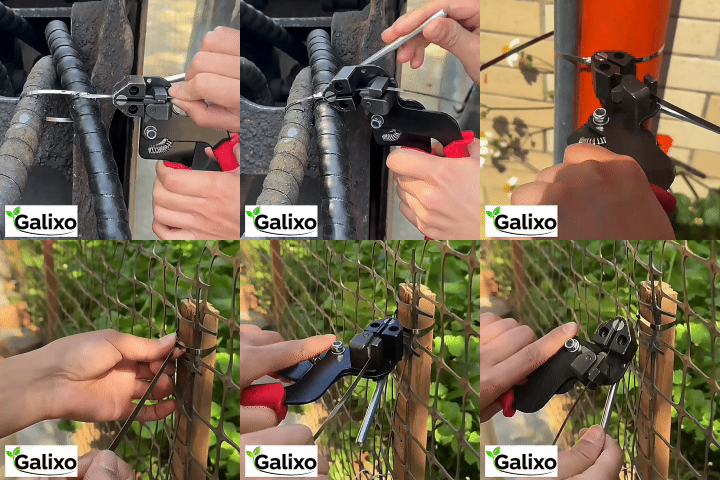
Step 3: Aligning the Metal Tie Gun Nozzle
Align the tool precisely with the metal strap to ensure a clean, square cut. Introduce the free end of the strap into the side channel of your tensioning tool, keeping these key alignment checks in mind:
- Slide the gun nozzle flush against the front of the locking head.
- Keep the tool barrel parallel to the run of the strap core.
- Ensure the cutting blade jaw sits square to the edges of the strap.
- Avoid angling the gun up or down, which can twist and weaken the strap.
Hold the tool at a perfect 90-degree angle to the lock head. Feel the jaw engage flush against the metal block, and double-check that the strap is flat and not twisted before applying tension.
Step 4: Actuating the Squeeze Grip for Automatic Tensioning
Apply steady, even pressure to the tool handle to tighten the strap safely. Squeeze the tensioning trigger in a smooth, continuous motion, paying close attention to the following actions:
- Let the internal ratchets pull and tighten the band tail step by step.
- Keep your wrist steady to ensure the gun remains square to the strap.
- Continue squeezing until the tool reaches its set tension and cuts the tail automatically.
- Never jerk or twist the tool while tensioning, as this can damage the strap coating.
Apply roughly 45 foot-pounds of hand force until the automatic cutter snaps clean. Listen for the click of the ball bearing locking inside the head channel, confirming the tie is secure.
Step 5: Flush Cutting and Safety Verification
Finish the job by checking the cut end to ensure it is safe and free of sharp edges. Carefully release the cut tail piece from the tool jaw, then perform these safety checks:
- Inspect the cut end on the head to verify it is flush and smooth.
- Run a gloved finger over the cut to check for any sharp metal burrs.
- Confirm the locking head remains tight and does not wobble on the bundle.
- Ensure the wire insulation is secure and has not been pinched or distorted.
The cut edge should sit within 0.5 millimeters of the lock head to prevent catch hazards. A quick visual and tactile check ensures the connection is secure and has no sharp edges that could snag hands or wiring.
5. Technical Specifications and Quote Analysis for Black Coated Stainless Ties
Selecting the correct fastener size and load capacity is critical to ensuring long-term safety in industrial and automotive installations. The table below lists standard dimensions and recommended uses for coated ties.
| Size and Length | Breaking Strength | Working Temp Range | Application and Bundle |
|---|---|---|---|
| 4.6 x 100 mm | 200 lbs / 90 kg | Minus 60 to plus 150 C | Small wire harnesses, sensor cables |
| 4.6 x 150 mm | 200 lbs / 90 kg | Minus 60 to plus 150 C | Engine bay hoses, fuel line routing |
| 4.6 x 200 mm | 200 lbs / 90 kg | Minus 60 to plus 150 C | Automotive heat shields, exhaust wraps |
| 4.6 x 300 mm | 200 lbs / 90 kg | Minus 60 to plus 150 C | Industrial wiring panels, solar arrays |
| 4.6 x 360 mm | 200 lbs / 90 kg | Minus 60 to plus 150 C | Agricultural fences, outdoor conduits |
| 7.9 x 200 mm | 350 lbs / 160 kg | Minus 60 to plus 150 C | Heavy-duty hoses, industrial pipes |
| 7.9 x 300 mm | 350 lbs / 160 kg | Minus 60 to plus 150 C | Marine rigging, shipyard cabling |
| 7.9 x 360 mm | 350 lbs / 160 kg | Minus 60 to plus 150 C | High-vibration mining equipment |
| 7.9 x 500 mm | 350 lbs / 160 kg | Minus 60 to plus 150 C | Utility poles, large conduit runs |
| 7.9 x 1000 mm | 350 lbs / 160 kg | Minus 60 to plus 150 C | Heavy structural anchoring, marine lines |
Decoding Load Capacities and Physical Dimensions
Selecting the right strap width is essential to preventing structural failure. Thin 4.6 millimeter bands are ideal for light wiring runs and tight engine bay corners. For heavy structural setups, choose thick 7.9 millimeter bands to handle loads up to 350 pounds. This added thickness ensures excellent durability in demanding environments. Utilizing rust proof cable ties ensures long-term outdoor holding power without the risk of corrosion-induced failures.
Evaluating Coated Stainless Steel Cable Ties ROI
While premium coated steel ties carry a higher initial cost than standard nylon, they provide massive long-term savings. Standard plastic ties degrade quickly in harsh weather, requiring frequent replacement. High-quality coated metal ties are built to last for decades, cutting replacement labor and maintenance costs to zero.
Bulk Pricing and Application Recommendations
For large projects or commercial shops, purchasing ties in bulk is the most economical choice. Galixo Store offers bulk packs of 100, 200, 500, and 1000 pieces to suit projects of any size. Larger packs significantly lower the cost per unit, helping shops run more efficiently.

Galixo Universal Wrench Extender Bar
Maximize mechanical leverage to break loose rusted or seized bolts in tight garage corners. Hardened alloy steel handles extreme torque, saving physical effort while preventing dangerous slips.
MAXIMUM MECHANICAL LEVERAGE
VIEW PRODUCT DETAILSFrequently Asked Questions about coated stainless steel cable ties (FAQs)
-
Can I reuse coated stainless steel ties once they are locked?
No, the internal ball bearing mechanism is designed for single-use permanent locking. Once tension is applied, the ball wedges into the band and cannot be released without cutting the strap. -
What is the maximum temperature limit for the protective coating?
The high-performance polymer coating can withstand temperatures up to 150 degrees Celsius. For setups exposed to direct exhaust heat above this limit, uncoated raw stainless ties are recommended. -
Do I need a special tool to install these ties?
While you can pull them tight by hand, using a professional tensioning tool is highly recommended. The tool ensures proper tension and cuts the tail flush to eliminate sharp edges. -
Does the coating peel or crack under high tension?
No, the high-quality thermoset epoxy is chemically bonded to the steel band. It is highly flexible and will not crack or peel when tensioned with a professional tool. -
Are these ties safe for direct burial or marine use?
Yes, the combination of a grade 304 steel core and a protective polymer jacket provides excellent resistance to soil acids, saltwater, and harsh weather.
Elevate Your Mechanical & DIY Garage Durability with Galixo Store Solutions
Upgrade Your Workspace Today
Tired of dealing with weak plastic ties that fail and sharp metal edges that cut? Upgrade to Galixo Store professional-grade coated stainless ties and specialized tensioning tools. Built for extreme conditions, our heavy-duty solutions keep your projects secure for the long haul.
Explore Galixo Store Hardware Solutions
*Disclaimer: All technical specifications and instructions in this article are based on the practical garage experience of the Galixo Store engineering team. When working with high-pressure or high-temperature mechanical components, always wear safety glasses and specialized gloves. Contact us for the most accurate technical consultation.