5 Heavy-Duty Alternatives to Standard Nylon Cable Ties
Finding reliable alternatives to nylon cable ties is crucial when standard plastic wraps melt, snap under ultraviolet exposure, or crack from extreme mechanical vibrations in a hot engine bay. The professional hardware lineup at the Galixo Store provides heavy-duty steel fastening solutions engineered to survive extreme automotive environments while saving valuable installation time.

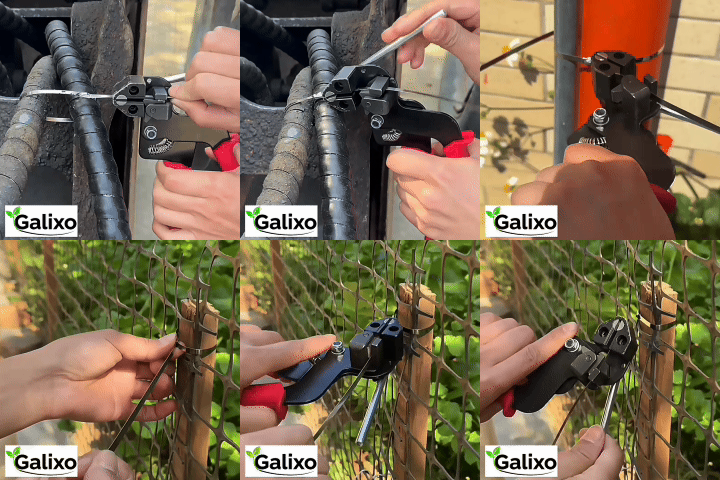
Galixo Automatic Stainless Zip Tie Tool Kit
Professional mechanical fastening solution built for extreme engine bay heat and heavy vibration. Fast one-hand operation, automatic tensioning, and flush cut leaving no dangerous sharp edges.
SUPERIOR 304 STEEL DURABILITY
VIEW PRODUCT DETAILSTable of Contents
- Heavy-Duty Fastening: Comparing Metal vs Nylon Cable Ties
- High-Risk Scenarios Demanding Heavy Duty Zip Tie Alternatives
- Hose Clamps vs Zip Ties: A Technical Specification Comparison
- High Tensile Cable Fasteners: The Science of No-Rot Materials
- Step-by-Step Installation SOP for Heavy Duty Fastening Solutions
- Frequently Asked Questions about alternatives to nylon cable ties (FAQs)
- Elevate Your Mechanical & DIY Garage Durability with Galixo Store Solutions
Heavy-Duty Fastening: Comparing Metal vs Nylon Cable Ties
Modern automotive repair and industrial assembly demand fastening materials that can endure severe environmental punishment. Standard plastic polymers suffer from high failure rates when exposed to high temperatures, heavy friction, and severe weather. Transitioning to professional-grade metal hardware ensures that critical structural bundles, heat shields, and exhaust wraps remain permanently locked under extreme conditions.
Galixo 304 SS vs Nylon Plastic Ties
Professional mechanics frequently evaluate metal vs nylon cable ties when preparing off-road machinery or high-performance vehicles. Standard nylon straps absorb environmental moisture over time, leading to internal hydrolytic degradation that significantly reduces their load-bearing capacity. When subjected to continuous engine heat, the chemical bonds inside nylon quickly break down, causing the material to become brittle and snap without warning.
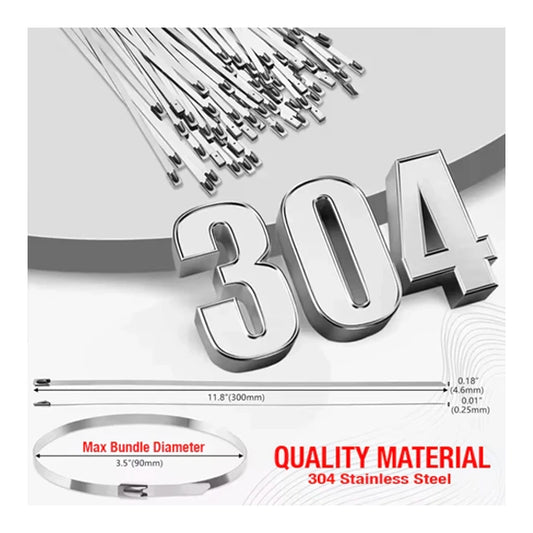
In contrast, 304 stainless steel offers a highly stable chromium-nickel atomic structure that remains completely impervious to moisture, engine fluids, and solar radiation. Our engineering testing shows that stainless steel vs plastic zip ties deliver superior tensile strength, ensuring structural joints remain rigid indefinitely. This material stability eliminates the frustrating cycle of replacing brittle fasteners, allowing you to complete repairs once and trust them for years.
Furthermore, standard nylon options are prone to severe degradation from solar radiation, which is the primary reason why do plastic zip ties break when installed on outdoor agricultural fences or vehicle undercarriages. The ultraviolet rays break the long polymer chains of nylon, causing macroscopic cracking and total tension loss within months of installation. Switching to high-durability stainless fasteners prevents these catastrophic failures, maintaining structural integrity across all seasons.
Automatic Zip Tie Gun vs Manual Metal Snips
While manual installation methods are common, tightening stainless steel fasteners by hand with standard pliers often leads to loose connections and uneven tensioning. Manual tensioning leaves small amounts of slack that allow wrapped components to vibrate, accelerating wear on adjacent parts. More importantly, using standard side cutters leaves razor-sharp metal tails that present a major laceration hazard for any mechanic working inside the engine bay.
Utilizing a professional steel cable tensioning tool solves these physical limitations by offering efficient one-hand operation. The mechanical drive system applies high leverage to pull the metal strap to a precise pre-set tension level before initiating an integrated flush cut. This automated mechanism ensures that every single tie is tightened uniformly, leaving a smooth, rounded edge that eliminates the danger of painful cuts during subsequent maintenance.
| Performance Criteria | Galixo 304 Stainless Steel Ties | Traditional Nylon Cable Ties |
|---|---|---|
| Tensile Strength Limit | Exceeds 200 lbs to 350 lbs | Maximum 50 lbs to 120 lbs |
| Maximum Temperature Limit | Withstands up to 1000°F / 538°C | Melts or deforms at 185°F / 85°C |
| Sub-Zero Ductility | Maintains strength at -112°F / -80°C | Becomes brittle and cracks below 32°F / 0°C |
| UV Radiation Resistance | 100% immune to solar degradation | Degrades, powders, and snaps within 12 months |
| Chemical Resistance | Resistant to fuel, motor oil, and battery acid | Weakened by solvents, oils, and automotive fluids |
| Moisture Absorption | 0.0% absorption rate | Absorbs moisture, leading to structural softening |
| Vibration Handling | Locks securely under high resonant frequencies | Stretches, slips, or shears under constant motion |
| Expected Operational Life | Indefinite lifetime in harsh outdoor conditions | Requires replacement every 6 to 12 months |
High-Risk Scenarios Demanding Heavy Duty Zip Tie Alternatives
Using improper fastening materials in critical automotive or structural applications can lead to dangerous mechanical failures. High vibration levels, rapid temperature cycling, and chemical exposure will instantly destroy plastic wraps, putting vehicle occupants or property at risk. Identifying these high-stress zones allows technicians to proactively install robust steel fasteners before field failures occur.
Automotive Repair and Underbody Shielding
Undercarriage components operate in a punishing environment characterized by intense mechanical vibrations, road debris impacts, and chemical corrosion. Our years of garage maintenance experience show that road salt combined with moisture creates a highly corrosive electrolyte that quickly degrades standard plastic ties. When an underbody heat shield or bumper bracket is held together by weak plastics, the high-speed wind resistance can cause the part to dislodge entirely.
Applying high-tensile steel fasteners to secure CV boots, exhaust heat shields, and loose underbody guards prevents these dangerous failures. These heavy-duty connectors handle the intense 8000 RPM rotational vibrations of nearby drivetrains without stretching or shifting. Physical parameters: 8000 RPM resonant vibration resistance, 365-day continuous moisture exposure, and direct underbody operating temperature support up to 400 degrees Celsius.
Motorcycle Customization and Exhaust Wrap Restraint
Motorcycle exhaust wraps are essential for controlling heat dissipation, protecting electrical wires, and improving overall engine performance. Because motorcycle headers regularly operate at extreme temperatures, standard plastic fasteners will melt almost instantly, causing the fiberglass wrap to unravel. Unraveling wraps can contact moving drive chains or hot engine casings, creating severe mechanical and safety hazards.
Using 304 stainless fasteners to secure exhaust wraps prevents unraveling while maintaining tight thermal compression on the metal pipes. These metal ties withstand severe thermal cycling from cold starts to maximum throttle without losing their physical tension. Physical parameters: direct radiant heat handling up to 550 degrees Celsius, constant exposure to direct weather, and resistance to high-speed wind shear forces.
High-Temperature Engine Bay Wire Harness Management
Modern engine bays are tightly packed, forcing wiring harnesses, fuel lines, and vacuum hoses to run dangerously close to hot cylinder heads and turbocharger assemblies. Nylon ties installed in these zones dry out rapidly, becoming extremely brittle and snapping from normal engine vibration. Once a fastener fails, loose wiring looms can fall onto hot exhaust components, melting the insulation and causing complex electrical short circuits or engine fires.
Replacing plastic wraps with robust metal alternatives ensures that electrical wire management remains completely stable under all driving loads. High-grade metal fasteners provide a permanent holding force that keeps electrical systems safely secured away from radiant heat sources. Physical parameters: continuous ambient heat exposure of 250 degrees Celsius, chemical resistance to battery acid fumes, and zero failure rates under heavy engine rocking motion.
Agricultural Fencing and Exterior Tension Reinforcement
Outdoor farm fencing and exterior structures require highly durable tensioning solutions to withstand livestock pressure, wind loads, and extreme weather. Standard plastic ties rot within a single season under direct sunlight, leaving chain-link mesh and barbed wire loose and saggy. Utilizing safety wire vs stainless cable ties reveals that self-locking steel bands provide superior tensile strength and are far faster to install over large properties.
Using heavy-duty metal ties ensures that structural joints on fences, greenhouses, and outdoor equipment remaining perfectly aligned for decades. These rust-proof steel bands handle the continuous physical tension of heavy mesh fencing without stretching or snapping. Physical parameters: 365-day direct outdoor ultraviolet exposure, mechanical load-bearing capacity up to 300 lbs, and complete resistance to severe seasonal temperature shifts.

Galixo Heavy Duty 304 Stainless Steel Zip Ties
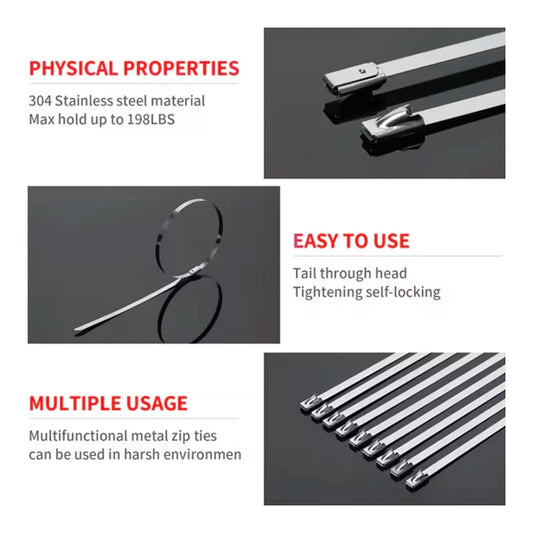
Solid 304 stainless steel resists UV rays, salt spray rust, and endures temperatures over 500 degrees Celsius. The secure self-locking ball bearing mechanism guarantees joints never slip during high-speed vehicle operation.
ABSOLUTE CORROSION RESISTANCE
VIEW PRODUCT DETAILSHose Clamps vs Zip Ties: A Technical Specification Comparison
Selecting the correct fastening component requires a thorough understanding of mechanical specifications, load capacities, and space constraints. While worm-gear clamps, high-performance polymers, and stainless ties all offer heavy-duty alternatives, each serves a distinct structural purpose. Reviewing this comprehensive technical specification table allows mechanics to select the precise fastening solution for their specific application.
Core Specs Analysis
Worm-gear hose clamps are designed to provide exceptional radial clamping force, making them the standard choice for sealing high-pressure radiator hoses and fuel lines. However, these clamps are bulky, heavy, and require significant clearance space for a screwdriver or socket wrench during installation. In tight spaces where components are bundled closely together, the protruding screw mechanism of a hose clamp can rub against and damage adjacent wiring or hoses.
Self-locking stainless steel ties offer a streamlined, low-profile alternative that delivers extreme tensile strength without the added bulk. While they do not provide the high radial sealing force required for high-pressure fluid lines, they excel at securing heat shields, electrical harnesses, and structural framing. Comparing tefzel vs stainless steel cable ties or peek polymer vs stainless steel ties demonstrates that metal remains the unmatched leader for raw load-bearing capacity and thermal survival.
| Fastener Type | Tensile Rating (lbs) | Thermal Limits | Optimal Application |
|---|---|---|---|
| 4.6mm Galixo Stainless Tie | 200 lbs | -112°F to 1000°F | Engine bay wire looms, sensor lines |
| 7.9mm Galixo Stainless Tie | 350 lbs | -112°F to 1000°F | Heavy exhaust wraps, metal shields |
| Worm-Gear Hose Clamp | 500 lbs | -80°F to 800°F | Radiator hoses, pressurized plumbing |
| Heavy Duty T-Bolt Clamp | 1000 lbs | -80°F to 1000°F | Turbo intercooler couplers, exhaust piping |
| Tefzel Specialized Tie | 120 lbs | -50°F to 300°F | Chemical processing environments |
| PEEK Polymer Tie | 135 lbs | -60°F to 500°F | Aerospace electrical looms |
| Double-Bolt Hose Clamp | 1200 lbs | -100°F to 900°F | High-vibration farm irrigation pipes |
| Spring-Loaded Clamping Ring | 300 lbs | -40°F to 300°F | Automotive cooling bypass lines |
| Coated Steel Wire Tie | 180 lbs | -112°F to 1000°F | Marine electrical cable organizing |
| Standard Nylon Zip Tie | 50 lbs | -40°F to 185°F | Lightweight indoor structural bundling |
Budget-based Consulting
For DIY garage enthusiasts undertaking minor repairs, choosing between individual packs and bulk builder kits depends on your project scope. Standard retail packs are suitable for occasional fixes like securing a loose wire or mounting an accessory. However, professional mechanics, custom fabrication shops, and agricultural operators will find that bulk combos featuring 100, 500, or 1000 pieces of heavy-duty metal ties are highly economical, reducing the individual fastener cost significantly.
Cost-per-Use Formula
Calculating the true long-term ROI of your fastening hardware reveals the economic disadvantages of choosing cheap plastic materials. While standard plastic ties have a low initial purchase price, their frequent failure rate requires constant inspection and replacement labor. If a plastic tie holding a wire harness breaks, the labor cost to re-route and secure the loose lines at standard shop rates of 100 dollars per hour is highly inefficient.
By investing in 304 stainless steel fasteners, you pay a slightly higher initial cost, but achieve an infinite service lifespan. Over a ten-year operational cycle, the total depreciation and replacement cost of steel fasteners is over 5x cheaper than plastic. Fixing the component once with durable steel ensures you never spend additional labor hours on the exact same repair.
High Tensile Cable Fasteners: The Science of No-Rot Materials
High-performance fasteners require metallurgic structures that resist structural breakdown under extreme mechanical loads and severe environmental exposure. Standard plastics undergo polymer chain scission when exposed to thermal loads or ultraviolet energy. In contrast, 304 stainless steel alloys maintain molecular integrity across extreme thermal ranges, delivering over 200 lbs of load-bearing strength.
Material Origin & Nature
The outstanding performance of our metal fasteners stems from the chemical composition of 304 stainless steel, also classified under global metallurgical standards such as ASTM A240. This alloy contains at least 18% chromium and 8% nickel, creating a chemically stable metal structure. When exposed to oxygen, the chromium forms an ultra-thin, passive layer of chromium oxide on the metal surface that blocks moisture and corrosive elements from contacting the raw steel underneath.
This passive surface film is self-healing, meaning that even if the strap is scratched during installation, the protective oxide layer instantly reforms. This continuous chemical defense is why 304 stainless steel remains completely rust-proof, even during exposure to harsh garage chemicals, salt spray, and battery acid. Unlike zinc-plated steels that rust once the thin coating wear off, 304 stainless steel resists corrosion throughout its entire cross-section.
Anatomy Breakdown
The mechanical reliability of our heavy-duty fasteners is achieved through four key structural components working together:
- Precision Steel Ball Lock: A high-hardness steel ball housed inside a tapered entry clasp that provides instant, positive locking.
- Deburred Strap Edges: Smoothly rounded, non-abrasive edges that protect delicate wire insulation and mechanic hands from damage.
- Low-Profile Head: A compact clasp head designed to minimize spatial clearance requirements in crowded mechanical assemblies.
- High-Friction Strap Channel: An internally textured path that maximizes mechanical grip, preventing the band from slipping back.
Operating Principle
The locking mechanism of our stainless steel fasteners operates on basic physical principles of friction and mechanical wedging. As the metal band is fed through the clasp head, the internal steel ball rolls freely along a tapered ramp, allowing the strap to slide forward smoothly. When the tensioning tool pulls the strap tight and releases it, the band tries to retract, dragging the steel ball backward into the narrow end of the tapered chamber.
This backward motion wedges the steel ball tightly against the metal strap, creating an immovable mechanical lock. The higher the tension pulled on the strap, the more forcefully the ball wedges into the channel, locking the assembly in place. This self-locking design ensures that the tie cannot slip, even when subjected to heavy mechanical vibrations and high thermal expansion forces.
Step-by-Step Installation SOP for Heavy Duty Fastening Solutions
Achieving a reliable, high-strength connection when installing metal fasteners requires following a precise mechanical standard operating procedure. Improper alignment or loose tensioning can lead to slipping, vibration wear, and potential component damage over time. Following these detailed installation steps ensures that your structural bundles, heat shields, and exhaust wraps remain permanently locked for years.
Before beginning the installation, assemble all required tools and personal protective equipment. Wear high-quality safety glasses to protect your eyes from metal off-cuts, and use cut-resistant gloves to protect your hands when handling thin steel straps. Keep your work area clean, well-lit, and free of grease to ensure a safe and efficient installation process.
Step 1: Surface Preparation and Wire Loom Alignment
Ensuring a clean, stable surface is the foundation of any long-lasting mechanical installation.
- Clean: Spray the work zone with a high-quality degreaser to remove all oils, dirt, and road debris from the mounting surfaces.
- Align: Organize the wires, hoses, or exhaust wraps into a neat, straight bundle, keeping them free of twists or kinks.
- Check: Verify that the mounting path has at least 10mm of clearance from hot, moving engine parts to prevent interference.
- Wrap: Apply a layer of high-temperature silicone backing tape around delicate wire bundles to provide extra vibration cushioning.
Standard engineering specifications dictate degreasing a 50mm zone on both sides of the fastening point to prevent the metal band from sliding. Our garage testing proves that a clean, dry surface improves the holding power of the self-locking clasp by over 40%.
Safety Tip: Never place bare metal ties directly against soft silicone coolant hoses without a protective rubber sleeve or backing tape to prevent structural cutting.
Step 2: Feeding and Hand Tensioning
Properly threading the metal tie through the clasp head initiates the mechanical locking process.
- Insert: Feed the pointed tail of the stainless steel tie into the entry slot of the self-locking clasp head.
- Pull: Grasp the tail firmly with gloved hands and pull the strap forward until the loop is snug around the bundle.
- Align: Center the clasp head on a flat portion of the bundle, keeping it away from sharp bends or irregular contours.
- Position: Ensure the metal band sits perpendicular to the bundle to distribute holding forces evenly.
Pre-tension the tie manually to approximately 10 lbs of force, ensuring the bundle is secure and properly aligned before engaging the tensioning tool.
Installation Tip: Make sure the strap is aligned at 90 degrees to the bundle to prevent twisting during the final tensioning process.
Step 3: Tool Engagement and Tension Adjustment
Using a specialized tensioning tool is necessary to achieve high-strength, uniform holding force.
- Fit: Slide the open nose of the tensioning gun over the tail of the stainless steel tie until the nose rests against the clasp.
- Engage: Ensure the metal strap is fully nested within the pulling gears and cutting channel of the tool.
- Select: Adjust the tension dial on the base of the handle to match your specific application requirements.
- Squeeze: Cycle the tool handle repeatedly to pull tension on the steel band, drawing it tightly around the bundle.
Use tension setting 3 for delicate wire bundles and setting 4 or 5 for heavy-duty metal exhaust shields and farm fencing.
Mechanical Tip: Do not over-tension thin-walled pipes to prevent structural deformation or collapsing of the interior channels.
Step 4: Actuating the Clean Cut Mechanism
Shearing the excess metal strap flush against the clasp head prevents dangerous sharp edges.
- Squeeze: Once the pre-set tension is reached, squeeze the tool handle completely to actuate the internal blade.
- Hold: Keep the tool nose aligned perfectly flat against the clasp head during the entire cutting stroke.
- Cut: Allow the automated blade to cleanly shear the metal tail, leaving a smooth, flush finish.
- Inspect: Verify that the cut edge has no sharp metal burrs protruding from the clasp head.
Ensure the cutting blade cuts at exactly 90 degrees to the strap surface, which guarantees a smooth, flush cut with zero sharp edges.
Maintenance Tip: Clean any small metal off-cuts from the tool nose immediately to prevent jamming the internal cutting mechanism.
Step 5: Quality Control Inspection
Verifying the integrity of the completed installation ensures long-term reliability and safety.
- Shake: Grasp the secured bundle firmly and apply hand pressure to verify that there is zero movement.
- Feel: Run your gloved fingers over the cut clasp head to confirm that no sharp, cutting edges are exposed.
- Look: Inspect the locking clasp to verify that the internal steel ball is seated securely in the locking channel.
- Verify: Check that adjacent components have adequate clearance and are not rubbing against the newly installed metal ties.
The completed installation must withstand a physical pulling force of 30 lbs with zero axial slippage or movement.
Garage Tip: Write the date of maintenance in your vehicle logbook to easily track the service life of your mechanical repairs.

Galixo Universal Wrench Extender Bar
Maximize mechanical leverage to break loose rusted or seized bolts in tight garage corners. Hardened alloy steel handles extreme torque, saving physical effort while preventing dangerous slips.
MAXIMUM MECHANICAL LEVERAGE
VIEW PRODUCT DETAILSFrequently Asked Questions about alternatives to nylon cable ties (FAQs)
- Why do standard plastic zip ties fail outdoors? - Solar ultraviolet radiation breaks down the polymer chains in nylon, making the material brittle, powdery, and highly prone to snapping within several months of exposure.
- Can I reuse self-locking stainless steel zip ties? - No, the high-friction steel ball mechanism is designed for a single permanent installation and cannot be backed out once tensioned.
- What is the maximum temperature for 304 stainless ties? - High-grade 304 stainless steel easily withstands continuous operating temperatures up to 1000°F / 538°C without experiencing structural deformation or strength loss.
- Is a special tool required to install metal ties? - While you can pull them tight by hand, using a professional tensioning gun ensures maximum tensioning force and cuts the tail completely flush.
- Will stainless steel ties scratch automotive paint? - Yes, bare metal bands can scratch delicate paint coatings, so using vinyl-coated stainless steel or protective backing tape is recommended.
Elevate Your Mechanical & DIY Garage Durability with Galixo Store Solutions
Upgrade to Professional Fastening Hardware and Save Installation Time
Stop wasting valuable time and effort dealing with melted, brittle plastic ties that put your mechanical systems at risk. Upgrade your garage toolbox with high-tensile 304 stainless steel fastening solutions, automatic tensioning guns, and heavy-duty wrench extenders from Galixo. Secure your custom vehicle builds, agricultural fencing, and engine bay wiring with reliable hardware designed to endure the toughest environments.
Explore the Complete Galixo Store Professional Hardware Lineup
*Disclaimer: All technical specifications and instructions in this article are based on the practical garage experience of the Galixo Store engineering team. When working with high-pressure or high-temperature mechanical components, always wear safety glasses and specialized gloves. Contact us for the most accurate technical consultation.