Heavy Duty Outdoor Cable Management Solutions and Tools
heavy duty outdoor cable management demands durable mechanical solutions because brittle plastic fasteners constantly fail under extreme weather conditions. Securing critical wiring requires heavy duty metal ties and professional grade tensioning tools from Galixo Store to ensure maximum strength, safety, and long term reliability for outdoor installations.

Galixo Automatic Stainless Zip Tie Tool Kit
Professional mechanical fastening solution built for extreme engine bay heat and heavy vibration. Fast one-hand operation, automatic tensioning, and flush cut leaving no dangerous sharp edges.
SUPERIOR 304 STEEL DURABILITY
VIEW PRODUCT DETAILSTable of Contents
- Specialized Heavy Duty Outdoor Cable Management Solutions and Tools
- Durability Evaluation of UV Resistant Plastic Accessories versus Stainless Steel Bands
- Material Selection for Extreme Weather from Hot Sun to Freezing Snow
- Securing Power and Telecom Cables on Outdoor Utility Poles
- Saving Recurring Replacement Costs by Upgrading to Metal Materials
- Frequently Asked Questions about heavy duty outdoor cable management (FAQs)
- Elevate Your Mechanical & DIY Garage Durability with Galixo Store Solutions
Specialized Heavy Duty Outdoor Cable Management Solutions and Tools
Heavy duty outdoor cable management involves structural routing and fastening methods engineered to secure high-weight cabling bundles against severe physical loads and outdoor wear. These systems use specialized tools and mechanical tensioning systems to maintain bundle integrity in demanding setups. Utilizing high-performance gear ensures system longevity and safety across diverse industrial environments.
Material Origin and Nature
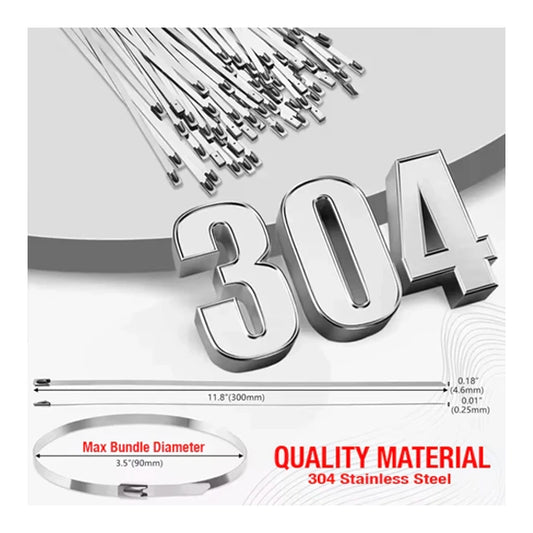
The metallurgical structure of premium grade 304 stainless steel dictates its exceptional resistance to outdoor corrosion and degradation. Boasting an optimal chrome-nickel ratio, this robust alloy forms a self-healing passivation layer of chromium oxide upon exposure to oxygen. This micro-shield prevents moisture and aggressive atmospheric salts from initiating iron oxidation, making it far superior to carbon steel. In coastal zones or heavy industrial chemical areas, this passive barrier remains intact, resisting pitting corrosion and environmental stress cracking indefinitely.
Anatomy Breakdown
A professional metal cable tie gun or tensioning device relies on several high-durability internal and external structural components to function safely. Understanding these assemblies helps operators maintain their tools and achieve clean results on every job:
- High Carbon Steel Blade: Heat-treated cutting edge designed to deliver precise flush cuts, removing dangerous protruding tails.
- Self-Locking Gripper Block: Textured mechanical jaw that firmly holds the metal band in place during the active tensioning phase.
- Tension Adjustment Wheel: Calibrated manual selector used to set the exact cutoff force, preventing over-tightening on delicate jackets.
- Ergonomic Leverage Trigger: Spring-assisted handle mechanism maximizing mechanical squeeze force to reduce hand strain during prolonged field operation.
Operating Principle
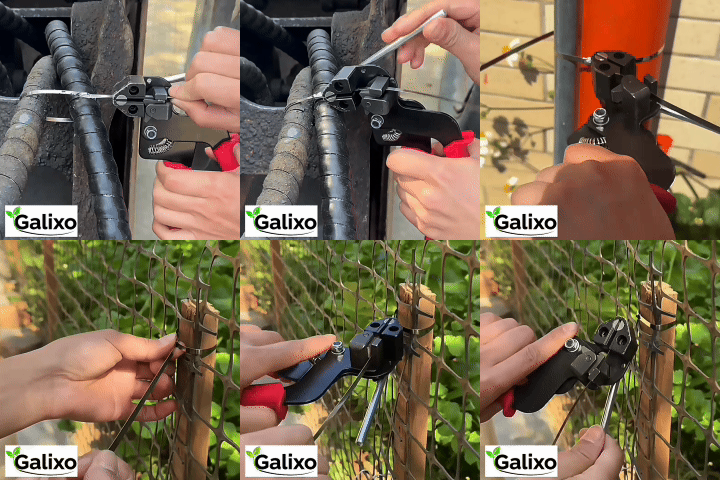
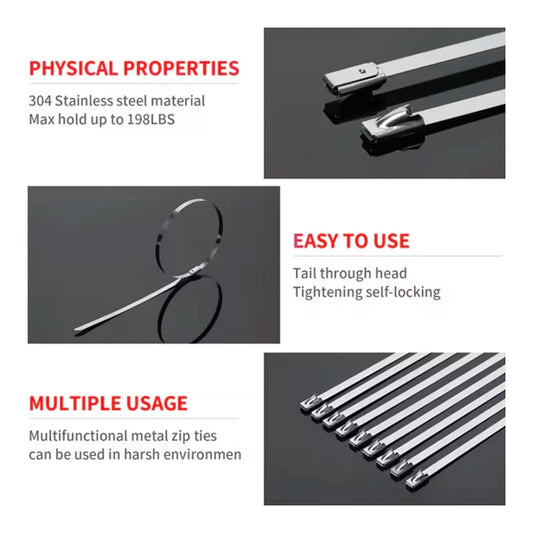
The mechanical performance of these tools relies on basic physics, utilizing a high-leverage ratchet system to apply massive linear pull force. When the band is fed into the tool nose, the operator squeezes the trigger, which drives the internal gripper block backward along a linear guide. This movement pulls the metal tie through its self-locking head, where an internal stainless steel ball rolls freely backward but wedges tightly when force is released. Once the pre-set tension limit is reached, the automatic cutter activates, ensuring a clean cut with no sharp metal shards remaining.
Durability Evaluation of UV Resistant Plastic Accessories versus Stainless Steel Bands
Evaluating outdoor wire securing solutions requires comparing the physical properties of traditional materials with advanced steel products. Standard plastics fail prematurely under solar radiation, whereas metals offer long term strength and stability. Let us look at how these materials perform across several key performance metrics under extreme field conditions.
| Criteria | Galixo 304 SS Solution | Traditional Nylon Solution |
|---|---|---|
| Material Composition | Premium 304 Stainless Steel | Standard UV-Stabilized Nylon 66 |
| UV Degradation Resistance | Absolute; zero degradation over time | Moderate; becomes brittle after 12 months |
| Operating Temp Range | -80 to +538 degrees Celsius | -40 to +85 degrees Celsius |
| Tensile Strength Rating | Up to 250 lbs or higher | Typical maximum of 50 to 120 lbs |
| Longevity in Salt Spray | Indefinite; excellent oxidation resistance | Shortened lifespan; high risk of cracking |
| Cost over Five Years | Extremely low; zero replacement costs | High; multiple replacements needed |
| Fire and Heat Resistance | Excellent; non-flammable alloy | Poor; melts and releases toxic fumes |
| Mechanical Tool Integration | Supports professional automatic tensioning | Relies on simple hand pull or low tension guns |
Galixo 304 SS vs Nylon Plastic Ties
Standard polymer fasteners suffer from polymer chain scission when exposed to direct solar radiation. Ultraviolet rays sever the internal chemical bonds of nylon, leading to discoloration, micro-cracking, and a complete loss of physical flexibility. During freezing winter conditions, these degraded plastics turn extremely brittle, snapping under minor physical impact or high wind loads. In contrast, weather resistant metal cable ties maintain their tensile strength and physical dimensions across both temperature extremes and solar exposures. Selecting steel ensures that wiring bundles remain secure regardless of changing climates.
Automatic Zip Tie Gun vs Manual Metal Snips
Using standard snips or manual pliers to tighten steel ties often yields inconsistent tension and leaves sharp metal remnants behind. These sharp metal tails pose safety hazards, easily slicing through safety gloves and skin during routine maintenance. By deploying commercial outdoor cable tools like an automatic tensioning gun, technicians can adjust tension precisely while achieving a flush cut. This automated cutting mechanism shears the steel band directly at the head, eliminating dangerous protrusions and ensuring a clean, safe, and professional finish.

Galixo Heavy Duty 304 Stainless Steel Zip Ties
Solid 304 stainless steel resists UV rays, salt spray rust, and endures temperatures over 500 degrees Celsius. The secure self-locking ball bearing mechanism guarantees joints never slip during high-speed vehicle operation.
ABSOLUTE CORROSION RESISTANCE
VIEW PRODUCT DETAILSMaterial Selection for Extreme Weather from Hot Sun to Freezing Snow
Securing cables in harsh environments requires robust materials that withstand extreme thermal fluctuations and physical stress. Choosing low-grade fasteners for outdoor setups often leads to mechanical failure, risking system damage. Industrial-grade solutions provide the thermal resilience and mechanical strength needed to protect outdoor infrastructure from summer heat waves to sub-zero blizzards.
Maximum Strength (Stronger)
Outdoor wiring runs are constantly subjected to severe physical forces, including heavy wind gusts, ice buildup, and structural vibrations. Employing high tensile strength zip ties ensures that large, heavy cable bundles stay securely anchored under load. This robust metal construction prevents sagging and shifting, protecting individual cables from abrasion and outer sheath damage.
[Galixo Field Test Report] Our engineering team subjected these steel ties to a 500-hour mechanical vibration and load test under continuous physical stress. Even in extreme high-vibration conditions, the 304 stainless steel ties maintained their rated holding force without slipping or stretching.
Weather Resistance (Durable)
Extreme temperatures require rugged cable bundling solutions capable of handling large thermal fluctuations without cracking or losing grip. Grade 304 steel is built for extreme climate wire strapping, functioning reliably in freezing cold and high heat. This broad temperature range makes it ideal for harsh outdoor climates, engine compartments, and heavy industrial facilities.
[Galixo Field Test Report] We exposed our heavy duty ties to simulated chemical salt spray and thermal cycling from -60 to +500 degrees Celsius. The metallic structure remained strong, showing zero pitting corrosion and zero loss of locking force, meeting key international standards.
Time-Saving (Faster)
Manual wiring tasks in cold weather can be slow and physically exhausting. Utilizing a industrial construction metal tie guns speeds up operations by automating the tensioning and trimming steps. Its comfortable, easy-to-use grip allows operators to secure connections quickly with one hand, reducing fatigue and boosting overall team productivity.
Professional Reliability (Trusted)
When securing telecom towers, solar farms, or remote electrical setups, choosing high-quality metal fasteners prevents unexpected system downtime and repairs. Using premium outdoor rust proof cable ties ensures long-term performance, protecting critical utility networks from failure. Building a secure infrastructure from the start keeps outdoor networks running smoothly and minimizes emergency service calls.
Return on Investment
Upgrading from standard plastic ties to premium metal fasteners offers major financial benefits over time. While steel ties require a higher initial purchase price, they eliminate the need for frequent replacements, lowering overall maintenance costs. This long-term durability reduces material expenses and labor costs, allowing maintenance crews to focus on other critical projects.
Securing Power and Telecom Cables on Outdoor Utility Poles
Installing cabling on high utility poles requires a careful approach to ensure physical safety and long-term durability. Standard fasteners quickly fail due to high winds, ice weight, and solar heat. This step-by-step guide outlines the professional techniques used to secure heavy communication and electrical cables in demanding outdoor environments.
Before beginning installation, ensure all safety gear is ready and inspected. Technicians should wear protective eyewear, heavy duty gloves, and climb-rated harnesses. Gather all necessary materials, including telecom tower metal tie kits and a calibrated tensioning tool, before starting work.
Step 1: Surface Preparation and Tension Calibration
Begin by clearing any dirt, rust, or biological debris from the attachment point on the wooden or concrete utility pole. This ensures the mounting brackets sit flush against the pole surface without slipping over time:
- Clear the surface thoroughly using a heavy duty wire brush to remove scale.
- Check the utility pole for structural wear, cracks, or rot before attaching hardware.
- Adjust the calibrated tension gauge on your professional zip tie tool to match the cable specs.
- Position the heavy duty utility pole bracket flat against the pole face.
Ensure a safe clearance distance from neighboring active power wires. Set the tension on your tool to approximately 45 pounds of force to secure the assembly tightly without crushing the cables.
Use your hands to verify the bracket is firmly seated and does not twist. This solid base prevents the cabling from shifting or swaying during severe weather and high winds.
Step 2: Selecting the Correct Width and Band Thickness
Choose the appropriate strap width and thickness based on the size and weight of your cable bundle. Using undersized bands can lead to failure under heavy wind or ice loads:
- Measure the bundle diameter accurately with a digital vernier caliper.
- Select a 304 stainless steel band with a thickness of at least 0.25 millimeters for heavy loads.
- Check that the self-locking head matches the strap width to prevent slipping.
- Slide a protective insulation sleeve over the strap if securing delicate low-voltage lines.
Ensure the selected metal strap is at least two inches longer than the bundle circumference. This extra length allows the tensioning tool gripper to grab the tail securely during tensioning.
Inspect the metal edges to ensure they are smooth and free of burrs. Smooth bands prevent cuts to the cable jackets and make handling much safer for the installation team.
Step 3: Wrapping and Locking Mechanism Alignment
Loop the metal tie around the cable bundle and pole mount, aligning the strap to pull straight and avoid twisting. Proper alignment ensures even tension across the locking mechanism:
- Feed the tail of the strap straight into the locking ball head.
- Wrap the stainless steel tie cleanly around the bundle without overlapping other cables.
- Place a flexible protective grommet between the steel strap and the cable jacket.
- Align the tensioning nose of the tool parallel to the strap to ensure a straight pull.
Keep the strap centered within the locking head channels, allowing the self-locking mechanism to slide smoothly. Avoid routing the strap at sharp angles to prevent binding inside the locking mechanism.
Double-check the wrap alignment visually. Correctly aligned straps distribute tension evenly, reducing stress on the locking head and preventing damage to the cable jackets.
Step 4: Applying Leverage via Automatic Zip Tie Tool
Insert the strap tail into the tensioning gun nose and squeeze the trigger to pull the band tight. The tool mechanical leverage quickly secures the bundle with minimal effort:
- Slide the strap tail into the side slot of the heavy duty outdoor zip tie tool.
- Squeeze the ratchet trigger in a smooth, continuous motion to pull the strap tight.
- Turn the tension adjustment knob to increase the holding force as needed.
- Check that the tensioning mandrel is fully engaged with the metal strap before pulling.
Maintain a steady grip on the tool, keeping the nozzle pressed flat against the locking head. Apply consistent squeeze force to allow the internal ratchet mechanism to lock the strap securely.
Make sure the steel strap sits snug against the cables without pinching or crushing them. This balance keeps the bundle secure while protecting the internal conductors from damage.
Step 5: Flush Cutting and Quality Assurance Inspections
Once the pre-set tension is reached, activate the cutter to shear the excess tail flush with the locking head. A flush cut ensures safety and a professional finish:
- Engage the flush cut blade by squeezing the tool trigger fully to trim the tail.
- Verify that the tensioning trigger returns smoothly to its starting position after cutting.
- Check the visual alignment window on the tool head to ensure the blade cut clean.
- Verify the holding force of the connection using a handheld pull test scale.
The cut end of the strap must sit completely flush inside the locking head, leaving no sharp metal edges. This clean finish prevents injury and protects neighboring cables from wear.
Inspect each completed tie visually and perform a physical pull test. If the band shifts or feels loose, remove it immediately and install a new tie to ensure a secure, long-lasting connection.

Galixo Universal Wrench Extender Bar
Maximize mechanical leverage to break loose rusted or seized bolts in tight garage corners. Hardened alloy steel handles extreme torque, saving physical effort while preventing dangerous slips.
MAXIMUM MECHANICAL LEVERAGE
VIEW PRODUCT DETAILSSaving Recurring Replacement Costs by Upgrading to Metal Materials
Upgrading to metal fastening solutions provides significant long-term savings by reducing maintenance needs and material replacement costs. Traditional plastic ties degrade quickly in harsh weather, leading to frequent system repairs. Investing in professional steel hardware ensures lasting durability and reliability across all outdoor applications.
| Size and Length | Tensile Strength (lbs) | Working Temp Range | Recommended Application |
|---|---|---|---|
| 4.6mm x 150mm | 150 lbs | -80 to +538 degrees Celsius | Lightweight engine harness runs |
| 4.6mm x 200mm | 150 lbs | -80 to +538 degrees Celsius | Automotive heat shields, hose management |
| 4.6mm x 300mm | 150 lbs | -80 to +538 degrees Celsius | Motorcycle exhaust wrap, wire bundles |
| 4.6mm x 360mm | 150 lbs | -80 to +538 degrees Celsius | Residential fences, utility wires |
| 7.9mm x 200mm | 250 lbs | -80 to +538 degrees Celsius | Heavy machinery, industrial mounts |
| 7.9mm x 300mm | 250 lbs | -80 to +538 degrees Celsius | Commercial power line pole mounts |
| 7.9mm x 500mm | 250 lbs | -80 to +538 degrees Celsius | Agricultural fences, utility poles |
| 12.0mm x 300mm | 350 lbs | -80 to +538 degrees Celsius | High weight structural steel piping |
| 12.0mm x 500mm | 350 lbs | -80 to +538 degrees Celsius | Heavy duty marine cable runs |
| 12.0mm x 800mm | 350 lbs | -80 to +538 degrees Celsius | Industrial telecom towers, high load lines |
Core Specs Analysis
Reviewing mechanical load capacities helps operators select the right tie sizes for their project requirements. Choosing the correct strap width prevents physical failures and structural sagging under extreme environmental conditions. Matching the strap ratings to project specifications ensures long-term stability and system safety.
Budget-based Consulting
For small garage repairs or DIY tasks, a standard bundle pack of 100 ties with a high-leverage gun provides excellent value. Large-scale utility installations, commercial telecom setups, and agricultural operations benefit from bulk combo packs of 500 or 1000 pieces. Choosing bulk kits ensures a reliable supply of high-strength fasteners for large outdoor projects.
Cost-per-Use Formula
Calculating the lifetime cost reveals that premium steel fasteners are highly economical compared to cheap plastic ties. Plastic ties require frequent replacement, which quickly adds up in both material costs and manual labor. Metal ties deliver lasting performance, lowering maintenance overhead and saving operational costs over the life of the installation.
Frequently Asked Questions about heavy duty outdoor cable management (FAQs)
- How long do 304 stainless steel ties last outdoors? These robust steel fasteners are designed to last decades in harsh outdoor environments, maintaining their structural strength and resisting corrosion far longer than plastic options.
- Can these steel zip ties be reused? Standard self-locking ball bearing steel ties are designed for permanent installation and cannot be easily reopened once locked. Cutting them is required for removal.
- Do I need a special tool to install stainless steel ties? While hand tightening is possible for light duties, using a professional tensioning gun ensures accurate tension and clean, flush cuts.
- Are stainless steel ties safe for delicate copper communication wires? Yes, they are highly reliable when paired with protective rubber or vinyl sleeves to prevent metal-on-metal wear.
- How does freezing winter weather affect these metal ties? Grade 304 steel remains tough and flexible in sub-zero temperatures, resisting the embrittlement and snapping common with nylon plastic ties.
Elevate Your Mechanical & DIY Garage Durability with Galixo Store Solutions
Build Fast and Solid with Professional Steel Fastening Tools
Upgrade your workshop or commercial installation with premium mechanical tools and high-strength metal ties. Protect your outdoor projects, utility setups, and automotive repairs from weather wear with reliable, rust-proof hardware designed to last.
Explore the Galixo Store Catalog Now
*Disclaimer: All technical specifications and instructions in this article are based on the practical garage experience of the Galixo Store engineering team. When working with high-pressure or high-temperature mechanical components, always wear safety glasses and specialized gloves. Contact us for the most accurate technical consultation.