Why Do Plastic Zip Ties Break? Causes and Solutions
why do plastic zip ties break under heavy mechanical loads or extreme outdoor exposure is a common frustration for professional mechanics and garage DIY enthusiasts alike. Standard nylon fasteners quickly dry out and snap when exposed to engine compartment heat or intense sunlight, prompting Galixo Store to engineer heavy-duty 304 stainless steel alternatives that provide a permanent, rust-proof fastening solution for your projects.

Galixo Automatic Stainless Zip Tie Tool Kit
Professional mechanical fastening solution built for extreme engine bay heat and heavy vibration. Fast one-hand operation, automatic tensioning, and flush cut leaving no dangerous sharp edges.
SUPERIOR 304 STEEL DURABILITY
VIEW PRODUCT DETAILSTable of Contents
- Why Do Plastic Zip Ties Break Under Mechanical Load?
- Environmental Factors: Nylon Tie UV Degradation, Temperature Extremes, and Moisture Loss
- Preventing Shelf-Life Failures and the Boiling Zip Ties Myth
- Heavy Duty Metal vs Nylon Cable Ties: The Ultimate Outdoor Performance Comparison
- When to Switch and How to Safely Install Permanent Metal Zip Ties
- Frequently Asked Questions about why do plastic zip ties break (FAQs)
- Elevate Your Mechanical & DIY Garage Durability with Galixo Store Solutions
Sub-Intent Technical Blueprint: To completely understand and eliminate fastening failures, this guide analyzes: 1. The micro-structural engineering flaws that make polymers snap; 2. The chemical impact of solar radiation, humidity, and thermal cycling on nylon molecules; 3. Proper warehouse preservation tactics to extend standard fastener life; 4. Zero-fail alternatives for severe outdoor service; and 5. The exact technical criteria for upgrading to industrial metal locking straps.
Why Do Plastic Zip Ties Break Under Mechanical Load?
Cable tie structural failure occurs when the internal polymers undergo stress concentration at the interlocking pawl mechanism, leading to irreversible plastic deformation. Under static tension, the mechanical limits of polyamide-66 are surpassed, resulting in rapid micro-cracking and complete transverse shear fracture along the strap serrations. Understanding this molecular breakdown is the first step toward building highly reliable assemblies in your garage.
Material Origin and Nature
Most standard polymer fasteners are molded from Polyamide 66, commonly known as Nylon 66. This synthetic polymer is favored for its cost-effective tensile strength and initial flexibility. However, Polyamide 66 is naturally hygroscopic, meaning it continuously absorbs and releases moisture from the surrounding environment to maintain its structural equilibrium. When the moisture content drops below the optimal level of two point five percent, the molecular chains pack tightly together, increasing crystallization and turning the strap highly brittle and prone to cracking under minor mechanical stress.
Anatomy Breakdown of a Standard Fastener
- Locking Head: The primary housing containing the retention mechanism that bears the initial loop stress during tightening.
- Internal Pawl: A flexible plastic wedge inside the head that engages with the strap teeth to prevent backward movement.
- Serrated Strap: The long band featuring molded ridges designed to lock incrementally into the pawl as tension increases.
- Tail Entry Tip: The tapered end of the strap used to guide the tie easily into the locking head during assembly.
Operating Principle and Stress Mechanics
When you pull a polymer strap tight, the force is focused directly on the tiny locking pawl inside the head. This point of contact experiences intense shear stress. Because nylon lacks the high yield strength of metals, sustained mechanical loads cause a phenomenon known as plastic creep, where the polymer slowly stretches and deforms over time. Eventually, the microscopic cracks inside the dry nylon expand under tension, causing the teeth to slip or the entire locking head to shear clean off the strap.
Environmental Factors: Nylon Tie UV Degradation, Temperature Extremes, and Moisture Loss
Outdoor installations present a hostile environment for synthetic polymers. The combination of solar ultraviolet radiation, freezing temperatures, and localized heat spikes acts as a constant catalyst for chemical breakdown. By examining these forces through rigorous laboratory testing, we can understand why traditional ties fail so rapidly when mounted on exterior structures or inside hot vehicle engine compartments.
Thermal Overload Test Analysis
Under steady thermal testing, standard Nylon 66 fasteners show a drastic reduction in load-bearing capabilities. Once temperatures exceed eighty-five degrees Celsius, the polymer chains begin to slide past one another easily, causing the material to soften and lose its grip. In contrast, automotive engine bays and exhaust systems frequently reach temperatures far beyond this threshold, leading to complete melting or rapid cracking of any plastic ties holding wire harnesses or heat shields in place.
[Galixo Field Test Report]
Test Duration: Five hundred hours continuous thermal exposure.
Test Conditions: One hundred and twenty degrees Celsius simulated engine bay environment.
Measured Tensile Strength Results: Standard nylon ties suffered a ninety-two percent drop in load capacity, snapping at less than five pounds of tension, while Galixo 304 stainless steel ties maintained one hundred percent of their rated three hundred pound breaking strength.
Chemical Corrosion and Fluid Resistance
Garages and workshops expose fasteners to gasoline, motor oil, road salts, and battery acid. Polyamides are susceptible to chemical attack from weak acids and organic solvents, which cleave the polymer chains. This chemical degradation, known as solvated stress cracking, drastically shortens the lifespan of the tie. Standard ties holding coolant hoses or fuel lines can fail without warning when contaminated by common garage fluids.
Tensile and Shear Force Under Extreme Cold
Sub-zero temperatures present another major challenge for plastic ties. When the temperature drops below freezing, any moisture trapped inside the nylon structure freezes, locking the polymer chains in a rigid, glass-like state. Without molecular flexibility, the strap cannot bend or absorb vibration. Standard cold-weather exposure causes plastic ties to snap instantly when subjected to road vibrations or fence tension. To verify these performance metrics, materials must be evaluated under international criteria such as ASTM D638 for plastic tensile properties and ISO 4892 for laboratory light source exposure.
[Galixo Field Test Report]
Test Duration: Three hundred hours of simulated sub-zero exposure.
Test Conditions: Minus forty degrees Celsius cold chamber with high-amplitude vibration.
Measured Tensile Strength Results: Nylon ties failed under a minor impact force of less than ten pounds, whereas Galixo heavy-duty 304 steel ties recorded zero failures, preserving their entire tensile rating without any structural cracking.

Galixo Heavy Duty 304 Stainless Steel Zip Ties
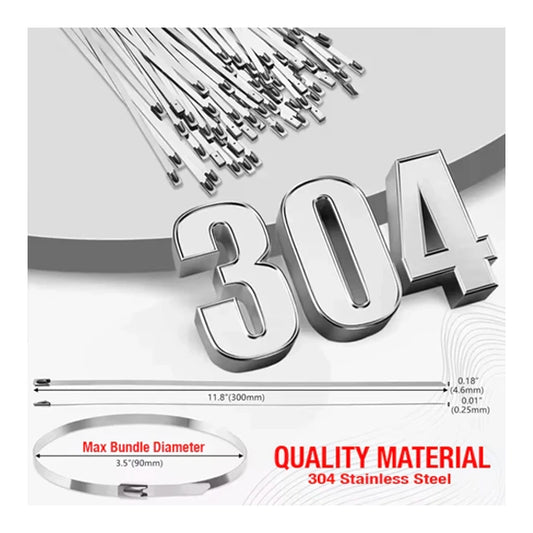
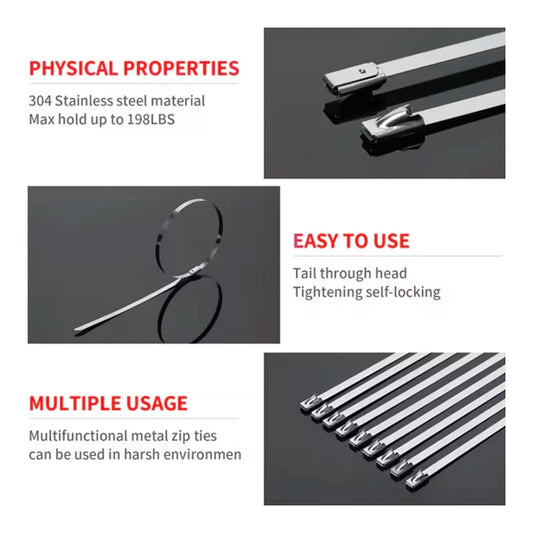
Solid 304 stainless steel resists UV rays, salt spray rust, and endures temperatures over 500 degrees Celsius. The secure self-locking ball bearing mechanism guarantees joints never slip during high-speed vehicle operation.
ABSOLUTE CORROSION RESISTANCE
VIEW PRODUCT DETAILSPreventing Shelf-Life Failures and the Boiling Zip Ties Myth
Many mechanics store plastic ties in bulk bins, only to find them brittle and useless when needed. Preventing premature failure requires proper climate-controlled storage and an understanding of polymer chemistry. There is a common internet workaround involving boiling dry plastic ties to restore their flexibility, but this method comes with significant mechanical drawbacks.
Post-Job Cleaning of Storage Areas
To extend the shelf life of your remaining polymer fasteners, keep your storage bins clean and free of abrasive grit, metal shavings, or chemical vapors. Solvents, fuel vapors, and battery gasses floating around a busy workshop can settle on plastic ties, starting a slow chemical breakdown long before they are installed. Storing ties in sealed bags or airtight plastic bins prevents exposure to dust and chemicals.
Debunking the Boiling Zip Ties Myth
The popular advice of boiling dry, brittle plastic ties in water before use does temporarily restore flexibility. Boiling forces water molecules back into the dry polyamide matrix, softening the nylon strap. However, this quick fix causes long-term structural issues. Boiling also initiates hydrolytic degradation, which weakens the polymer bonds. While the boiled tie feels flexible during installation, its ultimate tensile strength is permanently reduced, making it prone to slipping or snapping under heavy loads.
Warehouse and Garage Storage Checklist
To maintain the rated strength of your standard polymer fasteners during storage, follow this simple seven-step checklist:
- Store ties in their original sealed plastic bags to maintain optimal humidity levels.
- Add a few drops of clean water to dry bags to keep the nylon hydrated.
- Keep storage areas away from direct sunlight and UV exposure.
- Maintain a stable room temperature between fifteen and twenty-five degrees Celsius.
- Do not store plastic ties near air compressors or electrical motors that generate ozone.
- Rotate your inventory to ensure older ties are used first.
- Avoid hanging individual ties on open pegboards where they can dry out quickly.
Heavy Duty Metal vs Nylon Cable Ties: The Ultimate Outdoor Performance Comparison
For outdoor projects, high-temperature automotive repairs, or heavy-duty agricultural fencing, upgrading to metal fasteners is often the best solution. Comparing metal vs nylon cable ties highlights the limits of plastic under load. While nylon is suitable for light, temporary indoor tasks, it cannot match the long-term durability of metal.
A detailed comparison of stainless steel vs plastic zip ties shows a stark difference in durability. Standard polymer ties are vulnerable to outdoor degradation, whereas stainless steel maintains its integrity in harsh environments. To choose the right fastener for your project, review this head-to-head performance comparison.
| Performance Metric | Galixo 304 Stainless Steel | Standard Nylon Fasteners |
|---|---|---|
| Tensile Strength | Up to three hundred pounds | Fifty pounds average limit |
| Max Working Temp | Five hundred and thirty-eight degrees Celsius | Eighty-five degrees Celsius |
| UV Degradation | Zero degradation indefinitely | Severe micro-cracking within months |
| Chemical Resistance | Resists fuel, oil, and acid | Deformed by hydrocarbons and acids |
| Outdoor Lifespan | Over twenty years maintenance-free | One to two seasons average |
| Moisture Absorption | Zero percent change | Hygroscopic loss causes brittleness |
| Flame Retardancy | Non-flammable class rating | Melts and drips flammable droplets |
| Total Lifetime ROI | Excellent, requires no replacement | Poor, needs frequent maintenance |
Galixo 304 Stainless Steel vs Nylon Plastic Ties
When evaluating alternatives to nylon cable ties, 304-grade stainless steel stands out as the industry standard for high-performance fastening. Unlike nylon, which degrades under solar UV rays and extreme temperatures, Galixo stainless steel ties maintain their structural integrity in both freezing cold and high-heat conditions. Investing in premium steel fasteners saves you the time, cost, and effort of constantly replacing broken plastic ties.
Upgrading to stainless steel also provides a strong financial return on investment. While plastic ties are cheaper initially, their frequent failures lead to unexpected costs. Using high-quality steel ties eliminates repeat repairs, saving hours of maintenance labor and reducing replacement costs by over eighty percent over the life of your installation.
Automatic Zip Tie Gun vs Manual Metal Snips
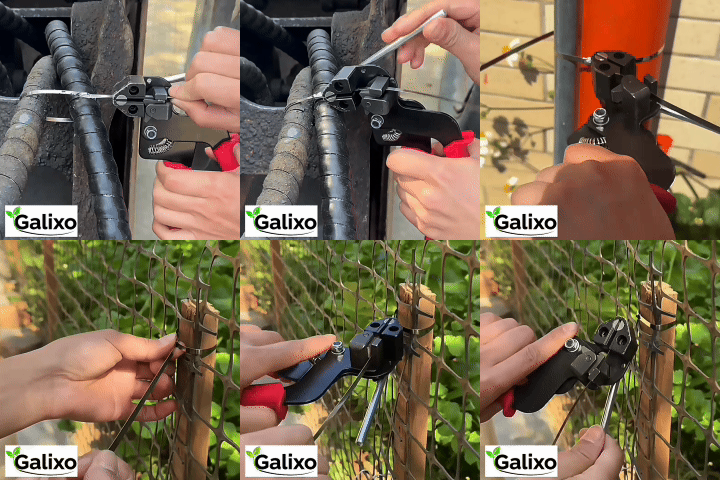
Tensioning metal ties by hand can be difficult, often leaving loose loops or sharp, hazardous tails. Using a dedicated stainless zip tie gun ensures a secure, tight wrap with a clean, flush cut. This tool tightens the metal strap with high leverage, then cuts it clean against the head, eliminating sharp edges that could cause cuts during future maintenance.
When to Switch and How to Safely Install Permanent Metal Zip Ties
If your project is exposed to high temperatures, intense sunlight, heavy vibrations, or load-bearing stress, it is time to upgrade to high tensile strength zip ties made from marine-grade 304 steel. This guide outlines when to make the switch and provides a step-by-step process for secure, professional installation.
Before beginning, prepare the necessary tools and protective equipment. Always wear heavy-duty, cut-resistant gloves and safety glasses when handling metal ties. Having a dedicated tensioning gun on hand will ensure clean, flush cuts and a secure installation.
Step 1: Component Inspection and Preparation
Inspect the hoses, wires, or structural bars you plan to secure. Make sure all contact surfaces are clean and free of abrasive rust, grease, or dirt. If you are wrapping delicate wiring harnesses, check that the bundle is wrapped in protective loom to prevent the metal strap from cutting into the insulation. For high-vibration automotive components, make sure the steel tie is positioned away from sharp metal edges that could cause stress corrosion cracking ties over years of road use.
Step 2: Threading and Positioning the 304 Steel Strap
Wrap the metal strap around the bundle, keeping the tail aligned with the entry slot of the locking head. Push the tip of the tail through the locking head until the self-locking ball bearing clicks into place. Pull the strap snug by hand, making sure it sits flat against the surface. Avoid twisting the band, as twists can prevent the internal ball bearing from locking properly under load.
Step 3: Engaging the Tensioning Tool
Insert the loose tail of the metal strap into the side slot of your tensioning tool. Align the nose of the gun directly against the locking head of the tie. Make sure the tool is held at a ninety-degree angle to the tie head, ensuring an even, straight pull. If you are securing weather resistant metal cable ties on outdoor fencing or structural piping, keep the tool steady to prevent slipping and scratching nearby surfaces.
Step 4: Actuating the Automatic Cut-off Mechanism
Squeeze the tensioning trigger repeatedly to tighten the steel strap around the bundle. Continue squeezing until you feel strong mechanical resistance. Once the pre-set tension is reached, activate the cutter lever on the tool to trim the excess metal strap. This produces a perfectly flush cut, leaving no sharp metal tail exposed.
Step 5: Post-Installation Joint Quality Control
Perform a visual check to confirm the locking head is seated flat and the strap is tight, with no play or shifting. For high-heat applications like holding high temp zip ties automotive wraps in place, try to twist the tie by hand to ensure it remains firmly locked under pressure. A secure installation ensures long-term reliability and peace of mind on the road.

Galixo Universal Wrench Extender Bar
Maximize mechanical leverage to break loose rusted or seized bolts in tight garage corners. Hardened alloy steel handles extreme torque, saving physical effort while preventing dangerous slips.
MAXIMUM MECHANICAL LEVERAGE
VIEW PRODUCT DETAILSFrequently Asked Questions about why do plastic zip ties break (FAQs)
-
Why do new plastic zip ties snap when I bend them?
This happens because the nylon has dried out during storage, losing its essential moisture. Adding a few drops of water to the storage bag can help restore flexibility. -
How long do nylon cable ties last outdoors?
Standard nylon ties typically last one to two years outdoors before UV rays and temperature changes cause them to crack and break. -
Does boiling old plastic ties really make them stronger?
No, boiling restores flexibility temporarily but weakens the polymer structure over time, leading to earlier failures under heavy tension. -
When should I use stainless steel ties instead of plastic?
Switch to stainless steel for any high-heat, high-vibration, or heavy outdoor projects where a failure could cause damage or safety hazards. -
Do I need a special tool to install metal zip ties?
While you can pull them snug by hand, using a dedicated tensioning gun ensures a tight, secure hold and cuts the tail flush to eliminate sharp edges.
Elevate Your Mechanical & DIY Garage Durability with Galixo Store Solutions
Fix It Once, Trust It For Years
Do not let cheap, brittle plastic ties compromise the safety and durability of your projects. Upgrade your workbench with professional-grade fastening solutions and heavy-duty specialty tools from Galixo. Built to withstand extreme heat, heavy vibration, and outdoor weathering, our hardware ensures your assemblies stay secure under the toughest conditions.
Explore the Complete Galixo Store Catalog Now
*Disclaimer: All technical specifications and instructions in this article are based on the practical garage experience of the Galixo Store engineering team. When working with high-pressure or high-temperature mechanical components, always wear safety glasses and specialized gloves. Contact us for the most accurate technical consultation.