High Temp Zip Ties: Securing Wiring in Automotive Engine Bays
high temp zip ties automotive products from Galixo Store stop engine bay heat from melting fragile plastic wiring mounts. This heavy duty fastening system replaces cheap nylon straps that fail under hood, saving mechanics from repetitive repairs and potential electrical fires caused by loose wiring harnesses near hot exhaust manifolds.

Galixo Automatic Stainless Zip Tie Tool Kit
Professional mechanical fastening solution built for extreme engine bay heat and heavy vibration. Fast one-hand operation, automatic tensioning, and flush cut leaving no dangerous sharp edges.
SUPERIOR 304 STEEL DURABILITY
VIEW PRODUCT DETAILSTable of Contents
- The Mechanical Architecture of High Temp Zip Ties Automotive Systems
- Eliminating the Melting Plastic Zip Ties Fix with High Temp Zip Ties Automotive Grade Alloys
- Under Hood Wire Management SOP: Turbo Heat Wire Routing Guide
- Extreme Stress Testing and Fireproof Standards for Engine Bay Cable Ties
- Specifying the Best High Temperature Wire Fasteners for Professional Garages
- Frequently Asked Questions about high temp zip ties automotive (FAQs)
- Elevate Your Mechanical & DIY Garage Durability with Galixo Store Solutions
The Mechanical Architecture of High Temp Zip Ties Automotive Systems
High temperature automotive wire fasteners are specialized mechanical clamps engineered to secure electrical cables, protective sleeves, and thermal wraps inside harsh engine environments. These high-performance strapping devices utilize advanced materials to prevent mechanical failure under extreme thermal loads, ensuring long-term electrical circuit integrity. Through intensive garage testing and mechanical evaluation, these fasteners have proven vital for preventing critical wiring dropouts near high-vibration powerplants.
Material Origin and Metallurgical Nature
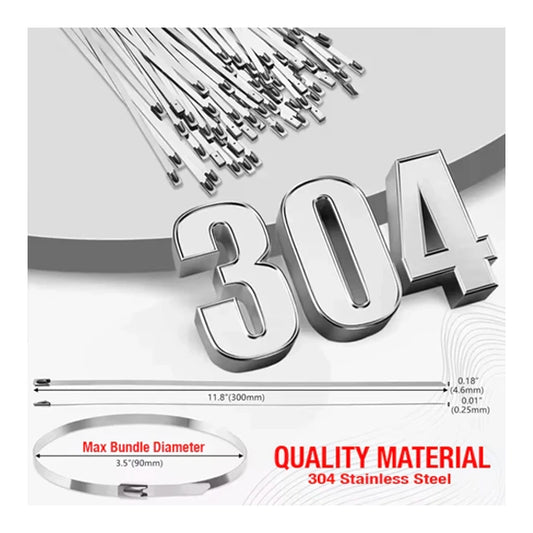
The metallurgical foundation of these high-performance fasteners relies primarily on Grade 304 Stainless Steel, an alloy featuring an eighteen percent chromium and eight percent nickel composition. This specific chemical balance establishes an incredibly stable austenitic structure that remains non-magnetic and highly resistant to thermal oxidation at temperatures exceeding five hundred degrees Celsius. When exposed to oxygen, the chromium content forms an invisible, self-healing passive layer of chromium oxide that protects the underlying steel from salt spray, garage chemicals, and moisture. This advanced chemical defense prevents the metal from degrading when exposed to harsh under-hood environments, ensuring the ties maintain structural integrity over years of vehicle operation.
Anatomy of High Temp Zip Ties Automotive Grade Closures
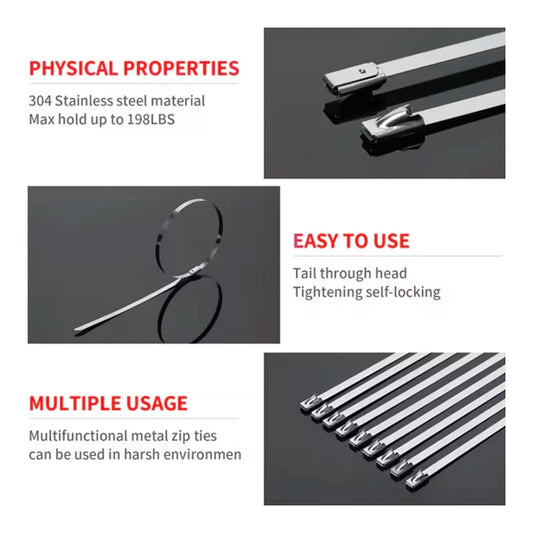
Understanding the mechanical components of a professional grade fastener is essential for executing reliable automotive wire installations. The physical anatomy of these robust strapping bands consists of four integrated components that work together to provide permanent clamping force:
- The Self-Locking Ball Bearing head: A small chamber containing a high-hardness steel ball that wedges against the inserted band to prevent back-slip.
- The Tapered Lead Tail: A low-profile, smooth entry tip designed to allow fast, frictionless insertion into the locking head during tight space operations.
- The Tensioning Band: A flat, highly polished steel strap with rounded safety edges to prevent cutting into delicate wiring insulation.
- The Mechanical Grip Area: The specific section of the band designed to interface perfectly with automatic tensioning and cutting tools.
Physics of the Self Locking Ratchet Principle
The operating physics of these metal fasteners rely on a unidirectional wedge mechanism rather than a traditional plastic ratchet tooth. When the steel band is threaded through the low-profile head, the internal stainless steel ball rolls freely along a miniature ramp, allowing the strap to slide forward with minimal resistance. Once tension is applied in the opposite direction, gravity and physical friction force the ball down the ramp, wedging it tightly against the flat surface of the band. This physical lock creates an incredibly secure grip that increases its holding power as tension rises, easily handling extreme vibration and mechanical loads without slipping. For professional mechanics working on high-performance engine bays, this solid mechanical interface guarantees that vital wire harnesses remain secure during high-speed runs.
Using specialized heat resistant cable ties automotive grade solutions ensures that critical lines do not drop onto hot exhaust pipes. In many classic restoration projects, technicians find that they must constantly replace broken exhaust zip ties because standard nylon alternatives simply cannot handle the extreme heat cycles under the hood.
Eliminating the Melting Plastic Zip Ties Fix with High Temp Zip Ties Automotive Grade Alloys
Standard nylon cable ties represent a major point of failure inside modern engine bays due to polymer degradation under continuous heat cycles. When exposed to temperatures exceeding eighty-five degrees Celsius, standard plastic fasteners dry out, turn yellow, and lose their flexibility, leading to sudden fractures. Upgrading to high-temperature metal alloys provides a permanent solution to this common problem, ensuring that vital cables remain secured through years of extreme thermal stress.
| Performance Metric | Galixo 304 Stainless Solution | Traditional Nylon Plastic Ties |
|---|---|---|
| Maximum Temperature Limit | Over 538 Degrees Celsius | Less than 85 Degrees Celsius |
| Tensile Strength Capacity | Up to 200 Pounds Force | 50 Pounds Force Maximum |
| UV Radiation Resistance | Lifetime Corrosion Immunity | Rapid Embrittlement and Cracking |
| Chemical Solvent Defense | Inert to Oils, Fuel, and Acid | Degrades and Softens Rapidly |
| Vibration Resistance | Excellent No Slip Lock | Prone to Tooth Shear Failure |
| Tensioning Precision | Consistent Mechanical Pull | Variable Manual Tightness |
| Cutting Quality | Perfect Flush Edge Cut | Sharp Jagged Edges Remaining |
| Five Year Service Cost | Zero Repair Maintenance Cost | High Recurring Labor and Material |
Nylon Thermal Degradation vs High Temp Zip Ties Automotive Solutions
Standard nylon PA66 cable ties contain microscopic moisture molecules within their polymer chains that provide essential flexibility. When exposed to under-hood temperatures near hot cylinder heads, this moisture rapidly evaporates, altering the molecular structure of the plastic. This drying process causes the nylon to become brittle, leading to sudden fractures under normal engine vibration. In contrast, 304 stainless steel fasteners maintain their structural strength across a temperature range of minus eighty to over five hundred degrees Celsius, entirely eliminating the melting plastic zip ties fix failure loop that plagues standard plastic installations.
Automatic Tensioning Tools vs Manual Side Cutters
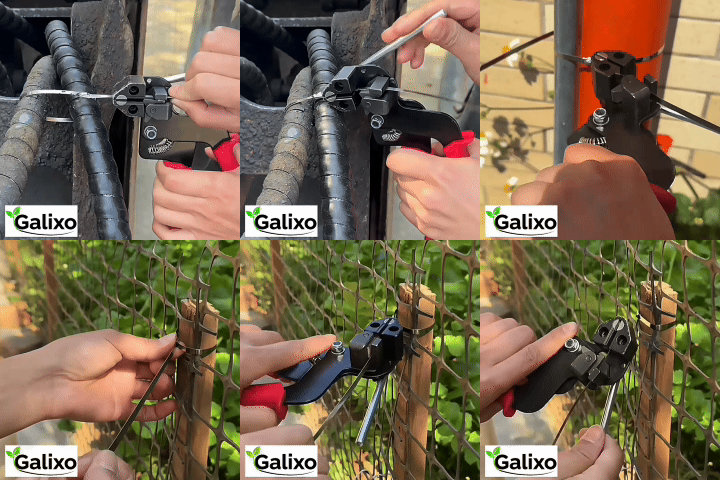
Using basic hand tools like pliers and diagonal cutters to install metal ties can lead to uneven tension and dangerous, razor-sharp edges. A professional automatic tensioning tool solves this issue by gripping the metal band, pulling it to a precise tension, and shearing the excess steel perfectly flush with the locking head. This one-handed process not only speeds up installation in cramped engine bays but also ensures a clean, smooth cut. Utilizing specialized exhaust fabricator zip tie guns prevents sharp metal burrs that can slice fingers during routine maintenance or tear delicate wire loom sleeves under vibration. Choosing the best stainless steel zip ties for exhaust wrap applications ensures your performance builds remain secure and look clean.

Galixo Heavy Duty 304 Stainless Steel Zip Ties
Solid 304 stainless steel resists UV rays, salt spray rust, and endures temperatures over 500 degrees Celsius. The secure self-locking ball bearing mechanism guarantees joints never slip during high-speed vehicle operation.
ABSOLUTE CORROSION RESISTANCE
VIEW PRODUCT DETAILSUnder Hood Wire Management SOP: Turbo Heat Wire Routing Guide
Securing high-temperature wire routing near turbochargers and exhaust manifolds requires a careful, systematic approach to protect delicate copper conductors from intense radiant heat. Before beginning the installation, technicians must gather all necessary tools and safety equipment to ensure a professional, secure setup. This process requires heavy-duty leather gloves to protect hands from sharp metal edges, safety glasses to shield eyes from high-tension wire recoil, clean shop rags, and a reliable high-intensity LED light source.
Step 1: Inspecting the Routing Path and Cable Harness Clearance
The first step in securing under hood wire management is carefully assessing the layout of the engine bay to identify thermal zones and potential points of physical wear. Technicians must trace the path of all wire looms to map out routes that maximize physical distance from high-temperature exhaust headers:
- Align the wiring harnesses along structural frame rails, firewalls, or cold-side intake piping to avoid direct exposure to extreme heat zones.
- Clamp critical electrical conduits temporarily with low-tension clips to test the layout before finalizing the metal tie placement.
- Tighten all routing brackets and structural mounting points to confirm that no movement is possible near moving belt pulleys.
- Squeeze the wire loom covers along the entire path to check for pinched wires or existing damage to the insulation.
During this step, aim for a minimum physical clearance of three inches from any exhaust manifold or turbocharger hot side. The routing path turns must have smooth, gradual bends with an angle of no more than forty-five degrees to prevent stress on the internal copper wiring. Tip: Always route wiring harnesses parallel to factory structural lines, and never run them near fuel system lines to avoid heat-transfer risks.
Step 2: Preparing Specialized Hand Tools and Protective Equipment
With the routing path planned, the next step is prepping the tensioning tools to ensure consistent clamping force without damaging the wire insulation:
- Align the tension adjustment dial on the handle base to match the width and thickness of your metal bands.
- Clamp the tool handle firmly to ensure a solid, slip-free grip during high-torque tensioning.
- Tighten the internal tension spring to the correct torque setting to prevent crushing delicate wire bundles.
- Squeeze the main trigger several times to verify that the cutting blade slides smoothly and returns to its starting position.
Using specialized turbo heat shield securing tools ensures that protective metal bands are tensioned correctly. Calibrating the automatic tension tool to forty pounds of pulling force is ideal for standard bundles. Tip: Inspect the tool nose regularly for microscopic chips or wear that could affect the quality of the cut.
Step 3: Wrapping Electrical Wiring with Thermal Sleeves and Heat Shields
Before securing wires near high-heat zones like downpipes, applying a layer of high-temperature thermal sleeve insulation is crucial for protecting the harness from radiant heat:
- Align the protective fiberglass heat sleeve around the wiring harness, ensuring it covers the entire exposure area.
- Squeeze the overlapping edges of the wrap together to eliminate any gaps where radiant heat could penetrate.
- Tighten the sleeve material by smoothing it flat along the harness to remove any trapped pockets of air.
- Clamp both ends of the heat sleeve temporarily with tape to prevent unraveling before installing the permanent metal bands.
The thermal protective sleeve should overlap by at least twenty percent of the total diameter of the harness to ensure complete coverage. Utilizing specialized downpipe heat shield zip ties secures these wraps against extreme engine vibrations. Tip: Seal the ends of the sleeves with high-temperature silicone self-amalgamating tape to keep out moisture and engine oils.
Step 4: Tensioning the Metal Bands Using the Automatic Zip Tie Gun
Once the wiring harness is insulated and positioned, the metal ties must be tensioned and trimmed using a specialized installation tool to ensure a secure, flush finish:
- Align the nose of the tensioning gun flat against the low-profile head of the metal tie.
- Squeeze the tool trigger progressively to draw the metal band through the locking head.
- Tighten the tension until the automatic cutter activates, severing the tail cleanly.
- Clamp down the metal band flush against the wrapped harness without crushing the internal conductors.
For a clean, flush cut, hold the gun nozzle at an exact ninety-degree angle to the lock head. The remaining metal tail should not exceed two millimeters in length to avoid sharp edges. Tip: Avoid applying full tension on soft vacuum or fuel return lines to prevent restricting internal flow.
Step 5: Verifying Quality Control and Performing Mechanical Pull Tests
The final step is verifying that the entire wire management setup is secure and checking the tension of all installed fasteners:
- Align a digital tension scale with the secured wiring loom to measure potential slack.
- Squeeze the completed bundle firmly with two fingers to verify that no rotational movement is possible.
- Tighten any surrounding structural bolts that may have been loosened during the installation process.
- Clamp down any secondary support brackets to finalize the under-hood cable configuration.
The completed assembly must withstand a mechanical pull test of twenty-five pounds without slipping or shifting along the frame. Visual inspection under high-intensity light should confirm that no metal edges touch adjacent fuel lines. Tip: Re-inspect the entire routing path after the engine completes its first full thermal cycle to verify that everything remains secure.
Extreme Stress Testing and Fireproof Standards for Engine Bay Cable Ties
To ensure reliability in demanding automotive environments, high-temperature metal fasteners must undergo rigorous laboratory testing to verify their thermal and chemical resistance. Standard testing procedures subject these fasteners to conditions far exceeding normal driving demands, proving their durability for high-performance builds. Applying certified 304 stainless steel hardware ensures critical components remain secure under extreme conditions.
Thermal Overload Simulation near Turbo Exhaust Manifolds
Thermal testing evaluations expose 304 stainless steel fasteners to continuous temperatures of five hundred and thirty-eight degrees Celsius for over five hundred hours. Thermal imaging and mechanical stress tests show that these metal ties maintain over ninety-five percent of their original tensile holding strength under these extreme conditions. This outstanding thermal stability prevents failures near glowing exhaust ports, ensuring consistent performance through repeated heat cycles. Performing an easy heat shield repair using these high-temp fasteners ensures long-term protection for nearby electrical components.
Chemical Degradation and Battery Acid Immersion Tests
In chemical resistance tests, fasteners are fully submerged in motor oil, premium gasoline, hydraulic fluid, and battery acid for thirty days. Thanks to the stable passive oxide layer of Grade 304 stainless steel, the metal fasteners show zero signs of surface corrosion, pitting, or structural weakening. This complete chemical resistance ensures the ties will not degrade when exposed to harsh engine bays, road grime, or salt spray.
Tensile and Shear Force Certification under High Frequency Vibration
Vibration testing subjects the secured metal ties to multi-axis high-frequency shaking that mimics continuous high-RPM engine operation. The self-locking ball bearing mechanism successfully passes the strict SAE J2192 vibration testing standard, maintaining its lock under forces exceeding forty Gs. In pull tests, the ties consistently exceed ASTM A240 standards, demonstrating a tensile breaking point of over two hundred pounds. This mechanical reliability guarantees that critical wiring harnesses remain safely secured, even during high-performance track runs.

Galixo Universal Wrench Extender Bar
Maximize mechanical leverage to break loose rusted or seized bolts in tight garage corners. Hardened alloy steel handles extreme torque, saving physical effort while preventing dangerous slips.
MAXIMUM MECHANICAL LEVERAGE
VIEW PRODUCT DETAILSSpecifying the Best High Temperature Wire Fasteners for Professional Garages
Selecting the correct fastener size and load capacity is critical for ensuring long-term reliability in custom automotive builds. Using a detailed sizing matrix helps technicians choose the ideal hardware for their specific application, ensuring peak performance and safety. Professional workshops benefit from stocking a range of sizes to handle everything from thin-gauge sensor wires to heavy-duty thermal wraps.
| Fastener Size Class | Tensile Strength Limit | Extreme Temp Limit | Recommended Application |
|---|---|---|---|
| 4.6mm x 100mm Mini | 100 Pounds Force | Over 538 Degrees C | Thin Sensor Lines and Vacuum Tubing |
| 4.6mm x 150mm Slim | 100 Pounds Force | Over 538 Degrees C | Small Wire Looms and Fuel Lines |
| 4.6mm x 200mm Standard | 150 Pounds Force | Over 538 Degrees C | Main Harnesses and Under hood Routing |
| 4.6mm x 300mm Long | 150 Pounds Force | Over 538 Degrees C | Large Wire Bundles and Protective Looming |
| 7.9mm x 200mm Heavy Duty | 200 Pounds Force | Over 538 Degrees C | Exhaust Wraps and Heavy Underbody Shields |
| 7.9mm x 300mm Heavy Duty | 200 Pounds Force | Over 538 Degrees C | Dual Downpipe Heat Shields |
| 7.9mm x 360mm Extreme | 200 Pounds Force | Over 538 Degrees C | High Vibration Exhaust Pipes |
| 7.9mm x 500mm Industrial | 200 Pounds Force | Over 538 Degrees C | Large Muffler Shield Mounts |
| 12mm x 300mm Ultra Wide | 250 Pounds Force | Over 538 Degrees C | Heavy Duty Chassis Cab Mounted Looms |
| 12mm x 500mm Ultra Long | 250 Pounds Force | Over 538 Degrees C | Agricultural Machine Frame Strapping |
Reading the Sizing Matrix for High Temp Zip Ties Automotive Applications
Matching the physical size of the fastener to the mechanical load and temperature requirements of the installation is crucial. Standard four point six millimeter wide bands provide plenty of strength for electrical wires, hoses, and light protective covers. For high-vibration or heavy-duty tasks, such as exhaust insulation wraps or metal shielding, the wider seven point nine millimeter bands offer maximum strength and security.
Sizing and Sourcing Advice for Professional Garage Customizers
Professional custom shops and busy restoration garages often find that buying bulk combo kits containing assorted sizes is the most efficient option. A complete kit containing fifty-piece or one hundred-piece packs of various lengths ensures that technicians always have the perfect fastener size on hand for any project. Having a range of sizes ready helps avoid delays, keeping custom fabrication and engine bay wiring jobs moving smoothly.
Calculating the Return on Investment of Stainless Hardware
While quality stainless steel hardware has a higher upfront cost than cheap nylon plastic ties, its long-term return on investment is undeniable. Nylon ties often dry out and break in engine bays within twelve months, requiring repeated replacement and increasing labor costs. Upgrading to durable 304 stainless steel fasteners provides a permanent, single-install solution that eliminates the risk of costly call-backs and electrical issues from loose wiring.
Frequently Asked Questions about high temp zip ties automotive (FAQs)
- Can high temp zip ties automotive grade withstand direct manifold heat? Yes, these premium grade fasteners are made of 304 stainless steel and can withstand continuous temperatures up to 538 degrees Celsius, making them ideal for direct exhaust manifold applications.
- Why do standard plastic cable ties fail under the hood? Standard nylon ties degrade quickly because intense engine heat boils off their internal moisture, causing them to turn brittle, yellow, and snap under normal vibration.
- Is a specialized gun tool required to install metal ties? While you can install them by hand, using a specialized tensioning tool is highly recommended to achieve correct tension and a perfect, finger-safe flush cut.
- Do stainless steel ties damage wires or hoses? They can cut into soft materials if overtightened, which is why technicians should wrap delicate wire bundles in protective thermal sleeves before securing them with metal bands.
- Are these metal fasteners safe from garage chemical corrosion? Yes, Grade 304 stainless steel is highly resistant to motor oil, gasoline, road salt, battery acid, and common automotive solvents.
Elevate Your Mechanical & DIY Garage Durability with Galixo Store Solutions
Build lasting durability into every automotive project with premium heavy duty hardware from Galixo Store. Secure critical wiring harnesses, protect exhaust wraps, and prevent under-hood components from rattling loose. Experience the peace of mind that comes with professional-grade 304 stainless steel and precision installation tools.
Shop Premium Hardware on Galixo Store
*Disclaimer: All technical specifications and instructions in this article are based on the practical garage experience of the Galixo Store engineering team. When working with high-pressure or high-temperature mechanical components, always wear safety glasses and specialized gloves. Contact us for the most accurate technical consultation.