Pro Secrets for Wire Harness Management
Wire harness management is the critical foundation for ensuring electrical system longevity and structural integrity in automotive, marine, and industrial environments. This in-depth guide on professional cable organization will help you master the techniques required for secure fastening while leveraging the high-performance solutions available at galixo.store to achieve results that withstand extreme heat, vibration, and chemical exposure for years.
Need Help Choosing the Right Fastening Solution? Galixo.store is Ready to Assist 24/7
In just 5 minutes, our expert team can provide a free consultation to find the perfect tool kit for your project.
Why Proper Wire Harness Management is Crucial? A Direct Impact on Durability and Safety
Correctly managing a wire harness serves as the primary defense against electrical failure and mechanical wear. In high-vibration settings like engine bays or industrial machinery, loose wires lead to insulation chafing, which eventually causes short circuits or fires. By utilizing professional-grade metal fastening tools, you ensure that every bundle remains stationary even under extreme thermal expansion. This proactive approach significantly reduces maintenance costs and prevents catastrophic system failures in critical infrastructure.
Using a stainless steel zip tie gun correctly ensures every fastening achieves optimal tension, delivering a professional, safe finish and extending the project lifespan, instead of facing loose ties, dangerous sharp edges, or material damage. The mechanical advantage provided by a tensioning tool allows for a level of security that manual tightening cannot match, especially when working with high-tensile 304 stainless steel materials that require significant force to lock permanently.
- Thermal Stability: Metal ties withstand temperatures exceeding 1000 degrees Fahrenheit, whereas plastic alternatives melt or become brittle.
- Vibration Resistance: Precise tensioning prevents the micro-movements that lead to wire fatigue over thousands of operating hours.
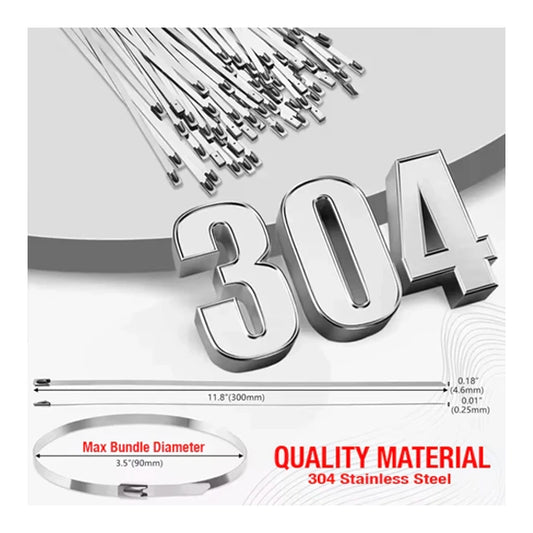
- Chemical and UV Protection: 304 Stainless steel remains immune to oil, gasoline, and solar radiation, ensuring the harness remains secure in outdoor or automotive environments.
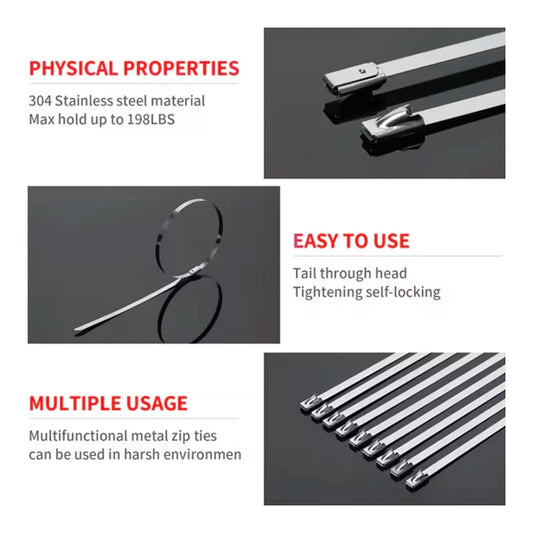
- Load Capacity: Each professional tie supports up to 200 lbs of tensile force, allowing for the consolidation of heavy cable bundles.
A Detailed 3-Step Guide to Wire Harness Management for Beginners
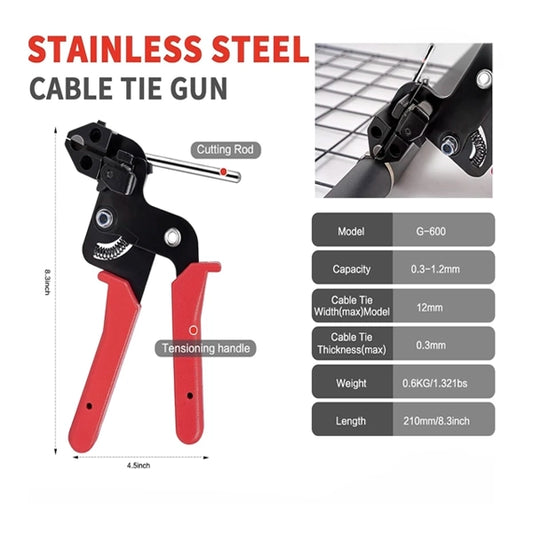
Mastering the use of a stainless steel zip tie gun involves understanding the relationship between tension and material flexibility. For beginners, the process may seem complex, but following a standardized technical routine ensures consistency across every connection. The Galixo tool kit is engineered to simplify this workflow by combining a high-leverage tensioning mechanism with a precision cutting blade, allowing users to transition from loose bundles to industrial-grade securements in seconds. This method eliminates the risk of hand fatigue and ensures that every tie is tightened to the exact specification required for safety.

Step 1: Prepare and Thread the Stainless Steel Tie
First, select a tie with the appropriate length and width for your application. Thread the end of the tie through the self-locking head and wrap it around the object. Pull it snug by hand to secure the initial position. It is essential to ensure the smooth side of the tie faces the wires to prevent any accidental abrasion during the tightening phase. Verify that the ball-lock mechanism is engaged before proceeding to the tool phase to prevent the tie from slipping back under initial pressure.
Step 2: Engage the Tool and Apply Tension
Insert the excess tail of the tie into the front of the tensioning tool. Squeeze the handle repeatedly to tighten. You can adjust the tension control knob to achieve the desired tightness, ensuring a secure hold without damaging the bundled items. For delicate electrical looms, a lower tension setting is advised to avoid crushing the wire insulation. For rigid structures like exhaust wraps or metal piping, a higher tension setting ensures the material does not shift during high-speed operation or thermal cycling.
Step 3: Automatically Cut for a Clean Finish
Once the pre-set tension is reached, the tool automatic cut-off mechanism will activate, cleanly severing the excess tie flush with the head. This leaves a smooth, professional finish with no dangerous sharp edges. This clean cut is vital in tight spaces where technicians must frequently reach in for maintenance, as it prevents lacerations often caused by ties cut with standard pliers. The flush finish also contributes to a streamlined aesthetic that mirrors factory-level quality in custom automotive or industrial builds.
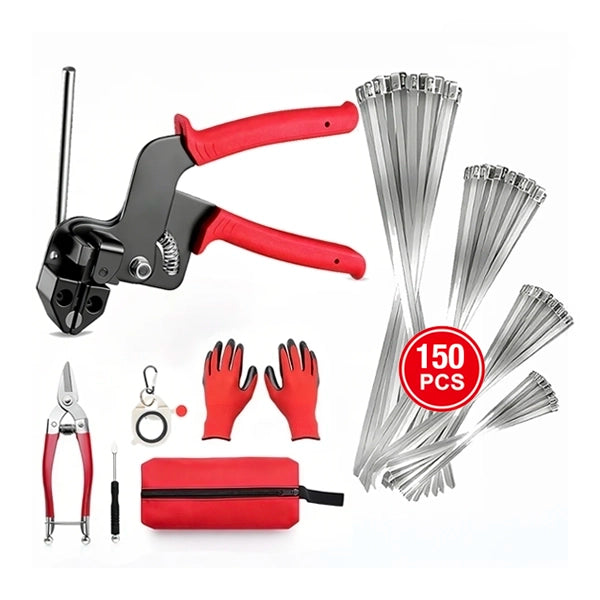
GALIXO Stainless Steel Zip Tie Tool Kit
This all-in-one kit features a professional-grade tensioning gun and 150 heavy-duty 304 stainless steel ties. Perfect for any task requiring a strong, durable, and clean fastening solution. Our team at Galixo store is ready to help you choose the right package for your needs.
Advanced Techniques: Professional Methods for Wire Harness Management
Professionals distinguish their work by applying specific technical principles to cable routing and fastening. Beyond simply tightening a tie, expert wire harness management involves calculating load distribution and environmental factors. For example, in high-vibration racing applications, technicians utilize a double-wrap technique where the tie circles the bundle twice before entering the locking head, effectively doubling the surface area and reducing the pressure on any single point of the wire insulation. This level of detail ensures that the harness remains intact during high-G maneuvers and intense thermal fluctuations.
Choosing Between 304 and 316 Stainless Steel
The 304 stainless steel ties included in the GALIXO kit offer excellent corrosion resistance for most applications, including general automotive and home construction. For marine environments or exposure to harsh chemicals, consider upgrading to 316 stainless steel for superior saltwater protection. The primary difference lies in the molybdenum content, which provides 316 steel with enhanced resistance to pitting in chloride-rich environments. For the majority of DIY users, the 304 grade provides the perfect balance of strength and affordability.
Automotive Applications: Securing Exhaust Wrap and Wiring Looms
In the garage, this tool is essential for securing exhaust heat wrap, which withstands extreme temperatures. It is also perfect for neatly bundling wiring looms in the engine bay, ensuring a secure and tidy setup. When securing exhaust wraps, it is recommended to space the ties every 4 to 6 inches to ensure uniform heat retention and prevent the wrap from unraveling due to wind turbulence. For electrical looms, always leave a small amount of slack between tie-down points to allow for the natural movement of the engine on its mounts.

| Technical Metric | Standard Plastic Tie | Galixo 304 Stainless | Performance Benefit |
|---|---|---|---|
| Tensile Strength | 50 lbs | 200 lbs | 4x more secure hold |
| Max Temp (Continuous) | 185 F | 1000 F | Fire and heat safety |
| UV Resistance | Degrades over time | Immune to UV | Outdoor longevity |
| Corrosion Resistance | Low (Chemical prone) | High (Acid/Oil proof) | Industrial reliability |
| Locking Mechanism | Plastic Ratchet | Steel Ball-Lock | Permanent securement |
| Material Elasticity | Stretches under load | Zero stretch | Consistent tension |
| Installation Method | Manual / Plastic gun | Galixo Tensioner | Effortless professional finish |
| Finish Quality | Sharp edges common | Flush, smooth cut | User safety |
Troubleshooting Common Issues with Wire Harness Management
Even with professional tools, certain challenges may arise during the installation of metal ties. Identifying these issues early is key to maintaining a high standard of work. Our team at Galixo.store has analyzed thousands of user reports to provide solutions for the most common technical hurdles. Most issues stem from improper tool calibration or material selection rather than mechanical failure. By understanding these failure points, you can ensure every tie remains secure for the entire lifespan of the project.
- Why is the tool not cutting the tie after tightening? Solution: You may not have reached the set tension level, or the tension knob is set too low. Try increasing the tension setting or squeezing the handle a few more times. Also, check the cutting blade for wear or debris. Ensure the tail of the tie is positioned centrally in the cutting slot.
- The zip tie keeps slipping from the tool gripper? Solution: Ensure you are inserting enough of the tie tail into the tool (at least 2 to 3 inches). The gripping mechanism needs sufficient material to hold onto during the tensioning process. Clean the gripper teeth with a small brush if any metal fragments have accumulated.
- The cut is not flush and leaves a sharp edge? Solution: This can indicate a worn-out cutting blade or an improper angle of engagement. While the GALIXO tool is built for thousands of cuts, ensure the tool is held perpendicular to the tie head during the final squeeze. If the blade becomes dull after extensive industrial use, contact our support for assistance.
- Ties are breaking during the tensioning phase? Solution: This usually occurs when the tension knob is set too high for the specific gauge of the tie being used. Lower the tension setting and apply steady, rhythmic squeezes rather than sudden jerks. Ensure the ties are genuine 304 steel as brittle counterfeits may snap under pressure.
Need Help Choosing the Right Fastening Solution? Galixo.store is Ready to Assist 24/7
In just 5 minutes, our expert team can provide a free consultation to find the perfect tool kit for your project.
Which GALIXO Stainless Zip Tie Tool Kit is Right for You? Expert Advice from Galixo.store
Selecting the correct package is vital for maximizing both your budget and your project efficiency. At Galixo.store, we offer tiered solutions designed for everyone from the weekend hobbyist to large-scale industrial contractors. Choosing the right kit ensures you have a sufficient supply of ties and multiple tools if you are working with a team. Every kit from Galixo.store includes our 90-Day Guarantee and Free Worldwide Shipping. Order today to elevate your work to a professional standard.
- For Hobbyists and Semi-Pros: The Pro Kit is our most popular entry point, featuring one high-performance gun and 150 ties. This is ideal for home automotive repairs, garden fencing, and general household organization.
- For Enthusiasts and Dual-Site Projects: The 2 Kits Pack provides two full sets, allowing you to keep one in the garage and one in a mobile tool chest. This package offers a significant discount for those who require redundancy in their tool kit.
- For Professional Teams and Workshops: The 3 Kits Pack is the most economical solution for businesses. It ensures that multiple technicians can work simultaneously on complex wire harness management tasks without sharing tools, increasing productivity by up to 40 percent.
Quick FAQs on Stainless Steel Cable Ties
To help you better understand the capabilities of our products, we have compiled the most frequent technical inquiries regarding metal fastening systems. These answers are based on laboratory testing and real-world feedback from our professional client base.
- What is the maximum temperature for stainless steel zip ties? Standard 304 stainless steel zip ties can withstand continuous operating temperatures up to 1000 degrees Fahrenheit and intermittent exposure as high as 1600 degrees Fahrenheit.
- How do you remove a stainless steel zip tie? They must be cut off using heavy-duty diagonal cutters, snips, or a cutting wheel because the ball-lock mechanism is permanent. Always wear safety glasses during removal.
- What does a 200 lbs tensile strength mean? It means the tie can withstand up to 200 pounds of pulling force before the material or the locking head fails, making it suitable for heavy bundles.
- Can this tool be used with plastic zip ties? No, the Galixo tool is specifically calibrated for the hardness of metal. Using it on plastic will result in inconsistent tension and may damage the cutting blade.
- Are 304 stainless steel ties magnetic? Grade 304 is generally non-magnetic but can acquire a slight magnetic charge after the cold-working process used to form the tie.
GALIXO Stainless Steel Zip Tie Tool Kit
This all-in-one kit features a professional-grade tensioning gun and 150 heavy-duty 304 stainless steel ties. Perfect for any task requiring a strong, durable, and clean fastening solution. Our team at Galixo.store is ready to help you choose the right package for your needs.
Complete Any Project with Confidence and Professionalism from Galixo.store
At Galixo.store, we deliver a high-quality stainless steel zip tie tool kit that saves you time and ensures professional results. We are committed to durable, easy-to-use products and excellent customer support. Upgrade your toolkit and tackle any job with confidence. Call our support hotline now at +1 813-408-1627 or order directly from our website to get your discount and free shipping!
Note: The guidance and prices in this article are for reference at the time of publishing and are subject to change. Please contact Galixo.store directly for the most current information. Disclaimer: The instructions in this article are based on practical experience with GALIXO STORE products. Always follow safety best practices when working with tools. Please contact contact@galixo.store for detailed support regarding your specific application.