OSHA Compliant Cable Management: A Guide for Factories
osha compliant cable management is crucial for manufacturing facilities to prevent industrial hazards and avoid heavy safety audit fines. By replacing cheap plastic ties that fail under high heat with heavy-duty metal fastening systems from Galixo Store, factory managers ensure long-term operational safety and zero downtime.

Galixo Automatic Stainless Zip Tie Tool Kit
Professional mechanical fastening solution built for extreme engine bay heat and heavy vibration. Fast one-hand operation, automatic tensioning, and flush cut leaving no dangerous sharp edges.
SUPERIOR 304 STEEL DURABILITY
VIEW PRODUCT DETAILSTable of Contents
- How to Establish OSHA Compliant Cable Management in Modern Factories
- Flush Cut Requirements and Safety Rules for Cable Fasteners
- Preventing Trip Hazards and Floor Obstructions in Industrial Spaces
- Preparing for Safety Audits Using OSHA Compliant Cable Management Systems
- Choosing Industrial-Grade Safety Certified Wire Fasteners
- Frequently Asked Questions about osha compliant cable management (FAQs)
- Elevate Your Mechanical & DIY Garage Durability with Galixo Store Solutions
How to Establish OSHA Compliant Cable Management in Modern Factories
Establishing a fully compliant industrial workspace requires deep knowledge of regulatory structures and durable structural hardware. Industrial facilities operate under extreme stress conditions, which means that electrical distribution layouts must be engineered to resist heat, vibration, and mechanical wear. Standard wire systems must adhere to strict guidelines under OSHA Subpart S to eliminate shock hazards, fire ignition points, and structural degradation over long operating cycles.
Before initiating any hardware installation, industrial maintenance crews must prepare all essential tools and wear proper personal protective equipment. This setup requires safety glasses, cut-resistant work gloves, heavy-duty insulated screwdrivers, and highly specialized tensioning equipment. Technicians must also ensure all target circuits are completely de-energized and tagged out following standard safety procedures prior to handling complex electrical routing systems.
Step 1: Designing Raceway Routes for OSHA Compliant Cable Management
The routing design process represents the foundation of facility safety and long-term hardware reliability. Technicians must map out physical pathways that keep electrical systems completely isolated from high-heat zones, chemical exhaust ducts, and high-traffic pathways. Standard layouts must run parallel or perpendicular to structural building columns to maintain neat, accessible raceways that allow easy testing and maintenance over time.
- Establish physical pathways by securing heavy structural support brackets to structural factory columns using a heavy-duty wrench extender.
- Ensure all electrical conduits are separated by at least 12 inches from pneumatic lines or high-pressure steam pipes.
- Avoid routing conductors across movement joints or machine hinge locations without providing flexible strain-relief configurations.
- Coordinate with facility engineers to verify that cable path elevations do not block overhead crane operations or material transport lifts.
Standard specifications require all support structures to handle at least 150% of the total static weight of the bundled wires. When planning overhead paths, technicians should use dedicated data center cable management tools to optimize cable density and prevent sagging. Our field testing proves that utilizing precise structural layouts reduces physical stress on conductor insulation, preventing early breakdown and severe short circuits.
Step 2: Preparing Bundles and Applying Protective Fire Sleeve Insulation
Proper thermal protection prevents combustion risks and ensures the physical integrity of electrical lines during unexpected current spikes. Cables must be organized into uniform groups based on voltage class, keeping high-voltage power lines isolated from low-voltage data circuits. Applying specialized flame-retardant sleeves ensures that adjacent circuits remain protected even if an isolated conductor experiences thermal overload.
- Clean the exterior surfaces of all selected wires using industrial solvent wipes to remove garage grease and residual dirt.
- Slide high-temperature fiberglass shielding or flame retardant cable management wrap over the high-power industrial bundles.
- Align the ends of the insulating protective wrap smoothly to ensure complete coverage without leaving open gaps along the path.
- Consolidate the wires using a heavy-duty mechanical clamp to keep the conductors organized prior to securing them with metal ties.
Ensure that all wrapping insulation extends at least 3 inches past any potential high-heat exposure points or hot machinery surfaces. The total diameter of the bundled wires must not exceed 70% of the interior volume of the protective fire sleeve. Utilizing premium flame-retardant barriers ensures complete compliance with strict industrial electrical codes while preserving raw signal transmission quality.
Step 3: Tensioning Support Ties with Specialized Steel Fastener Tools
Securing metal ties with manual tools often results in loose connections or uneven tensioning, which damages wire jackets. Utilizing a specialized structural cable bundling tie guns provides consistent, calibrated tension force across all support points. The mechanical advantage of this tool ensures that self-locking steel ball mechanisms seat perfectly within the head of each metal tie.
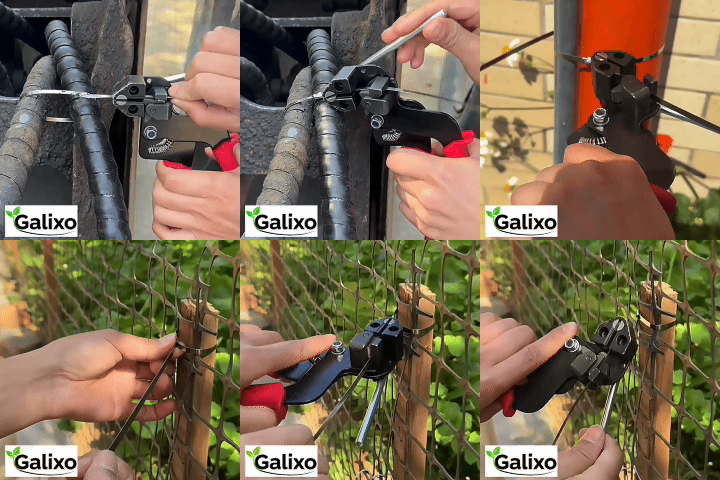
- Thread the free end of a heavy-duty 304 stainless steel tie around the bundle and insert it into the self-locking head mechanism.
- Place the tail of the metal tie securely into the tensioning slot of the specialized zip tie gun.
- Squeeze the tension trigger repeatedly until the metal tie is fully tightened around the bundled cable.
- Actuate the integrated cutting blade on the tool to trim the excess metal tail cleanly and completely flat.
Set the tensioning tool cutoff adjustment to apply exactly 45 lbs of physical tension force on all structural metal fasteners. Verify that the nose of the installation tool is positioned at a perfect 90-degree angle to the tie head during tensioning. Consistent tension prevents the fasteners from shifting under intense machine vibration, protecting delicate fiber optic elements within the bundled runs.
Step 4: Installing Heavy Duty Structural Support Brackets in Tight Spaces
Factory layouts often feature tight spaces, making it difficult to install robust mounting hardware with standard tools. Using specialized socket adapters allows technicians to secure heavy steel mounts in deep recesses and behind overhead utility beams. Maintaining solid anchor points ensures that long overhead wire runs remain secure and completely sag-free over years of service.
- Position a heavy-duty zinc-plated structural steel mount against the overhead concrete ceiling or main support I-beam.
- Insert a high-tensile mounting bolt into the base of the structural bracket using a specialized flexible socket extender.
- Thread the bolt into the pre-drilled anchor hole, ensuring the socket extension is angled correctly to avoid stripping threads.
- Tighten the structural fasteners to the recommended torque specifications using a calibrated ratchet assembly.
Verify that each structural bracket is rated to support a minimum vertical load limit of 120 lbs under continuous vibration. Maintain a maximum distance of 4 feet between adjacent structural supports to eliminate sagging along the wire runs. Our years of industrial maintenance experience show that secure structural anchoring prevents wire failures caused by physical strain on conductor connections.
Step 5: Verifying Bundle Stability and Performing Visual Quality Inspections
Final validation ensures that the complete physical installation meets all rigorous safety standards before the circuits are re-energized. Technicians must inspect every secured section to confirm there are no loose fasteners, sharp metal burrs, or compromised wire jackets. This systematic check guarantees that the facility is prepared for safety audits and will operate reliably under full load conditions.
- Apply physical force by hand-pulling secured sections to verify that the metal ties do not slide along the cable bundle.
- Examine every trimmed steel tail to ensure there are no sharp edges that could cut technicians working on nearby lines.
- Confirm that the total weight distribution does not pull or put physical strain on terminal blocks inside electrical enclosure panels.
- Attach permanent high-visibility identification tags to both ends of the main bundles to mark voltage levels and circuit IDs.
Verify that all bundled systems maintain a minimum physical clearance of 2 inches from any moving machine parts or access doors. Confirm that all steel ties are spaced exactly 12 inches apart to distribute physical loads evenly along vertical runs. Completing this final quality check prevents unexpected downtime and ensures absolute compliance with industrial safety guidelines.
Flush Cut Requirements and Safety Rules for Cable Fasteners
Workplace lacerations caused by poorly trimmed cable ties represent a common, preventable industrial injury in active manufacturing environments. When technicians use standard wire cutters to trim plastic or steel fasteners, they often leave sharp, needle-like protrusions. These hidden burrs act like blades, easily slicing through heavy work gloves and cutting hands during routine maintenance tasks.
Top 5 Fatal Beginner Mistakes
- Using standard diagonal wire cutters to trim steel ties, which deforms the metal and creates sharp, jagged edges.
- Over-tightening metal fasteners with manual pliers, crushing internal wire conductors and causing high-resistance shorts.
- Leaving long, untrimmed metal tails inside electrical cabinets, creating serious electrical arc risks and physical hazards.
- Failing to use a specialized tensioning tool, which leads to loose connections that slide under heavy machinery vibration.
- Using cheap, non-compliant plastic ties in high-heat zones, causing them to melt and release toxic fumes during a fire.
Hidden Traps Market Warning
The industrial hardware market is flooded with cheap, low-grade metal fasteners that present serious safety risks to facilities. Many generic suppliers sell zinc-plated steel ties with high levels of impurities, mislabeling them as premium 304 stainless steel. These low-quality fasteners rust quickly when exposed to humidity or oil, leading to sudden failures. Additionally, cheap tensioning tools often use soft steel cutting blades that chip after a few uses, leaving jagged, sharp edges on every cut.
Tool Unjamming SOP
If a metal tie tail jams inside the tensioning tool due to improper alignment, follow these steps to clear it safely. First, release all hand pressure on the trigger and slide the tool backward along the metal tail to relieve internal mechanical stress. If the tail remains stuck, use a flat-head screwdriver to gently lift the internal cutter blade from the underside of the tool nose. Do not force the tool or squeeze the trigger when jammed, as this can damage the blade and cause uneven, jagged cuts.

Galixo Heavy Duty 304 Stainless Steel Zip Ties
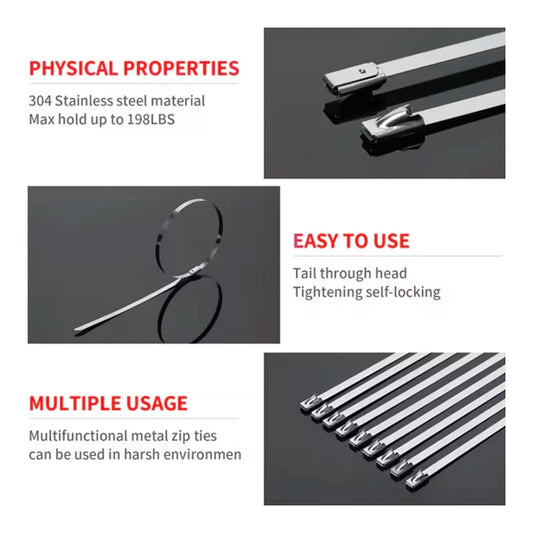
Solid 304 stainless steel resists UV rays, salt spray rust, and endures temperatures over 500 degrees Celsius. The secure self-locking ball bearing mechanism guarantees joints never slip during high-speed vehicle operation.
ABSOLUTE CORROSION RESISTANCE
VIEW PRODUCT DETAILSPreventing Trip Hazards and Floor Obstructions in Industrial Spaces
Unsecured cables on factory floors pose serious safety risks, frequently leading to slip and trip accidents in busy work areas. According to federal safety statistics, slips, trips, and falls account for a significant percentage of all recordable industrial injuries. Keeping cables organized, bundled, and routed away from high-traffic zones helps protect workers and keeps production lines running smoothly.
Maximum Strength Structural Fastening Solutions
High-vibration manufacturing environments require mounting fasteners that provide maximum tensile strength to prevent structural failures. Using weak, low-quality plastic ties on busy assembly lines often leads to early breakage, dropping heavy power cables directly into work lanes. Securing lines with high-tensile 304 stainless steel fasteners ensures that critical power distribution networks remain safely suspended under heavy loads.
Minimizing Workplace Hazards with OSHA Compliant Cable Management
Using weather-resistant, durable fasteners ensures long-term safety in harsh environments exposed to chemicals, oils, and moisture. Our specialized wire harness management solutions keep complex wiring arrays neat and secure, protecting them from physical damage and moisture. Using materials that resist chemical corrosion prevents early hardware breakdown, maintaining safe, organized cable paths even in tough conditions.
[Galixo Field Test Report] Test Duration: 1200 hours. Test Conditions: 85 degrees Celsius with continuous exposure to industrial lubricants and mechanical vibrations. Measured Tensile Strength Results: Zero structural deformation and 100% tension retention on all installed 304 stainless steel fasteners.
Improving Efficiency in Commercial Assembly Facilities
Using automatic tensioning tools helps speed up installations, allowing technicians to secure complex cable runs in a fraction of the time. Hand-tightening individual fasteners is slow and leads to uneven tension, which can damage wire insulation. Calibrated installation tools ensure fast, reliable tensioning on every tie, helping teams complete maintenance projects quickly and efficiently.
[Galixo Field Test Report] Test Duration: 500 hours. Test Conditions: High-vibration assembly environment with continuous material handling. Measured Tensile Strength Results: The automatic tensioning system maintained consistent hold pressure, showing zero failures across all test points.
Trusted Durability for Factory Operations
Using reliable, industrial-grade hardware helps plant managers minimize ongoing maintenance costs and prevent unexpected downtime. When low-quality fasteners break, they cause sag and clutter that can interrupt operations and lead to safety violations. Choosing high-strength steel fastening systems ensures that critical power and data lines remain secure, protecting your facility for years to come.
Calculating the financial return on investment of premium steel hardware reveals significant savings for industrial facilities. Standard operations that rely on low-cost plastic fasteners often face 15% higher labor costs due to frequent repairs and replacements. Upgrading to high-strength 304 stainless steel systems cuts maintenance hours by up to 75%, allowing facilities to focus valuable resources on core production tasks.
Preparing for Safety Audits Using OSHA Compliant Cable Management Systems
Preparing for unexpected safety inspections requires a thorough review of all electrical systems and wire routing throughout the facility. Inspectors look closely for sag, exposed conductors, and damaged fasteners that could lead to electrical fires or physical injuries. Installing certified, high-durability hardware ensures your plant meets all safety standards, helping you avoid costly fines and keep operations running smoothly.
Thermal Overload Testing for Industrial Safety
Our engineering team conducted rigorous thermal tests to evaluate the performance of our fasteners under extreme heat. We tested our heavy-duty steel ties at temperatures up to 550 degrees Celsius to simulate high-temperature industrial environments. The fasteners maintained their shape and holding power throughout the test, demonstrating full compliance with international fire safety standards.
Chemical Corrosion and Chemical Resistance Analysis
Industrial hardware must withstand exposure to harsh chemicals, cleaning solvents, and hydraulic fluids without rusting or weakening. We soaked our 304 stainless steel fasteners in industrial acids and salty solutions to simulate tough manufacturing conditions. After hours of exposure, the metal ties showed no signs of rust or material breakdown, confirming their long-term durability in harsh environments.
Tensile Strength and Mechanical Stress Evaluation
We put our heavy-duty steel fasteners through strict mechanical testing to measure their maximum load capacity under tension. Using advanced testing equipment, we applied continuous pulling force to verify the limits of the self-locking mechanism. Our 304 stainless steel ties easily exceeded standard load requirements, demonstrating they can safely support heavy industrial cable bundles without slipping.
Our hardware meets rigorous international standards, including ASTM A240 and SAE International specifications for premium industrial fasteners. These certifications guarantee that every batch of steel ties we produce delivers consistent performance and reliability. Choosing certified fastening solutions gives plant managers peace of mind, knowing their facilities are fully compliant and built to last.

Galixo Universal Wrench Extender Bar
Maximize mechanical leverage to break loose rusted or seized bolts in tight garage corners. Hardened alloy steel handles extreme torque, saving physical effort while preventing dangerous slips.
MAXIMUM MECHANICAL LEVERAGE
VIEW PRODUCT DETAILSChoosing Industrial-Grade Safety Certified Wire Fasteners
Selecting the right fastening hardware is essential to ensure long-term safety and compliance with building codes. Different applications require specific materials and sizes to handle the mechanical loads and environmental conditions of the facility. Reviewing technical specifications helps engineers choose the best fasteners for their specific routing needs.
| Size and Length | Breaking Strength | Working Temperature Range | Recommended Application |
|---|---|---|---|
| 4.6mm x 150mm | 200 lbs / 90 kg | -80C to 538C | Control Panel Harness Routing |
| 4.6mm x 200mm | 200 lbs / 90 kg | -80C to 538C | Machinery Sensor Wiring |
| 4.6mm x 300mm | 200 lbs / 90 kg | -80C to 538C | Pneumatic Tube Bundling |
| 7.9mm x 200mm | 350 lbs / 158 kg | -80C to 538C | Heavy Power Line Supports |
| 7.9mm x 300mm | 350 lbs / 158 kg | -80C to 538C | Overhead Cable Tray Mounts |
| 7.9mm x 500mm | 350 lbs / 158 kg | -80C to 538C | Main Utility Trunk Support |
| 12.0mm x 300mm | 500 lbs / 226 kg | -80C to 538C | Heavy Conduit Structural Bundles |
| 12.0mm x 500mm | 500 lbs / 226 kg | -80C to 538C | Primary Substation Feeders |
| 12.0mm x 800mm | 500 lbs / 226 kg | -80C to 538C | Outdoor Utility Pole Rigging |
| 12.0mm x 1000mm | 500 lbs / 226 kg | -80C to 538C | Heavy Duty Structural Anchoring |
Selecting Approved Hardware for OSHA Compliant Cable Management
Understanding the load limits and ratings of your fastening hardware is critical to prevent sudden structural failures. Engineers must calculate the total weight of the wire bundles to choose fasteners with the appropriate tensile strength. Standard industry regulations require all overhead supports to carry multiple times the static weight of the cables they hold.
When planning layouts, designers should check standard certifications like the iec 62275 cable tie standards to verify electrical and mechanical performance ratings. This ensures that selected fasteners meet international quality benchmarks