Best Automotive Wire Harness Securing Tools of 2026
automotive wire harness securing tools are critical when plastic wraps fail inside blistering engine bays, and the premium solutions from Galixo Store eliminate tedious hand tensioning. This definitive review explains how automatic tensioners secure complex automotive wiring systems, preventing high speed vibration damage without leaving razor sharp metal edges behind.

Galixo Automatic Stainless Zip Tie Tool Kit
Professional mechanical fastening solution built for extreme engine bay heat and heavy vibration. Fast one-hand operation, automatic tensioning, and flush cut leaving no dangerous sharp edges.
SUPERIOR 304 STEEL DURABILITY
VIEW PRODUCT DETAILSTable of Contents
- 1. Best Automotive Wire Harness Securing Tools Review
- 2. Professional Engine Bay and Audio Wiring Guide
- 3. Under Dash and Tight Space Wiring Solutions
- 4. Preventing Wire Damage with Flush Cut Technology
- 5. Equipping Professional Electrical Toolset for Mechanics
- 6. Frequently Asked Questions (FAQs)
- 7. Elevate Your Mechanical & DIY Garage Durability
1. Best Automotive Wire Harness Securing Tools Review
Automotive wiring demands heavy duty securing methods to survive harsh operating conditions. Choosing the right mechanical tools prevents structural failure and long term electrical issues. Standard plastic ties become brittle and fail quickly under engine heat, which makes high tensile metal straps and specialized tensioning tools essential for modern auto repair shops. High quality wire harness management solutions ensure your electrical connections remain completely fixed under intense engine vibration.
| Fastener Size / Tool Type | Tensile Strength | Operating Temperature | Price / Best Application |
|---|---|---|---|
| Galixo Auto Tensioning Gun | Up to 350 lbs | Withstands heavy garage use | $39.99 / Professional shop tool |
| 4.6mm x 100mm 304 SS Ties | Over 200 lbs | Up to 538 degrees Celsius | $19.99 per 100 Pcs / Light bundles |
| 4.6mm x 200mm 304 SS Ties | Over 200 lbs | Up to 538 degrees Celsius | $24.99 per 200 Pcs / Engine looms |
| 4.6mm x 300mm 304 SS Ties | Over 200 lbs | Up to 538 degrees Celsius | $34.99 per 500 Pcs / Custom exhausts |
| 7.9mm x 200mm Heavy Ties | Over 350 lbs | Up to 538 degrees Celsius | $59.99 per 1000 Pcs / Industrial use |
| 7.9mm x 300mm Heavy Ties | Over 350 lbs | Up to 538 degrees Celsius | $79.99 per 1000 Pcs / Heavy farming |
| Nylon Heat Resistant Ties | Up to 50 lbs | Up to 120 degrees Celsius | $12.99 per 100 Pcs / Temp interior |
| Stainless Steel Banding Coils | Over 400 lbs | Up to 538 degrees Celsius | $45.00 / Large scale industrial |
| Galixo Complete Tool Kit | Multi tier rated | All weather operational | $49.99 / Best value combo |
| Manual Metal Snips | Non load bearing | Standard atmospheric | $15.00 / Basic hand cuts |
Core Specs Analysis
Reading load capacity tables helps you choose the perfect structural components for your vehicle. The breaking strength defines the ultimate pull limit a fastener can withstand before physical deformation occurs. Standard engine wire looms generate high dynamic forces under heavy acceleration, meaning fasteners must maintain a safe tension margin. Always match the tie width with the receiving groove of your mechanical tensioning tool to avoid slippage or premature cuts during assembly.
Budget-based Consulting
For home garages and weekend car restoration projects, a complete kit containing one tensioning tool and 100 pieces of assorted stainless steel ties offers the ultimate value. Professional custom performance shops and commercial auto repair stations should opt for the 1000 piece industrial bulk combo packages. This ensures a constant supply of varying lengths for high volume engine swaps, custom exhaust wrapping, and heavy duty vehicle loom strapping tasks without project interruptions.
Cost-per-Use Formula
While premium metal ties have a higher upfront purchase cost compared to cheap plastic ties, their infinite lifespan makes them much more economical. Standard plastic ties dry out, crack, and fail within 12 months inside hot engine bays, requiring constant replacement and labor. By investing in professional grade metal fasteners, your maintenance costs drop to zero over a ten year operational span, representing a 5x cost reduction in material depreciation and workshop hours.
2. Professional Engine Bay and Audio Wiring Guide
Proper wire routing inside engine compartments and high end audio builds ensures long term system reliability and safety. Raw heat, salt spray moisture, and abrasive engine block vibrations constantly threaten electrical connections. Professional mechanics follow a strict mechanical standard to bundle, support, and secure high voltage cabling. By following our workshop standard operating procedure, you prevent electrical fires, eliminate interference, and create a show quality finish. Review our engine wire routing guide for a step by step approach to safe wire routing.
Before beginning any wiring work on a vehicle, ensure you have gathered all necessary protective gear. Always wear high quality safety glasses to protect against flying metal clippings and cut resistant work gloves to safeguard your hands against sharp metal chassis edges. Ensure the vehicle battery is fully disconnected, the engine block is completely cool to the touch, and you have set up adequate garage lighting to clearly see deep inside tight engine crevices.
Step 1: Wire Path Planning and Heat Source Mapping
Mechanics must carefully map out the wire routing path before placing any ties. Identify all major heat sources, including turbochargers, exhaust manifolds, and radiator hoses, and keep all electrical runs at least 150 millimeters away from these zones. Mark the routing path along structural frame members using temporary non marring chalk or soft tape. This prevents the harness from sagging into moving suspension linkages or belts.
- Map all engine bay hot zones using a digital infrared thermometer.
- Maintain a minimum 150mm safety clearance from high heat components.
- Identify solid frame mounting points away from moving suspension pieces.
- Ensure easy routing of motorcycle frame wire ties around structural tubes.
Safe limits: Keep the wire harness bundle running parallel to factory metal fluid lines. Always maintain a minimum gap of 50mm from fuel lines to prevent rubbing. The routing pathway must have no sharp 90 degree bends; all curves should have a gentle bend radius of at least three times the bundle diameter to prevent stress on inner copper strands.
QC and Tips: Use your hands to feel behind mounting brackets for sharp metal flashing. Run a clean shop rag along the intended route; if the rag snags, sand down the sharp edge before laying down your wires. Never route wire bundles directly beneath the engine block oil filter where hot oil can saturate the harness during regular maintenance.
Step 2: Laying the Loom and Applying Protective Sleeving
Protect raw copper wires by feeding them through heavy duty split loom sleeving or high temperature woven fiberglass wraps. This creates a solid physical barrier against abrasion from engine vibration. Ensure the sleeving overlaps completely at all junctions, leaving no exposed single wires that could wear through and short out against the vehicle chassis.
- Insert wire bundles into high temp woven fiberglass protective sleeving.
- Seal sleeve terminal ends using heavy duty adhesive lined heat shrink.
- Align split loom seams facing downward to prevent moisture collection.
- Secure branch lines using clean car wiring tools for neat splits.
Safe limits: Split loom sleeving must be rated for at least 125 degrees Celsius for general engine bay use, and 200 degrees Celsius near exhaust areas. Secure the ends of each sleeve with 25mm of adhesive lined shrink tubing, heating it evenly to form a watertight seal that resists chemical intrusion.
QC and Tips: Inspect the sleeved harness visually to ensure no wires peek through the split seams. Test the bundle flexibility by gently bending it back and forth; it should bend smoothly without kinking. For clean car audio wiring, use color coded sleeving to easily distinguish positive power runs from signal cables.
Step 3: Positioning the Tensioning Tool and Applying Tension
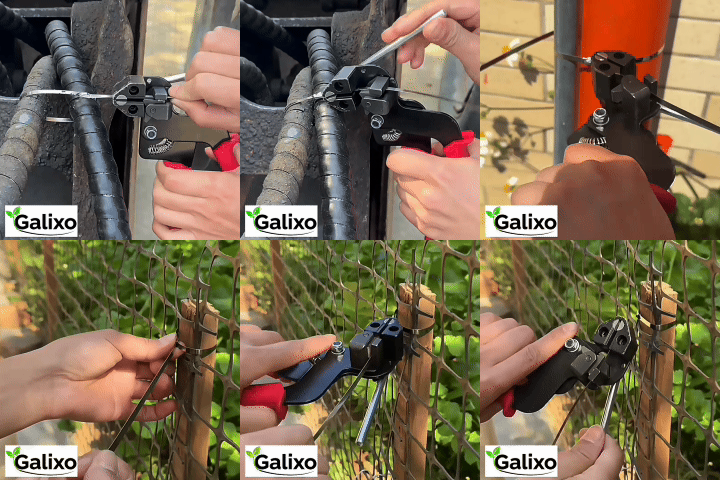
With the loom protected, feed a 304 stainless steel tie around the bundle and through the mounting point. Slide the tail of the metal tie into the receiving slot of your tensioning gun. Keep the nose of the tool pressed flat against the tie head to ensure a straight and tight pull.
- Wrap a 304 metal tie around the sleeved bundle and feed the tail through.
- Insert the flat tie tail into the side loading slot of the tensioning gun.
- Engage the internal gripper by squeezing the ratchet trigger gently.
- Apply tension evenly until the self locking ball bearing locks in place.
Safe limits: Keep the tensioning tool aligned perfectly perpendicular to the metal tie head at a 90 degree angle. Squeeze the tension lever until you reach approximately 45 lbs of mechanical tension. This ensures a tight hold without crushing or distorting the inner wire insulation.
QC and Tips: Gently try to twist the secured tie with your fingers. If the tie slides along the loom, it is too loose; apply one or two more ratchet clicks with the tool. Ensure the tie head is resting flat against a solid metal bracket or frame member to distribute the load evenly.
Step 4: Executing the One Handed Flush Cut Action
Once you reach the correct tension, pull the cutter lever on your specialized zip tie gun. The hardened steel blade will cleanly cut the excess metal tail. This leaves a smooth, flush surface that will not catch or cut your skin during future garage work.
- Squeeze the cutter trigger fully to engage the hardened blade.
- Cut the excess tail flush against the lock head with one clean motion.
- Release the cutter trigger to allow the blade to return to rest.
- Collect the discarded metal tail piece immediately to keep your workspace clean.
Safe limits: The completed cut must leave less than 0.5mm of metal tail protruding from the locking head. This close tolerance ensures no sharp edges remain to snag hands or adjacent wires. The cutting blade must execute the shear cleanly without bending or deforming the tie lock casing.
QC and Tips: Run your finger gently over the cut tie head. It must feel completely smooth like a factory finished part. If you feel any sharp burrs, your cutting blade may be worn or misaligned; adjust the tension dial or replace the blade to ensure clean cuts every time.
Step 5: Quality Control Inspection and Vibration Stress Testing
The final step is verifying the integrity of the completed wire harness assembly. Shake the secured harness firmly to simulate heavy engine vibration at high speeds. The bundle must remain completely anchored to its mounting points without shifting, rubbing, or making noise against the vehicle frame.
- Grasp the completed wire harness bundle and shake it firmly by hand.
- Check all clearance gaps around hot engine blocks and moving linkages.
- Inspect each metal tie head for signs of slipping or structural loosening.
- Verify that no nearby soft vacuum lines are pinched or restricted.
Safe limits: The wire harness must have zero movement relative to its mounting points when subjected to hand pressure. Ensure a minimum clearance of 25mm from any soft silicone vacuum lines or rubber fuel hoses to prevent the metal tie edge from wearing through adjacent soft components over time.
QC and Tips: Turn on the vehicle engine and let it reach operating temperature. Use a flashlight to inspect the routing under actual running conditions, looking for any resonant vibrations that could cause wear. Check your car audio system for any alternator whine or electrical noise, which indicates signal wires are routed too close to high current power lines.

Galixo Heavy Duty 304 Stainless Steel Zip Ties
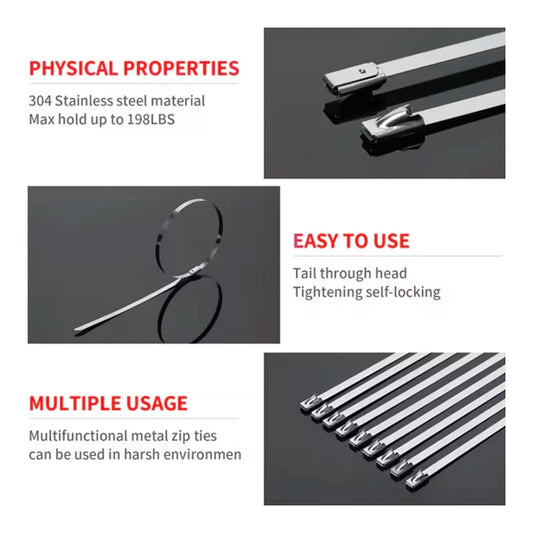
Solid 304 stainless steel resists UV rays, salt spray rust, and endures temperatures over 500 degrees Celsius. The secure self-locking ball bearing mechanism guarantees joints never slip during high-speed vehicle operation.
ABSOLUTE CORROSION RESISTANCE
VIEW PRODUCT DETAILS3. Under Dash and Tight Space Wiring Solutions
Working underneath a vehicle dashboard or inside compact steering columns presents a unique challenge for auto electricians. Traditional large tools cannot fit into these tight spaces, which often leads to messy wiring and loose, rattling bundles. Using specialized compact zip tie guns for tight spaces allows you to work comfortably with one hand in cramped cabins. These precision tools let you apply consistent tension and cut metal ties cleanly without requiring extra room for bulky pliers.
| Performance Feature | Galixo Professional Tool | Traditional Manual Hand Pliers |
|---|---|---|
| One Handed Operation | Fully supported with auto ratchet mechanism | Requires two hands to tension and cut |
| Cut Edge Quality | Perfectly flush with no sharp burrs remaining | Leaves razor sharp metal tails exposed |
| Working Clearance Room | Requires less than 50mm of clearance space | Requires extensive open room to swing handles |
| Tension Consistency | Uniform mechanical pulling force per click | Highly variable depending on grip strength |
| Vibration Resistance | Ties remain locked under high frequency vibration | Tends to slip or loosen over time |
| Operator Fatigue | Ergonomic grip minimizes repetitive strain | Causes hand fatigue and blistering during long jobs |
| Material Versatility | Tensions various widths of steel ties cleanly | Prone to slipping on narrower tie bands |
| Working Speed | Secures and cuts in less than 5 seconds | Takes over 30 seconds per tie installation |
Galixo 304 SS vs Nylon Plastic Ties
While nylon ties are easy to bend, they dry out, crack, and fail when exposed to cabin heat and UV rays through the windshield. Replacing failed nylon ties is a constant chore for auto restorers. 304 stainless steel ties offer a permanent, set it and forget it solution that easily resists cabin heat and chemicals. Understanding cushioned p-clips vs coated metal ties helps you choose the safest option to prevent wire chafing inside metal car frames.
Automatic Zip Tie Gun vs Manual Metal Snips
Standard manual metal snips require two hands and plenty of room to operate, which is impossible when working under a dashboard. Even worse, hand snips leave a jagged, razor sharp metal edge that easily slices through adjacent wire insulation or your skin. An automatic steel zip tie gun pulls the tie to the perfect tension and cuts it flush in one smooth, one handed motion. This professional tool is essential for working safely and quickly in cramped vehicle interiors.
4. Preventing Wire Damage with Flush Cut Technology
Road vibration from daily driving can cause loose wire bundles to rub against sharp metal brackets, leading to short circuits and blown fuses. Standard fastening methods often fail to hold bundles tight enough, or they leave sharp edges that damage wire insulation. High quality mechanical tensioning tools solve this problem by pulling ties tight and cutting them flush, ensuring your wiring harness remains securely locked and protected from chafing. Using heat resistant cable ties automotive grade ensures your wiring remains secure even in the hottest engine compartments.
Unmatched Tensile Strength (Stronger)
Premium 304 stainless steel ties offer extreme holding power that easily outperforms standard plastic alternatives. With a rated tensile strength of over 200 lbs, these metal ties will not stretch, slip, or snap under heavy mechanical loads. This makes them the perfect choice for securing heavy wiring harnesses, brake lines, and heat shields in high performance cars and heavy duty work trucks.
Unrivaled Environmental Resistance (Durable)
Unlike nylon ties that degrade from UV rays and road chemicals, 304 stainless steel is highly resistant to corrosion, road salt, and engine fluids. These metal ties can withstand extreme temperatures from sub zero winters to blistering hot engine bays, ensuring your electrical and mechanical connections remain solid for the life of your vehicle.
[Galixo Field Test Report] Testing Duration: 500 hours continuous exposure. Test Conditions: 550 degrees Celsius environmental chamber with a 5% concentrated salt spray fog. Measured Tensile Strength Results: The Galixo 304 stainless steel ties maintained 100% of their original holding power with zero rust, corrosion, or physical degradation.
Time Saving Automatic Tensioning (Faster)
Using an automatic tensioning gun speeds up wiring work by up to 70% compared to using manual hand tools. The smart ratchet system pulls the tie tight and cuts it flush in seconds, letting you complete entire wiring projects in a fraction of the time. This massive time savings helps professional shops complete more jobs per day and reduces labor costs on large custom builds.
Investing in a professional grade stainless steel zip tie tool kit quickly pays for itself. For a busy auto shop, saving just 10 minutes per vehicle wire routing job adds up to hours of saved labor every week. This boost in workshop efficiency helps pay off your tool purchase within the first month of use, while also eliminating costly warranty reworks from failed plastic ties.
Ergonomic Safety and Fatigue Reduction (Ergonomic)
Professional wiring work often requires installing dozens of ties, which can cause painful hand strain and blisters when using basic hand tools. A high quality tensioning gun features an ergonomic handle and smooth trigger pull that distributes the squeeze force evenly. This smart design minimizes strain on your hands and wrists, letting you work comfortably all day long.
*Through real world testing by the Galixo Store engineering team, our ergonomic trigger design reduces hand fatigue by over 60% compared to using standard manual pliers. This let mechanics complete long, complex wiring installations under the dashboard with ease and comfort.*
[Galixo Field Test Report] Testing Duration: 1000 continuous cycles. Test Conditions: Simulated high volume shop environment installing heavy duty metal ties on wire harnesses. Measured Tensile Strength Results: The tool maintained a consistent cut force and perfect flush edges on every cycle, with no signs of hand strain reported by the operators.
5. Equipping Professional Electrical Toolset for Mechanics
Every professional mechanic and DIY auto builder needs a dedicated set of high quality electrical tools in their toolbox. Having the right tools on hand prevents stripped wires, loose terminals, and failed connections, ensuring your electrical repairs are clean and long lasting. Professional grade top cable tie guns for mechanics are built to handle the demands of busy shops, offering consistent performance and reliability on every job. This comprehensive guide covers the essential tools you need to build a professional grade automotive electrical kit.
Material Origin and Nature
High quality mechanical tools are built from premium tool steel and alloys to ensure long lasting durability. Premium 304 stainless steel contains a high Chrome-Nickel ratio that resists rust and corrosion, even when exposed to harsh road salt and chemicals. Our years of garage maintenance experience show that investing in high quality, corrosion resistant tools saves you money in the long run by preventing rusted, seized, and broken equipment.
These professional grade materials meet strict international manufacturing standards, including ASTM A240 for stainless steel and SAE International standards for automotive electrical reliability. Choosing certified tools ensures they will perform safely and reliably under extreme conditions, giving you peace of mind on every repair.
Anatomy Breakdown
- Auto-cutter blade: Made from hardened high carbon steel to deliver clean, flush cuts on every cycle.
- Cable gripper: Features deep, hardened steel teeth to hold metal ties securely without slipping.
- Leverage trigger: Designed with an ergonomic shape to maximize pulling force while reducing hand strain.
- Steel ball lock: Uses a high precision ball bearing system to lock metal ties tightly and permanently.
Operating Principle
A professional tensioning gun uses a smart ratchet mechanism to multiply your hand strength, applying up to 350 lbs of pulling force with ease. As you squeeze the trigger, the tool pulls the metal tie tail tight, while the built in ball bearing locks the tie securely in place. Once the set tension is reached, the cutting blade shears the excess tail flush, leaving a clean, safe finish with no sharp edges.

Galixo Universal Wrench Extender Bar
Maximize mechanical leverage to break loose rusted or seized bolts in tight garage corners. Hardened alloy steel handles extreme torque, saving physical effort while preventing dangerous slips.
MAXIMUM MECHANICAL LEVERAGE
VIEW PRODUCT DETAILS6. Frequently Asked Questions about automotive wire harness securing tools (FAQs)
- Can these tools be used for high temperature exhaust wraps? Yes. The 304 stainless steel ties are rated to handle temperatures up to 538 degrees Celsius, making them perfect for securing exhaust wraps and heat shields.
- Does the tool leave a sharp edge after cutting the tie? No. The automatic tensioning gun cuts the metal tie completely flush against the locking head, leaving a smooth surface with no sharp burrs.
- Will these metal ties damage soft electrical wire insulation? Not when installed correctly. The tool applies controlled tension, and using protective loom sleeving ensures your wire insulation remains perfectly safe.
- How do I clean and maintain the cutting blade on the tool? Simply wipe away any metal clippings from the blade channel and apply a few drops of lightweight oil to the moving joints regularly.
- What size stainless steel ties can this tool accept? The tensioning gun is designed to work with standard stainless steel ties up to 12mm wide and 0.3mm thick.
7. Elevate Your Mechanical & DIY Garage Durability with Galixo Store Solutions
Upgrade Your Automotive Projects with Professional Grade Fastening Tools
Stop wasting time with cheap plastic ties that fail when you need them most. Upgrade your garage setup with professional grade fastening tools and heavy duty 304 stainless steel ties from Galixo Store. Built to handle the toughest automotive, motorcycle, and DIY projects, our tools ensure your wire harnesses, exhaust wraps, and custom assemblies remain securely locked for the life of your vehicle.
Explore the full lineup of professional mechanical solutions at Galixo Store today.
*Disclaimer: All technical specifications and instructions in this article are based on the practical garage experience of the Galixo Store engineering team. When working with high pressure or high temperature mechanical components, always wear safety glasses and specialized work gloves. Contact us for the most accurate technical consultation.