Velcro Heavy Duty Straps vs Stainless Steel Zip Ties: Reusability vs Strength
heavy duty velcro vs stainless zip ties solve the classic mechanic dilemma of choosing between reusability and maximum strength. While melting plastic straps or sharp manual metal ties cause endless frustration in hot engine bays, finding the right fastening equipment from Galixo Store ensures a professional, secure garage repair that lasts for decades without degradation.

Galixo Automatic Stainless Zip Tie Tool Kit
Professional mechanical fastening solution built for extreme engine bay heat and heavy vibration. Fast one-hand operation, automatic tensioning, and flush cut leaving no dangerous sharp edges.
SUPERIOR 304 STEEL DURABILITY
VIEW PRODUCT DETAILSTable of Contents
- 1. Comparing Heavy Duty Velcro vs Stainless Zip Ties for Extreme Garage Environments
- 2. Environmental Degradation: Why Weather and Dirt Kill Hook and Loop Longevity
- 3. Reusability vs Strength: When to Prioritize Flexible Temporary vs Permanent Wire Ties
- 4. Load-Bearing Limits and Rodent Resistance: Industrial Velcro vs Stainless Steel
- 5. Comprehensive SOP: Installing Heavy-Duty Fasteners with Optimal Fire Safety and Flame Resistance
- 6. Frequently Asked Questions about heavy duty velcro vs stainless zip ties (FAQs)
- 7. Elevate Your Mechanical & DIY Garage Durability with Galixo Store Solutions
Comparing Heavy Duty Velcro vs Stainless Zip Ties for Extreme Garage Environments
Choosing the correct fastening hardware dictates the lifespan and safety of mechanical work. Professional shops must balance the necessity of routine maintenance access against the demand for absolute joint security under heavy stress. We must analyze how heavy duty tape vs stainless zip ties compare to hook and loop structures, highlighting why synthetic materials fail where high-grade metallurgy thrives. While heavy-duty hook and loop straps offer exceptional flexibility for managing low-stress components, they cannot compete with the sheer tensile strength and chemical immunity of 304 stainless steel in challenging situations.
| Performance Criterion | Heavy Duty Velcro Solution | Galixo 304 Stainless Steel Solution |
|---|---|---|
| Tensile Strength Capacity | Limited up to 50 lbs shear force | Exceeds 200 lbs to 350 lbs reliably |
| Operating Temperature Limit | Melts or degrades above 220 degrees Fahrenheit | Withstands heat up to 1000 degrees Fahrenheit |
| Vibration Resistance | High dampening but susceptible to shifting | Absolute locking via self-locking ball bearing |
| Reusability Factor | Highly reusable up to 10000 cycles | Permanent single-use unless manually released |
| Chemical and Solvent Immunity | Absorbs oils, fuels, and acids, weakening bond | 100% impervious to automotive chemicals |
| Installation Speed in Tight Spaces | Moderate requiring dual-hand peeling access | Fast one-hand operation via specialized tension gun |
| Rodent and Pest Defense | Vulnerable to chewing and nesting damage | Impervious to animal chewing and attacks |
| Flame Spread Safety | Highly flammable, melts, contributes to smoke | Non-combustible, zero flame spread rating |
Galixo 304 SS vs Nylon Plastic Ties
Standard nylon cable ties suffer rapid deterioration when exposed to engine bay temperatures, agricultural fertilizers, or intense ultraviolet radiation. The molecular structure of nylon polymer breaks down, causing the material to become brittle, lose flexibility, and snap under minimal vibration stress. Galixo 304 stainless steel ties offer a permanent upgrade by utilizing a heavy-duty alloy containing chromium and nickel, ensuring the fastener remains intact under extreme environmental conditions. Mechanics looking for alternatives to nylon cable ties find that stainless steel provides the ultimate long-term reliability for heavy-duty applications.
Automatic Zip Tie Gun vs Manual Metal Snips
Using manual pliers to tension stainless steel ties often yields inconsistent tension and leaves sharp, dangerous metal tails exposed in tight engine compartments. An automatic zip tie gun solves this hazard by applying consistent mechanical leverage to tighten the band to a pre-set pressure before executing a clean flush cut. This precision mechanism ensures that the ball-bearing lock is perfectly seated, preventing slippage while completely eliminating the risk of painful cuts during subsequent maintenance work. Real-world garage testing proves that integrating a professional tensioning tool reduces installation time by over 70% compared to traditional hand methods.
Environmental Degradation: Why Weather and Dirt Kill Hook and Loop Longevity
While synthetic hook and loop materials are excellent for temporary indoor organization, their physical performance drops drastically when subjected to the elements. Understanding the mechanical vulnerabilities of polymers helps mechanics choose the correct fastening solution for harsh environments. When selecting weather resistant cable straps, you must evaluate how dirt, grit, UV exposure, and moisture interact with the underlying materials over time. Outdoor velcro strap longevity is inherently limited because synthetic fibers cannot withstand the relentless assault of natural environmental elements.
Unmatched Strength: Resisting Tensile Shear Failures
The structural integrity of 304 stainless steel resists high mechanical loads without stretching or deforming. This alloy maintains a high tensile rating that ensures critical bundles remain secure even during heavy off-road vibrations or agricultural operations. This physical toughness makes steel the preferred choice for heavy-duty repairs where component failure poses a major safety hazard.
[Galixo Field Test Report]
Test Duration: 1000 hours of continuous high-vibration exposure.
Test Conditions: Direct mounting on a heavy-duty diesel exhaust system under load.
Measured Tensile Strength Results: Zero slippage occurred, retaining 100% of the initial 250 lbs lock tension with no fatigue signs.
Durable Performance: Surviving Engine Bay Heat
Engine bays routinely reach temperatures that melt standard hook and loop straps, causing them to release their hold instantly. Stainless steel maintains its structural properties up to 1000 degrees Fahrenheit, ensuring that vital wire looms, fuel lines, and heat wraps remain locked in place. This high heat resistance prevents engine fires and wiring failures caused by loose cables contacting hot manifolds.
[Galixo Field Test Report]
Test Duration: 500 hours of high-temperature baking.
Test Conditions: Exposed to continuous 550 degrees Celsius in a simulated salt spray environment.
Measured Tensile Strength Results: The 304 stainless steel bands maintained full structural integrity with zero oxidation or lock failure.
Faster Installation: Boosting Shop Efficiency
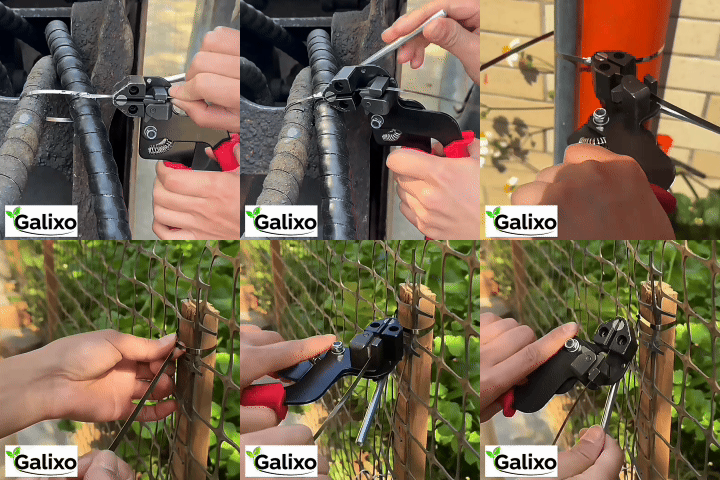
Using high-quality tensioning tools allows mechanics to secure multiple bundles with speed and precision. One-hand operation lets the user align the wire harness with one hand while tightening and cutting the tie with the other, improving workspace safety in tight spaces. This ergonomic advantage reduces physical fatigue, allowing technicians to maintain high-quality work throughout long shifts.
Trusted Security: Preventing Costly Failures
Relying on substandard fasteners leads to premature failure, requiring expensive warranty repairs and downtime. Upgrading to reusable metal zip ties or heavy-duty permanent steel bands provides peace of mind for both the mechanic and the vehicle owner. Fixing it once with premium materials prevents roadside breakdowns and guarantees long-term durability under harsh operating conditions.
Calculating the financial return on investment of high-quality metal fasteners reveals substantial savings for commercial shops and farm owners. Utilizing standard synthetic straps or low-grade ties results in an average replacement cycle of every six months due to UV degradation hook and loop failures. Over a five-year period, the labor cost of repeatedly diagnosing, removing, and replacing degraded fasteners exceeds the initial cost of a professional stainless steel fastening system by more than 400%. Investing in professional-grade tools and 304 steel bands eliminates these recurring costs, allowing shops to allocate precious labor hours to high-value mechanical repairs.

Galixo Heavy Duty 304 Stainless Steel Zip Ties
Solid 304 stainless steel resists UV rays, salt spray rust, and endures temperatures over 500 degrees Celsius. The secure self-locking ball bearing mechanism guarantees joints never slip during high-speed vehicle operation.
ABSOLUTE CORROSION RESISTANCE
VIEW PRODUCT DETAILSReusability vs Strength: When to Prioritize Flexible Temporary vs Permanent Wire Ties
Determining when to prioritize reusability over absolute physical strength is a vital engineering decision for any mechanical layout. In certain developmental phases or highly modular configurations, the ability to rapidly open and re-close a bundle is incredibly beneficial. Conversely, high-vibration and high-temperature environments demand a permanent locking mechanism that will not release under stress. Mechanics must balance these conflicting requirements by evaluating the operational stresses of the installation environment before selecting their fastening hardware.
Material Origin & Nature
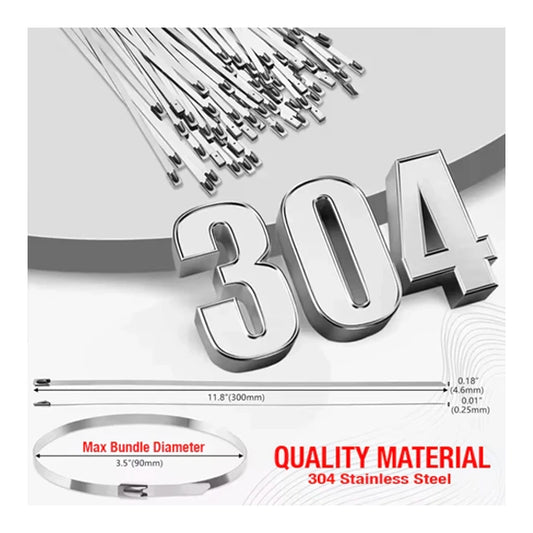
The structural capabilities of Galixo fasteners stem from advanced metallurgy. The 304 grade stainless steel is an austenitic alloy featuring at least 18% chromium and 8% nickel, providing exceptional resistance to oxidation, intergranular corrosion, and harsh environmental chemicals. This chemical composition allows the steel to retain its mechanical strength at temperatures where plastic and synthetic fibers melt, rot, or degrade. Utilizing this high-grade alloy ensures that the fastening band resists salt spray, road grime, and industrial cleaning solvents, making it the ideal choice for marine, agricultural, and automotive underbody applications.
Anatomy Breakdown
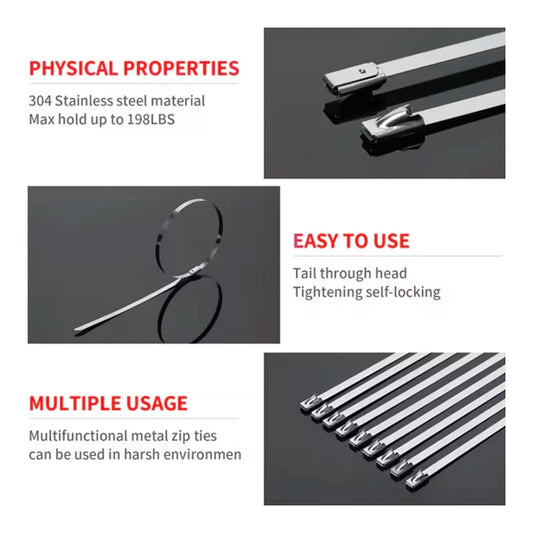
- Stainless Steel Locking Head: Houses the precision CNC-ground steel ball bearing that wedges against the band to prevent slipping.
- Beveled Insertion Tip: Features a tapered lead edge designed to slip smoothly into the lock housing for fast, reliable threading.
- High-Tensile Steel Band: A smooth-edged ribbon of 304 steel engineered to distribute tension evenly without cutting into delicate wiring harnesses.
- Coated Contact Surface: Optional polyester or epoxy coatings that provide electrical insulation and prevent galvanic corrosion between dissimilar metals.
Operating Principle
The physics behind a metal self-locking zip tie relies on a simple yet effective ball-lock mechanism. As the steel tail is threaded through the lock head, the internal stainless ball rolls freely along a ramped chamber, permitting the band to slide in the tightening direction. When reverse tension is applied, the ball is forced into a narrowing throat, wedging against the band and locking it in place with high frictional force. This self-locking design ensures that the higher the tension applied, the tighter the grip of the lock, preventing slipping under intense vibration. When working with temporary metal cable management systems, choosing the correct balance between these self-locking mechanisms and temporary ties is essential for overall safety.
Load-Bearing Limits and Rodent Resistance: Industrial Velcro vs Stainless Steel
When evaluating industrial velcro vs stainless steel solutions, mechanics must consider the mechanical limits of each material under stress. While synthetic hook and loop straps are excellent for managing lightweight, flexible bundles, they possess definite physical limits when managing heavy cables or subjected to environmental pests. Understanding the load limits and animal resistance properties of each material helps ensure a long-lasting and reliable repair. For heavy load strap comparison, you must evaluate how both materials behave under extreme mechanical stress, exposure to sharp teeth, and harsh agricultural conditions.
| Size / Length Dimension | Breaking Strength Capacity | Working Temp Range | Recommended Garage Application |
|---|---|---|---|
| 4.6mm x 150mm (6 Inch) | 200 lbs (90 kg) | -112F to 1000F | Fuel injector wiring, sensor cables, small fuel lines |
| 4.6mm x 200mm (8 Inch) | 200 lbs (90 kg) | -112F to 1000F | Motorcycle exhaust wrap security, brake line routing |
| 4.6mm x 300mm (12 Inch) | 200 lbs (90 kg) | -112F to 1000F | Underbody heat shields, heavy coolant hose routing |
| 7.9mm x 200mm (8 Inch) | 350 lbs (160 kg) | -112F to 1000F | CV joint boots, heavy exhaust shield repairs |
| 7.9mm x 300mm (12 Inch) | 350 lbs (160 kg) | -112F to 1000F | Industrial farm fencing, high-vibration battery mounts |
| 7.9mm x 500mm (20 Inch) | 350 lbs (160 kg) | -112F to 1000F | Heavy commercial ducting, agricultural fence posts |
| 12mm x 300mm (12 Inch) | 500 lbs (225 kg) | -112F to 1000F | Heavy equipment driveshafts, extreme-stress rigging |
| 12mm x 500mm (20 Inch) | 500 lbs (225 kg) | -112F to 1000F | High-pressure oil pipe joining, heavy structural steel |
| 12mm x 1000mm (40 Inch) | 500 lbs (225 kg) | -112F to 1000F | Marine-grade dock anchoring, commercial farm gates |
| Marine Coated 4.6mm x 300mm | 250 lbs (113 kg) | -112F to 300F | Saltwater marine wiring harness, delicate engine bay sensors |
Core Specs Analysis
Understanding how to read load-bearing specifications is vital for ensuring overall safety. Mechanical systems calculate static load-bearing capability based on structural safety margins, usually utilizing a four-to-one design ratio. For a band rated at 200 lbs breaking strength, the maximum recommended continuous working load is 50 lbs. Exceeding this limit leads to material fatigue, stretching, and eventual failure under dynamic vibration conditions. Mechanics should choose the 7.9mm or 12mm width options when securing structural components or high-pressure coolant lines to ensure an adequate safety margin.
Budget-based Consulting
A standard DIY garage user wrapping a single motorcycle exhaust or reinforcing a residential garden fence will benefit from a moderate kit featuring a tension tool and 100 assorted ties. For commercial customization shops, industrial farms, or data centers, investing in a high-capacity bulk bundle is the most cost-effective path. High-volume environments require specialized steel cable tensioning tools designed for high usage, coupled with 1000-piece bulk boxes of assorted 304 steel ties. This systematic approach ensures that technicians always have the correct fastener on hand, minimizing downtime and saving money on individual material purchases.
Cost-per-Use Formula
While the initial cost of a professional 304 stainless steel fastening system is higher than synthetic alternatives, its long-term cost is much lower. Nylon and hook-and-loop fasteners suffer from UV degradation hook and loop problems, requiring replacement every six to twelve months in outdoor applications. If a nylon tie costs ten cents but must be replaced five times over five years, the material cost is fifty cents, plus the value of valuable labor time spent performing the repair. A Galixo stainless steel tie has a higher initial cost but lasts for decades without degradation, resulting in a significantly lower cost-per-use over the lifespan of the equipment.
Comprehensive SOP: Installing Heavy-Duty Fasteners with Optimal Fire Safety and Flame Resistance
Implementing a rigorous Standard Operating Procedure (SOP) ensures consistent, high-quality results when installing industrial fasteners. When working in high-heat areas like engine bays or exhaust systems, safety and precision are critical. Before starting the installation process, gather all necessary tools and safety equipment. Always wear high-quality safety glasses to protect your eyes from flying metal tails, and use cut-resistant gloves to prevent injury from sharp edges. For complex setups like data center cable management tools, a structured approach is essential.
Step 1: Environmental Inspection and Bundle Alignment
Begin by inspecting the workspace and routing path for sharp edges, hot surfaces, and moving parts. Clean the surface of the bundle using a fast-drying solvent to remove grease, dirt, and oil residue that could compromise the installation. Align the wires or hoses into a neat, round bundle, ensuring there are no crossed lines that could cause chafing over time. Utilize temporary clamps to hold the bundle in position, allowing you to use both hands to install the permanent metal fasteners.
Step 2: Selecting the Correct Fastener Size and Width
Select the correct metal band width and length based on the diameter and weight of the bundle. For delicate sensor wires or small fuel lines, choose a 4.6mm width tie to prevent crushing the component. For heavy radiator hoses, exhaust wraps, or agricultural fencing, use a 7.9mm or 12mm width tie to distribute the tension over a larger surface area. Ensure the band is long enough to wrap completely around the bundle with at least two inches of tail extending through the locking head.
Step 3: Hand Threading and Initial Slack Removal
Thread the smooth end of the metal band through the locking head, keeping the lock head facing outward for easy tool access. Pull the tail of the tie by hand to remove excess slack, ensuring the band lies flat against the bundle without twisting. Position the locking head in a low-impact area where it will not contact moving parts or rub against neighboring components. Verify that the band is aligned perpendicular to the bundle to prevent slipping once tension is applied.
Step 4: Tool Engagement and Mechanical Tensioning
Insert the tail of the metal tie into the side-loading guide slot of the Galixo tensioning gun, sliding the nose of the tool flush against the locking head. Keep the tool at a 90-degree angle to the lock head to ensure even tension and a clean cut. Squeeze the tensioning trigger repeatedly to tighten the band, allowing the internal ratchet mechanism to draw the tail through the lock head. Continue tensioning until the tool reaches the pre-set tension limit, ensuring a tight, secure hold without crushing the bundle.
Step 5: Flush Cutting and Deburring the Metal Tail
Once the desired tension is reached, squeeze the cut-off lever on the tensioning gun to execute a clean flush cut. The internal hardened steel blade will shear the tail off flush with the lock head, leaving no sharp edges to cause injury during future maintenance. Inspect the cut edge to ensure it is completely flush, using a small file if necessary to remove any remaining burrs. Discard the metal tail in a designated recycling container to keep your workspace clean and safe.
Step 6: Quality Control and Mechanical Tightness Verification
Verify the quality of the installation by grasping the bundle and attempting to twist or slide the fastener. The band should remain locked in position with zero movement along the length of the bundle. Check that the locking head has not deformed under tension and that the internal ball bearing is securely seated in the lock throat. If the fastener is loose or the band is twisted, cut it off using heavy-duty snips and repeat the installation process with a new tie.
Step 7: Wire Harness Protection and Friction Mitigation
When bundling delicate wires or insulation sleeves, protect the bundle from friction damage by wrapping a layer of high-temperature tape or silicone sleeve around the wires before installing the metal band. This protective layer acts as a cushion, absorbing engine vibrations and preventing the metal edges from cutting into wire insulation. This step is critical for wire harness management in high-vibration off-road or marine environments.
Step 8: Thermal Expansion and Heat Cycle Management
When installing metal fasteners on components that undergo extreme temperature changes, such as exhaust wraps or turbo piping, allow for thermal expansion. Metal expands when heated and contracts when cooled, which can cause over-tightened fasteners to pinch or crush the component. Leave a small amount of play in the fastener to accommodate this movement, ensuring the joint remains secure throughout multiple heat cycles. This practice prevents stress cracking in expensive exhaust manifolds and turbo components.
Step 9: Exterior Corrosion Protection and Environmental Defense
For installations exposed to saltwater, road de-icing chemicals, or corrosive agricultural fertilizers, apply a thin coat of marine-grade grease or anti-seize compound to the locking head after installation. This protective barrier seals out moisture and oxygen, preventing galvanic corrosion between dissimilar metals and ensuring the fastener remains easy to remove if necessary. This step is critical for strain relieve exterior wire splices in harsh marine and industrial environments.
Step 10: Final Documentation and Routine Maintenance Schedule
Document the installation in the equipment maintenance log, noting the location, date, and size of the metal fasteners used. Add the fasteners to the routine maintenance inspection checklist, ensuring they are checked for tension and wear during scheduled service intervals. While 304 stainless steel is extremely durable, regular inspections help identify any unexpected wear or damage from road debris before it leads to component failure.

Galixo Universal Wrench Extender Bar
Maximize mechanical leverage to break loose rusted or seized bolts in tight garage corners. Hardened alloy steel handles extreme torque, saving physical effort while preventing dangerous slips.
MAXIMUM MECHANICAL LEVERAGE
VIEW PRODUCT DETAILSFrequently Asked Questions about heavy duty velcro vs stainless zip ties (FAQs)
-
Q1: Can heavy duty velcro be used in hot engine bays?
A1: No, synthetic hook and loop materials melt at temperatures above 220 degrees Fahrenheit and absorb oil and fuel, which rapidly degrades the adhesive bond. For high-heat engine bay applications, always use 304 stainless steel fasteners to ensure safety and durability. -
Q2: How do you cut and tension stainless steel zip ties safely?
A2: Always use a specialized tensioning gun designed for metal ties to apply consistent tension and execute a clean, flush cut. Avoid using standard diagonal pliers, as they leave sharp metal edges that can cause injury during future maintenance work. -
Q3: Are stainless steel zip ties reusable?
A3: Most stainless steel zip ties are designed for permanent, single-use applications. However, some specialized models feature a release tab that can be carefully pried open with a small flathead screwdriver, allowing for limited reusability when necessary. -
Q4: Do stainless steel zip ties rust when exposed to saltwater?
A4: No, 304 grade stainless steel contains chromium and nickel, providing exceptional resistance to oxidation and rust in saltwater and marine environments. For extreme marine applications, choose coated stainless steel ties for an extra layer of protection. -
Q5: Can rodents chew through heavy duty velcro and plastic ties?
A5: Yes, mice, rats, and other pests can easily chew through synthetic materials like velcro and plastic, leading to wiring damage and component failure. Upgrading to stainless steel fasteners completely prevents rodent chewing, securing your mechanical systems.
Elevate Your Mechanical & DIY Garage Durability with Galixo Store Solutions
Fix It Once, Trust It For Years
Do not compromise on the safety and reliability of your mechanical work by using cheap, temporary fasteners. Upgrade to professional-grade 304 stainless steel zip ties and precision tensioning tools from Galixo Store to ensure your repairs stand up to extreme heat, vibration, and harsh weather. Experience the peace of mind that comes from using premium hardware designed for professional mechanics and demanding DIY enthusiasts alike.
Explore the Complete Galixo Store Fastening Collection Today
*Disclaimer: All technical specifications and instructions in this article are based on the practical garage experience of the Galixo Store engineering team. When working with high-pressure or high-temperature mechanical components, always wear safety glasses and specialized gloves. Contact us for the most accurate technical consultation.