Temporary Metal Cable Management: Reusable Fastening Solutions
temporary metal cable management is crucial when standard plastic ties melt or break under heavy stress, posing hazards in temporary rigging or outdoor setups. Relying on premium hardware from Galixo Store ensures your electrical lines and heavy hoses remain secure yet fully retrievable without manual cutting struggles.

Galixo Automatic Stainless Zip Tie Tool Kit
Professional mechanical fastening solution built for extreme engine bay heat and heavy vibration. Fast one-hand operation, automatic tensioning, and flush cut leaving no dangerous sharp edges.
SUPERIOR 304 STEEL DURABILITY
VIEW PRODUCT DETAILSTable of Contents
- Reusable Metal Fastening Solutions for Temporary Cable Management
- Deployment SOP for Event Cable Management Heavy Duty Systems
- Removable Steel Cable Ties vs Traditional Wire Twist Solutions
- Cost Analysis of Reusable Metal Fastening Solutions vs Single Use Ties
- Real World Field Applications of Flexible Metal Wire Organization Systems
- Frequently Asked Questions about temporary metal cable management (FAQs)
- Elevate Your Mechanical & DIY Garage Durability with Galixo Store Solutions
Reusable Metal Fastening Solutions for Temporary Cable Management
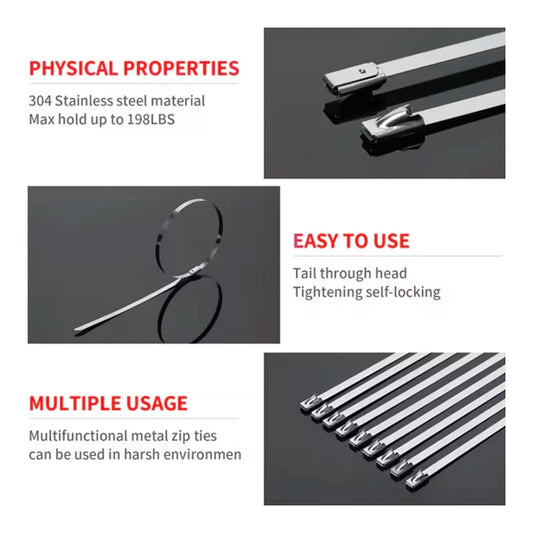
Reusable metal fastening systems provide robust structural support for complex wiring networks under harsh conditions. Incorporating grade 304 alloy steel bands with specialized release triggers, these heavy duty assemblies withstand extreme physical stress while allowing mechanics to adjust, relocate, or reclaim ties without damaging the internal conductors.
Material Origin and Nature
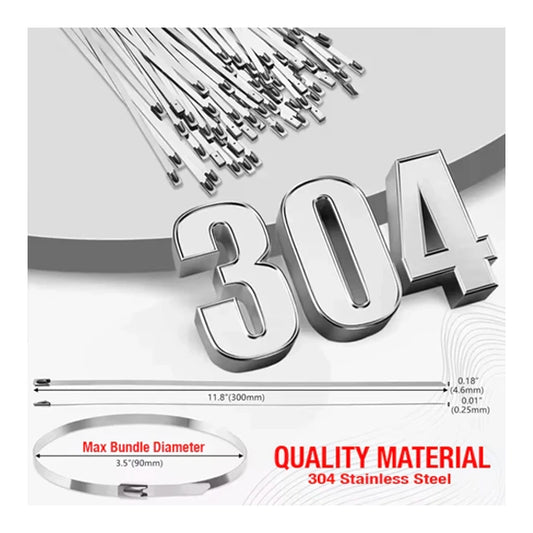
The structural foundation of these premium ties relies on grade 304 austenitic stainless steel, which contains a high ratio of chromium and nickel. This specific chemistry generates an invisible, self-healing chromium oxide film across the steel surface, preventing moisture, salt spray, and corrosive chemicals from triggering iron oxide degradation. This metallurgical profile makes reusable metal zip ties extremely stable when subjected to outdoor exposure or acidic environments. Unlike standard carbon steel or iron wires, grade 304 does not scale, pit, or lose its structural integrity when exposed to industrial fluids, rain, or marine atmosphere.
Anatomy Breakdown
A professional quick release strap features specific components engineered to provide a balanced mechanical holding force without causing wire damage:
- Locking chamber with release lever: A heavy duty head housing a pivot latch that can be pressed to release tension.
- Marine grade 304 stainless steel band: A high tensile, polished metal band with smooth, deburred edges to protect external insulation.
- Self locking internal ball bearing or spring tension system: A mechanism that automatically grips the band during insertion and prevents slipping.
- Low profile ergonomic head: A compact design that fits easily inside tight spaces, eliminating protruding metal edges.
Operating Principle
The mechanical grip relies on a physical locking wedge or spring loaded latch inside the head. When the metal band is fed through the entry slot, the latch moves freely in one direction, allowing the user to tighten the loop. When reverse force is applied, the locking mechanism bites down onto the steel band, holding the load secure. To release or adjust the band, a dedicated key or a integrated release lever is depressed. This action lifts the internal latch away from the metal band, allowing the operator to slide the band backward. This structural flexibility answers the common industrial question: can you retighten ball lock ties, as these specialized release versions allow unlimited adjustments during temporary setups.
Deployment SOP for Event Cable Management Heavy Duty Systems
Before starting any physical routing, operators must wear high impact safety glasses and heavy duty cut resistant work gloves to prevent lacerations. Prepare the primary tension tools, specialized release keys, protective rubber grommets, and high tensile ties on a clean utility belt. Standardizing your approach ensures consistent results across all temporary installations.
Step 1: Structural Route Planning and Cable Bundling Alignment
Proper planning prevents electrical interference and mechanical strain on cable connectors. Mechanics must evaluate the layout to avoid high friction areas or sharp metallic corners on support structures.
- Analyze the structural frame layout and trace the cleanest path for high voltage and low voltage signal cables.
- Gather the individual cables and arrange them into a circular bundle to minimize the surface footprint.
- Arrange heavier cables at the bottom of the bundle to establish a solid physical base for lighter signal wires.
- Wrap high friction contact zones with specialized rubber or silicone sleeves before attaching any metal hardware.
All cable routes must maintain a minimum distance of 100 millimeters from any moving components or heat sources. Quality control inspections require that the bundle remains completely straight, ensuring no individual wire is pinched, kinked, or twisted prior to securing the ties.
Step 2: Tensioning the Removable Steel Cable Ties
Applying the correct amount of force secures the bundle without crushing the underlying wire insulation. Over tightening can damage shielding, while under tightening causes line sag.
- Thread the free end of the marine grade steel band through the locking head, keeping the strap flat and uncoiled.
- Position the locking head on the outer face of the bundle to ensure easy access for future release or adjustments.
- Engage the tension loop by hand to take up the initial slack before introducing any mechanical tools.
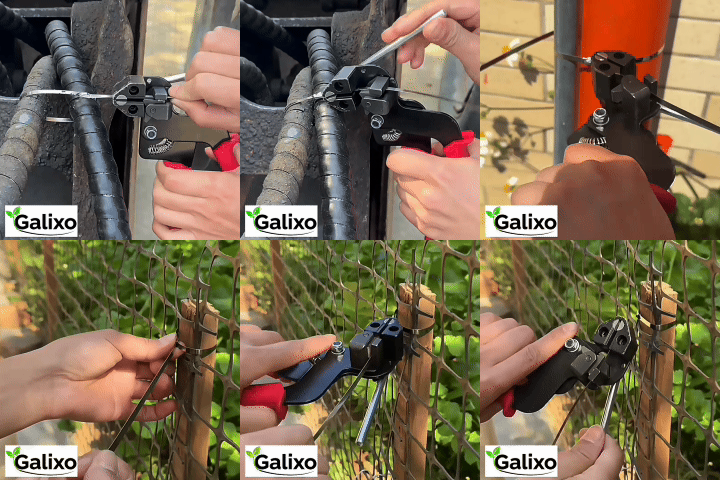
- Tighten the band utilizing a specialized tensioning tool until the bundle is firmly anchored against the support frame.
Tension forces must never exceed 45 pounds of direct torque on standard insulated bundles. For quick adjustments, operators can fasten stainless ties without tool setups by manually pulling the band snug and engaging the mechanical locking pin with a standard flathead screwdriver. Quality checks require that you attempt to twist the secured band with the fingers of your hand; if the band shifts more than 2 millimeters, the tension must be adjusted.
Step 3: Anchoring to Temporary Rigging and Event Structures
Anchoring heavy lines to overhead trusses or structural scaffolding requires robust connection points to resist wind sheer and physical vibrations.
- Align the bundled lines directly with the structural structural member of the truss or scaffolding frame.
- Secure the heavy duty steel band around both the cable bundle and the structural support pole.
- Verify that the metal band sits perpendicular to the support pole to prevent physical sliding along the metal frame.
- Lock the release lever into its safety recess to prevent accidental disengagement during high wind events.
The maximum vertical load limit must remain below 120 pounds per anchor point to prevent structural stress. To ensure overhead safety, operators often anchor event tent legs to fence rails and truss frames using these dual purpose steel ties, providing double reinforcement against extreme wind uplift. Every structural connection must undergo a pull test of 20 pounds of downward force to confirm stability.
Step 4: Continuous Load and Tension Quality Control Testing
Temperature shifts and physical movement can cause metal bands to settle, requiring structured inspection intervals to maintain system safety.
- Examine every locking head along the route to check for physical signs of metal fatigue or slippage.
- Measure the distance between the support structure and the cable bundle to identify any sagging lines.
- Calibrate the tension levels on high load vertical runs using a standardized mechanical inline tension scale.
- Record all structural tension values on the safety maintenance log to track system reliability over time.
Maintain a constant tension of 35 pounds across all critical junctions during active staging operations. Quality control officers must use a specialized calibration gauge to verify tension values across the staging area, ensuring zero system deviations.
Step 5: Safety Dismantling and Reusable Tie Extraction
The reclamation of fastening materials must be done methodically to preserve the hardware for future staging projects without causing injury.
- Insert the specialized release key or a small flat head driver into the release slot on the locking head.
- Depress the locking latch inside the housing to disengage the metal teeth from the steel strap.
- Extract the metal band slowly from the locking head, keeping your gloved hands clear of any potential recoil.
- Coil the reclaimed steel bands into neat circular loops and store them inside a dry, protective toolbox.
The release trigger angle must align at exactly 90 degrees to the head to avoid binding. Check the extracted band for physical deformations before coiling; any band showing deep creases or structural cracks must be retired immediately.

Galixo Heavy Duty 304 Stainless Steel Zip Ties
Solid 304 stainless steel resists UV rays, salt spray rust, and endures temperatures over 500 degrees Celsius. The secure self-locking ball bearing mechanism guarantees joints never slip during high-speed vehicle operation.
ABSOLUTE CORROSION RESISTANCE
VIEW PRODUCT DETAILSRemovable Steel Cable Ties vs Traditional Wire Twist Solutions
Temporary construction sites and major events have historically relied on soft steel tie wire or iron twist ties. While cheap upfront, these wire twists present significant long term issues, including metal oxidation, sharp wire ends that slice through thick cable insulation, and long removal times. Removable steel cable ties resolve these issues by using a flat, wide band profile and an integrated release lever that allows rapid, tool free dismantling.
| Performance Metric | Galixo Reusable Fastening Solutions | Traditional Iron Wire Twist Ties |
|---|---|---|
| Tensile Strength Capacity | Exceeds 150 to 250 pounds of holding force | Low force limits, prone to breaking under load |
| Corrosion Protection | High level chromium-nickel passivated finish | Oxidizes rapidly forming red iron rust |
| Reusability Factor | Up to 100 deployment cycles per unit | Zero reuse value as wire breaks upon twisting |
| Safety Profile | Polished flat bands with rounded edge profiles | Razor sharp twisted tips that puncture skin |
| Installation Speed | Fast single motion insertion and locking | Slow manual twisting utilizing hand pliers |
| Vibration Resilience | Maintains constant grip under high frequencies | Loosens and unravels during physical shaking |
| Thermal Limit Range | Withstands temperatures up to 538 Celsius | Scales and weakens at high engine temperatures |
| Long Term Financial Value | Low cost per use due to multi year lifespan | High replacement costs due to constant disposal |
Galixo 304 SS vs Nylon Plastic Ties
Under extreme outdoor sunlight, ultraviolet radiation breaks down the molecular bonds in nylon, causing standard plastic ties to turn brittle and snap within weeks. In high heat zones like engine bays or stage lighting arrays, nylon melts completely, creating immediate safety risks. The Galixo grade 304 stainless steel alternative resists all UV rays and retains its full tensile strength when exposed to extreme heat. Choosing metal over plastic prevents sudden cable drops, protecting expensive equipment and eliminating the need for constant maintenance visits.
Automatic Zip Tie Gun vs Manual Metal Snips
Using manual pliers to pull and twist metal bands is slow, tiring, and often leaves a sharp edge that can cut hands. In contrast, using a dedicated stainless zip tie gun allows fast, one hand operation in tight, hard to reach spots. The specialized tool pulls the metal band to your set tension level and cuts it flush with the locking head in one smooth motion, leaving a smooth surface that protects operators from scratches.
Cost Analysis of Reusable Metal Fastening Solutions vs Single Use Ties
Selecting the appropriate fastener size and load capacity ensures system safety while maximizing material longevity. The table below outlines standard configurations used by commercial rigging operators and industrial workshops to plan temporary layouts.
| Band Dimensions | Rated Breaking Strength | Operational Temperature Range | Recommended Applications / Packages |
|---|---|---|---|
| 4.6mm x 150mm | 150 pounds of tensile load | -80 to +538 Celsius | Engine harness routing / 100 Pcs pack |
| 4.6mm x 300mm | 200 pounds of tensile load | -80 to +538 Celsius | Stage light rigging / 200 Pcs combo |
| 7.9mm x 300mm | 250 pounds of tensile load | -80 to +538 Celsius | Heavy generator cable / 500 Pcs bulk |
| 7.9mm x 500mm | 300 pounds of tensile load | -80 to +538 Celsius | Industrial scaffold anchor / 1000 Pcs run |
Core Specifications and Load Capacity Analysis
Understanding these load limit tables prevents installation failures in the field. When planning support loops, you must calculate the total weight of the cable run and compare it against the rated breaking strength of the tie. To ensure a solid safety margin, the total weight of the bundle should not exceed 50% of the single band rating. If you are working on permanent or heavy installations, look for materials tested to international engineering standards such as ASTM A240, which guarantees uniform grain structure and reliable tensile strength in critical support systems.
Budget Based Consulting for Garages and Industrial Events
A standard automotive garage or DIY workshop can manage most tasks with a basic starter kit, which includes a tensioning gun and 100 mixed steel ties. For larger operations, like outdoor music festivals or construction sites, buying in bulk with 1000 piece packages is far more cost effective. Many operators use these heavy duty ties to field fix broken patio chair slats, secure tools, or anchor temporary stage rigging, showing how a single bulk purchase can handle both primary work tasks and quick field repairs.
Cost per Use Formula and Long Term Depreciation Proof
The true value of high quality hardware shows when you compare the lifetime cost against cheap, single use alternatives. To find the cost per use of a fastener, divide the initial price by its total number of uses:
Cost Per Use = Initial Purchase Price / Total Reclaimed Lifecycles
While a bag of 100 single use plastic ties is inexpensive upfront, they are discarded and replaced during every teardown, adding up over time. A single reusable grade 304 stainless tie can be deployed and reclaimed up to 100 times, bringing the cost per use down to pennies. It also saves labor hours by eliminating the need to cut and haul away old plastic trash, keeping your job site clean and efficient.
Real World Field Applications of Flexible Metal Wire Organization Systems
High quality metal ties excel in demanding physical environments where extreme temperatures, chemical exposure, or continuous movement would destroy standard plastic fasteners.
High Heat Automotive Engine Bay and Exhaust Shield Management
Engine bays face high heat and continuous vibration, which quickly degrade plastic ties and cause wire looms to fall onto hot exhaust components. Mechanics use reusable stainless ties to route wire harnesses safely away from headers and turbos. These ties are also used for fast emergency temporary car repair hacks, like securing a rattling heat shield or holding a cooling hose in place until permanent repairs can be made. These ties easily handle exhaust temperatures up to 500 degrees Celsius and over 8000 RPM of engine vibration without loosening or slipping.
Professional Stage Rigging and Event Staging Operations
Event production crews work with massive power cords and control cables wrapped around high metal trusses. These setups face heavy wind shear and constant movement during outdoor concerts. Using reusable steel ties allows crews to organize heavy cables quickly and securely. During teardown, the quick release mechanism allows them to slide the bands off without tools, saving hours of labor and leaving zero plastic waste on the ground.
Heavy Duty Construction Site Power Routing
Construction sites require temporary power lines run across metal scaffolding and near heavy machinery. These areas expose fasteners to mud, concrete dust, and rough handling. Reusable metal ties keep these power cables securely elevated, preventing trip hazards and protecting wires from being run over by heavy equipment. The passivated grade 304 steel resists rust and physical damage, even when exposed to rain, mud, and concrete dust for months.
Agricultural Fencing and Tension Line Security
Ranchers and farm owners use reusable metal ties to secure wire fencing and support heavy irrigation lines. Standard plastic ties quickly turn brittle and snap under direct sunlight, but stainless steel resists UV degradation and remains secure year round. These ties are also perfect for quick repairs around the property, like using them for quick diy fixes for wobbly mailbox posts or securing loose fence panels until permanent repairs are scheduled.

Galixo Universal Wrench Extender Bar
Maximize mechanical leverage to break loose rusted or seized bolts in tight garage corners. Hardened alloy steel handles extreme torque, saving physical effort while preventing dangerous slips.
MAXIMUM MECHANICAL LEVERAGE
VIEW PRODUCT DETAILSFrequently Asked Questions about temporary metal cable management (FAQs)
- Can you reuse standard stainless steel ball lock cable ties? - Regular ball lock ties are designed for permanent applications and cannot be opened easily without damage. Reusable metal ties require a built-in release lever or latch to slide the band backward safely.
- What is the maximum temperature limit for 304 stainless steel cable ties? - Grade 304 stainless steel resists structural degradation up to 538 degrees Celsius, which is equivalent to 1000 degrees Fahrenheit, making them perfect for high heat environments.
- Are reusable metal ties resistant to rust in outdoor salt environments? - Yes, the high chromium and nickel content in 304 marine grade steel prevents rust and pitting even under prolonged salt spray testing or chemical exposure.
- Do you need a special tool to tension temporary metal ties? - While you can tighten them by hand or with pliers, using a dedicated stainless zip tie gun ensures uniform tension and flat cuts without leaving razor-sharp edges.
- How many times can a reusable steel strap be deployed? - Provided the band is not creased or bent past its elastic limit, a high quality reusable steel tie can be safely deployed and released up to 100 times.
Elevate Your Mechanical & DIY Garage Durability with Galixo Store Solutions
Secure Your Industrial Layouts with Premium Reusable Metal Hardware
Upgrade your tool setup with high-strength 304 stainless steel fastening gear designed to withstand the toughest jobs. Whether you are routing engine harnesses, securing heavy stage lighting, or reinforcing outdoor fences, Galixo Store provides the professional-grade tools and durable metal ties you need to get the job done right.
Explore the Full Selection of Heavy Duty Fasteners at Galixo Store Now
*Disclaimer: All technical specifications and instructions in this article are based on the practical garage experience of the Galixo Store engineering team. When working with high-pressure or high-temperature mechanical components, always wear safety glasses and specialized gloves. Contact us for the most accurate technical consultation.