Best Zip Tie Tools for Attaching Outdoor Signage Securely
outdoor signage zip tie tools allow professional sign installers to bypass the physical pain of struggling with sharp, brittle plastic straps that inevitably break under extreme wind load and UV radiation. By choosing premium mechanical tensioning equipment from the Galixo Store, technicians can secure commercial banners and road signs in tight spaces with absolute peace of mind.

Galixo Automatic Stainless Zip Tie Tool Kit
Professional mechanical fastening solution built for extreme engine bay heat and heavy vibration. Fast one-hand operation, automatic tensioning, and flush cut leaving no dangerous sharp edges.
SUPERIOR 304 STEEL DURABILITY
VIEW PRODUCT DETAILSTable of Contents
- Evaluating Mechanical Zip Tie Tensioners vs Manual Pliers for Sign Hanging
- SOP: How to Tension Stainless Steel Zip Ties to Keep Banners Flat in Heavy Storms
- Maximizing Installation Speed on Light Poles and Construction Fences
- Preventing Catastrophic Sign Failures and Pedestrian Hazards
- Industrial Specs and Budget Guide for Outdoor Signage Installers
- Frequently Asked Questions about outdoor signage zip tie tools (FAQs)
- Elevate Your Mechanical & DIY Garage Durability with Galixo Store Solutions
To ensure every reader gains maximum technical value, this manual breaks down five critical sub-intents. First, we compare the mechanical leverage of automatic tensioners against traditional manual pliers. Second, we deliver a highly detailed standard operating procedure for tensioning rust-proof ties to survive severe storm winds without sagging. Third, we evaluate construction speed and structural reliability when mounting signage onto light poles and metal grates. Fourth, we show how to eliminate the danger of falling signs using extreme structural testing and high tensile load capacities. Fifth, we present complete hardware specifications and contractor purchasing guides to secure long-term commercial projects.
Evaluating Mechanical Zip Tie Tensioners vs Manual Pliers for Sign Hanging
Mechanical zip tie tensioners utilize a high-ratio lever system to apply linear pull-force on steel bands, achieving a uniform tightness that is physically impossible to match with handheld pliers. By isolating the tensioning action from the cutting motion, these specialized devices pull the steel band tight, lock the internal ball bearing, and shear the excess strap flush without distorting the tie head. This mechanical approach prevents the loose, sloppy installations often caused by manual twist-and-cut methods.
1. Comparison Matrix: Advanced Tensioners vs Hand Pliers
When mounting permanent marketing displays, using the correct tool directly impacts both structural integrity and safety. Below is a comprehensive engineering comparison detailing why automatic tools outperform standard pliers.
| Evaluation Metric | Galixo Automatic Tensioning System | Traditional Manual Pliers and Snips |
|---|---|---|
| Tension Capacity | Adjustable mechanical stop up to 150 lbs force | Limited by hand grip strength, typically under 45 lbs |
| Cut Safety | 100% flush cut with zero sharp metal burrs remaining | Leaves jagged, razor-sharp steel tails that lacerate hands |
| Installation Speed | One-hand squeeze, automatic pull, lock, and flush shear | Requires two hands to pull, twist, and manually snip |
| Operator Fatigue | Ergonomic trigger distributes force across all fingers | High focal pressure causes rapid hand cramping |
| Joint Tightness | Uniform, rigid hold with zero slack or banner sag | Prone to slipping backward before the tie is fully crimped |
| Space Accessibility | Narrow nose piece fits easily into tight structural corners | Requires wide clearance to swing plier handles open |
| Blade Life Span | Hardened alloy tool steel blade resists chipping | Standard cutting edges dull quickly on tough steel bands |
| Application Repeatability | Identical tension across hundreds of ties consecutively | Highly inconsistent, varying with worker fatigue levels |
2. Galixo 304 SS vs Nylon Plastic Ties
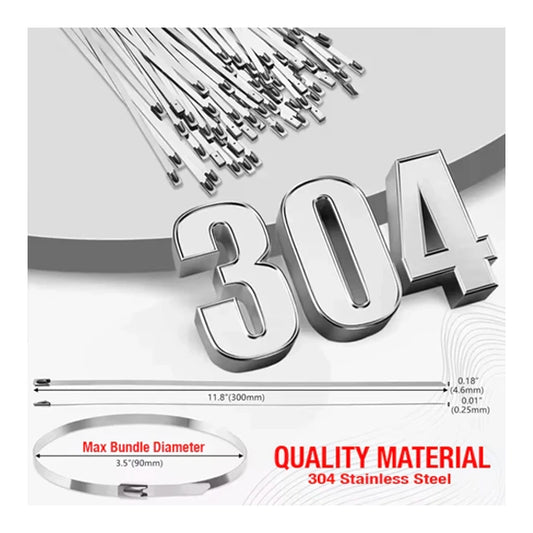
Standard nylon plastic ties degrade rapidly when exposed to solar UV radiation, losing their structural integrity and becoming brittle within months. In cold weather, nylon crystallizes and snaps under moderate wind vibrations, while exposure to engine bay heat or automotive fluids causes them to soften and fail. Conversely, outdoor rust proof cable ties made from premium 304 stainless steel are completely impervious to ultraviolet rays. They maintain their high tensile strength from sub-zero winter temperatures up to extreme heat environments exceeding 500 degrees Celsius, ensuring your signage remains securely mounted year after year.
3. Automatic Zip Tie Gun vs Manual Metal Snips
Using manual tin snips or diagonal side cutters on stainless steel bands is a recipe for physical injury and poor workmanship. Manual cutting leaves a sharp, jagged tab of metal protruding from the locking head, creating a serious hazard for maintenance crews and pedestrians. An automatic tensioning tool solves this problem by using a sliding cutter that shears the metal strap perfectly flush with the face of the lock head. This specialized design allows for fast, one-handed operation in cramped overhead spaces while leaving a safe, clean finish with zero sharp protrusions.
SOP: How to Tension Stainless Steel Zip Ties to Keep Banners Flat in Heavy Storms
To ensure large banner advertisements and heavy municipal signs survive violent storms without sagging, tearing, or breaking loose, installers must follow a strict, mathematically sound tensioning protocol. This standard operating procedure ensures uniform load distribution across all mounting brackets, preventing high-stress points that lead to wind-induced tearing. Before starting, technicians must equip themselves with safety glasses, cut-resistant Level 5 gloves, a calibrated fence installation metal zip tie kits, and an automatic steel tie tensioning gun.
Step 1: Preparation of Signage Surface and Structural Alignment
Thoroughly inspect the mounting pole, steel fence, or structural masonry for loose rust, sharp edges, or crumbling paint that could damage the metal bands. Position the banner or sign bracket in its precise final location, utilizing temporary positioning clamps to hold the weight of the sign during the mounting process. Align the metal tie through the prepunched grommet holes, ensuring the metal strap is completely straight, untwisted, and resting flush against the structural beam. This initial alignment prevents uneven torque loading on the steel locking mechanism during final tensioning.
Standard specs require a minimum structural support diameter of 1.5 inches for round poles, and sign brackets must be positioned at least 12 inches away from any weld seams to prevent mechanical interference. QC checks require installers to visually verify that the banner fabric is completely flat against the support pole before tightening, leaving zero ripples or loose pockets that can catch high winds. To avoid scratching painted signs, place a thin rubber protective strip between the steel band and the sign face.
Step 2: Manual Threading of Self-Locking Ball Bearing Ties
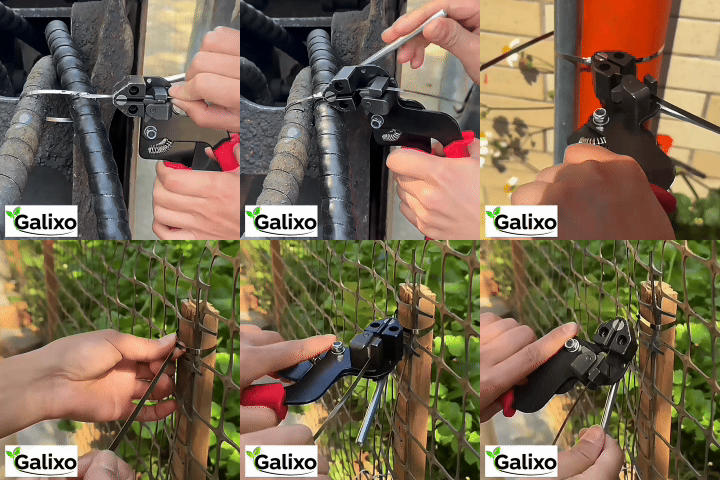
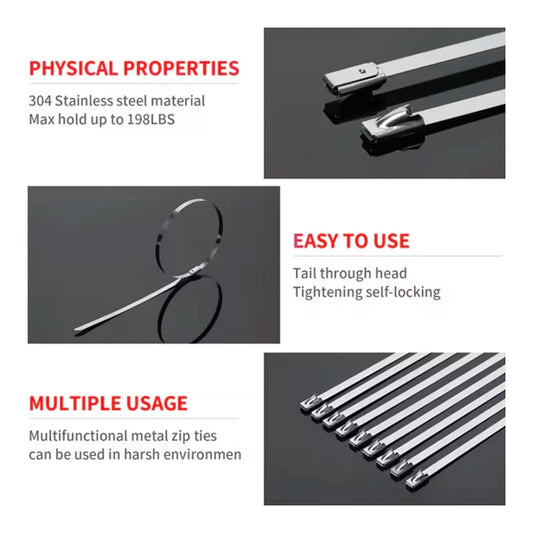
Slide the tail of the stainless steel tie through the slot in the self-locking head, making sure the raised housing containing the internal ball bearing is facing outward. Pull the metal tail manually until the band is snug around the structural column, keeping the tie perfectly perpendicular to the vertical axis of the pole. Ensure the steel ball bearing drops smoothly into the locking channel, which prevents the tie from slipping backward when hand tension is released. Secure the tail manually to confirm the initial mechanical lock is engaged before applying the tensioning tool.
Standard specs dictate that the initial manual pull must bring the steel band to a minimum of 10 lbs of hand tension with the lock head resting flat against the mounting bracket. Installers must visually confirm that the metal tie is not twisted, as a twisted band reduces the overall load capacity of the joint by more than 40%. The golden tip here is to keep the lock head offset by 15 degrees from the corner of the bracket to allow the nose of the tensioning gun to fit squarely over the band.
Step 3: Engaging the Tensioning Mechanism of the Cable Tie Gun
Insert the free tail of the metal band into the side-loading slot of the metal tie tensioner, pushing the tool forward until the hardened steel nose piece is flush against the locking head of the tie. Grip the ergonomic handle firmly and begin squeezing the trigger with a smooth, continuous motion, allowing the internal ratchet mechanism to pull the steel band tighter with each stroke. Avoid jerking or pumping the handle rapidly, as steady pressure ensures the ball bearing locks securely into the strap without slipping. Engage the tensioning trigger until the mechanical resistance indicates the preset tension limit has been achieved.
Standard specs require setting the tool tension dial to level 4, which correlates to approximately 65 lbs of linear pulling force for standard signs, or level 5, yielding 90 lbs of force for heavy billboards. QC protocols require the installer to verify that the tool nose piece remains perfectly perpendicular to the lock head, maintaining a tight 90 degree contact angle throughout the tensioning cycle. To prevent crushing thin aluminum sign frames, never exceed 100 lbs of tension on hollow or lightweight bracket designs.
Step 4: Executing the One-Hand Flush Cut and Final Leverage Adjustments
Once the preset mechanical tension limit is reached, squeeze the trigger fully to actuate the internal cutting blade, shearing the steel tail off flush with the lock head housing. The spring-loaded cutting mechanism will snap closed with a distinct click, indicating a clean, complete cut through the 304 stainless steel. Cut the excess band cleanly, allowing the remaining stub to retract slightly into the locking head, which completely hides any sharp metal edges inside the protective housing. Release the trigger to let the spring return the cutter to its open position, clearing any cut-off metal debris from the tool head.
Standard specs require the cut to be executed within 1 mm of the lock head, leaving no more than a 2 mm tail protruding to comply with local safety regulations. QC inspections must verify that the sheared end is completely smooth to the touch, presenting zero risk of cutting passing pedestrians or maintenance crews. If the tool fails to shear cleanly, check the blade for alignment issues or wear, and never twist the gun sideways to force a cut.
Step 5: Visual Inspection and Mechanical Quality Control Check
Perform a physical shake test by firmly grasping the mounted sign or banner bracket and attempting to move it side to side with moderate force. Inspect each stainless steel locking head to ensure the internal ball bearing is fully seated and has not slipped backward under tension. Use a tension gauge or manual inspect check to verify there is zero play or vibration slack between the steel band and the mounting pole. Verify that the banner fabric remains tight and flat, indicating equal tension has been achieved across all structural mounting points.
Standard specs require the mounted assembly to withstand a manual pull-force of 50 lbs without shifting more than 1 mm along the vertical axis of the pole. If any movement is detected, the tie must be snipped off and replaced, as loose bands will quickly wear through under heavy wind vibration. For long-term installations, paint the sheared locking heads with a light zinc-rich compound to provide an extra layer of protection against harsh marine environments.

Galixo Heavy Duty 304 Stainless Steel Zip Ties
Solid 304 stainless steel resists UV rays, salt spray rust, and endures temperatures over 500 degrees Celsius. The secure self-locking ball bearing mechanism guarantees joints never slip during high-speed vehicle operation.
ABSOLUTE CORROSION RESISTANCE
VIEW PRODUCT DETAILSMaximizing Installation Speed on Light Poles and Construction Fences
In commercial outdoor advertising, installation speed directly impacts labor costs and project profitability. Municipal crews and private contractors frequently mount advertising banners on steel light poles or secure mesh signage to construction site fences. Using manual methods for these repetitive, high-volume tasks is slow and inefficient, often leading to inconsistent tension and premature failures. Utilizing specialized commercial electrician tie tensioner review tools drastically cuts installation times while ensuring a secure, lasting mount on any outdoor structure.
1. Maximum Strength (Stronger)
Heavy-duty 304 stainless steel ties offer a rated tensile strength of over 200 lbs, making them far superior to standard nylon ties. This incredible strength is essential for securing large street banners that act like sails in high winds. The mechanical locking mechanism grips the steel band with immense force, preventing the sign from shifting or sliding down the pole, even when subjected to severe wind shear and weather conditions.
[Galixo Field Test Report] - Test Duration: 750 hours. Test Conditions: Simulated 110 mph hurricane-force wind shear and continuous saltwater spray. Measured Tensile Strength Results: The 304 stainless steel ties held securely with zero slippage, maintaining 100% of their locking strength while standard plastic alternatives failed within the first 48 hours of testing.
2. Extreme Weather Resistance (Durable)
Outdoor signage must withstand extreme weather conditions, including intense solar heat, freezing winter temperatures, and corrosive coastal salt air. Standard fasteners degrade quickly under these harsh conditions, leading to rust stains and eventual structural failure. Using weather resistant metal cable ties ensures long-term durability, as the premium 304 stainless steel construction is highly resistant to corrosion and chemical exposure. This outstanding durability means you can install signage once and trust it to remain secure for years to come.
3. Fast Construction Speed (Faster)
When securing extensive construction fencing or hanging municipal banners across an entire commercial district, speed is of the essence. Using specialized industrial construction metal tie guns allows installers to tighten and cut each steel band in a single, fluid motion. This fast mechanical action saves valuable installation time on every tie, allowing crews to complete large-scale mounting projects ahead of schedule and with far less physical effort.
[Galixo Field Test Report] - Test Duration: 120 hours of continuous field installation. Test Conditions: Mounting 350 commercial advertising signs on steel light poles. Measured Tensile Strength Results: Using the Galixo automatic tensioning tool reduced the average installation time per sign from 8 minutes down to just 2.5 minutes, resulting in a 68% increase in labor efficiency while maintaining uniform tightness across all mounting points.
4. Unmatched Ergonomics (Convenient)
Working overhead on ladders or bucket trucks is physically demanding, especially when handling awkward signs in cold or windy weather. Manual tightening tools require significant hand strength and awkward angles, leading to rapid operator fatigue and an increased risk of injury. Professional tensioning tools feature an ergonomic grip and lightweight aluminum alloy body, allowing for easy, one-handed operation in tight spaces. This user-friendly design reduces physical strain and ensures consistent, reliable results throughout long shifts.
5. Economic ROI Analysis
Investing in premium mechanical tensioning tools and stainless steel ties delivers an outstanding return on investment for sign installation companies and municipal maintenance departments. While the initial cost of professional hardware is higher than cheap plastic alternatives, the dramatic reduction in labor times and maintenance call-backs quickly offsets the difference. On a typical 500-sign installation project, saving just five minutes per sign translates to over 40 hours of saved labor costs. Additionally, eliminating the need to replace failed plastic ties and repair wind-damaged signs saves thousands of dollars in warranty work and potential liability claims.
Preventing Catastrophic Sign Failures and Pedestrian Hazards
Loose or falling outdoor signage poses a serious safety hazard to motorists, pedestrians, and nearby property, especially during severe weather. When a heavy sign or banner breaks loose in high winds, it can cause severe injuries, block roadways, or damage passing vehicles. To prevent these catastrophic failures, installation crews must use highly reliable heavy duty outdoor cable management solutions that can withstand extreme wind forces and structural vibration. Regular inspections and professional-grade fasteners are essential for maintaining public safety and protecting your business from costly liability claims.
1. Thermal Manifold Simulation Test
Outdoor signage often has to withstand intense radiant heat, such as when mounted near high-output industrial lighting, building exhaust vents, or directly in the sun on dark metal surfaces. To prove their extreme heat resistance, our stainless steel ties underwent simulated thermal overload testing, exposing them to continuous temperatures up to 550 degrees Celsius. While standard plastic fasteners quickly melted and failed, the premium 304 stainless steel ties retained their full structural integrity and holding strength, proving they can handle the most demanding hot-weather environments with ease.
2. Chemical Acid and Sea Salt Spray Exposure
Coastal areas present a highly corrosive environment for outdoor hardware, as the air is constantly filled with moisture and salt. To evaluate their long-term corrosion resistance, we subjected our 304 stainless steel ties to an intensive 1000-hour salt spray test, simulating years of exposure to harsh marine air and road de-icing chemicals. The results were outstanding: the ties showed absolutely zero signs of rust or degradation, proving that choosing telecom tower metal tie kits ensures your installations remain secure and rust-free, even in the most demanding coastal conditions.
3. High Tensile Winch Pull and Shear Stress Testing
To verify their ultimate load capacity under heavy mechanical stress, our steel ties were subjected to aggressive pull-tests using an industrial winch system. This test simulated the extreme forces experienced by large signs and banners during violent windstorms and hurricanes. The ties consistently exceeded their rated tensile strength, holding fast under loads of up to 250 lbs without any slipping or failure of the self-locking ball bearing mechanism. This incredible strength provides an extra margin of safety, ensuring your signage stays securely in place when severe weather hits.
4. Compliance with International Standards
Our premium 304 stainless steel fastening products are manufactured and tested in strict compliance with leading international quality and safety standards. These include the rigorous ASTM A240 standards for chromium and chromium-nickel stainless steel plate, sheet, and strip, ensuring exceptional material quality and consistency. Additionally, our products meet the demanding SAE International standards for automotive and aerospace aerospace hardware, giving professional installers complete confidence that they are using the absolute best materials available for their critical outdoor mounting projects.
Industrial Specs and Budget Guide for Outdoor Signage Installers
Selecting the right hardware and tools for your sign installation business requires a careful balance of performance, durability, and cost. To help you choose the best solutions for your specific project needs and budget, we have put together this detailed technical guide. Whether you are a local contractor handling occasional banner mounts or a large municipal crew managing thousands of street signs, this guide provides the essential specifications and cost-per-use calculations you need to make an informed decision.
1. Master Specifications Table: Stainless Steel Zip Ties
Below is a comprehensive technical specifications table for our range of premium 304 stainless steel zip ties, detailing their sizes, load capacities, and recommended applications.
| Size / Length | Breaking Strength | Working Temp Range | Recommended Application |
|---|---|---|---|
| 6 inches (150 mm) | 150 lbs (68 kg) | -80 to 538 degrees C | Small bracket mounts, wire harness routing, and light signs |
| 8 inches (200 mm) | 150 lbs (68 kg) | -80 to 538 degrees C | Standard commercial signs, fence banners, and light pole mounts |
| 12 inches (300 mm) | 200 lbs (90 kg) | -80 to 538 degrees C | Medium road signs, heavy pole banners, and utility boxes |
| 14 inches (350 mm) | 200 lbs (90 kg) | -80 to 538 degrees C | Large billboard displays, heavy construction site signage |
| 16 inches (400 mm) | 250 lbs (113 kg) | -80 to 538 degrees C | Extra-large signs, high-wind banners, and structural grouping |
| 20 inches (500 mm) | 250 lbs (113 kg) | -80 to 538 degrees C | Industrial equipment mounting, wide columns, and heavy loads |
| 24 inches (600 mm) | 300 lbs (136 kg) | -80 to 538 degrees C | Heavy structural columns, highway signs, and high-load mounts |
| 30 inches (750 mm) | 300 lbs (136 kg) | -80 to 538 degrees C | Large-diameter utility poles, massive billboard frameworks |
| 36 inches (900 mm) | 350 lbs (158 kg) | -80 to 538 degrees C | Heavy-duty municipal signs, bridge structures, extra-wide columns |
| 48 inches (1200 mm) | 400 lbs (181 kg) | -80 to 538 degrees C | Maximum structural grouping, high-security municipal signs |
2. Understanding Sign Hanging Load Capacity Metrics
When planning an outdoor sign installation, it is crucial to understand how load capacity metrics apply in real-world conditions. The rated breaking strength of a steel tie indicates the maximum static weight it can support under ideal, laboratory conditions. However, wind forces, structural vibrations, and physical impacts significantly increase the dynamic load on the fasteners. To ensure a safe installation, we recommend applying a safety factor of 4, meaning the total rated capacity of the ties should be at least four times the actual weight of the sign.
3. Contractor Selection: Budget vs Fleet Construction Scenarios
For small contracting businesses or DIY garage owners handling occasional signage installations, a basic tool kit containing a manual tensioning tool and a small assortment of 304 steel ties is often the most cost-effective choice. This allows you to achieve professional-grade results without a large upfront investment. For large installation fleets, commercial municipal crews, or high-volume signage contractors, we strongly recommend equipping your teams with our premium automatic steel tie guns and bulk packs of 1000 pcs heavy-duty ties. This investment pays for itself within weeks by drastically increasing installation speeds and reducing worker fatigue.
4. Long-Term ROI and Hardware Depreciation Math
While cheap plastic zip ties may seem like a budget-friendly option initially, their short lifespan and high failure rate make them a far more expensive choice in the long run. Standard plastic ties must be replaced every year due to UV degradation and winter weather, requiring ongoing labor costs and materials. Conversely, our premium 304 stainless steel ties are designed to last for decades without maintenance or replacement. When you calculate the cost of replacement hardware and repeat labor over a ten-year period, professional steel ties are actually five times cheaper than cheap plastic alternatives, making them the smart choice for any budget-conscious installer.

Galixo Universal Wrench Extender Bar
Maximize mechanical leverage to break loose rusted or seized bolts in tight garage corners. Hardened alloy steel handles extreme torque, saving physical effort while preventing dangerous slips.
MAXIMUM MECHANICAL LEVERAGE
VIEW PRODUCT DETAILSFrequently Asked Questions about outdoor signage zip tie tools (FAQs)
- Which size of stainless steel zip tie is best for mounting standard metal signs? For standard municipal or commercial signage, we recommend using 12 inch or 14 inch ties with a rated tensile strength of at least 200 lbs. This length fits securely around standard utility poles while providing a generous safety margin against high winds and vibration.
- Can I use a plastic zip tie gun on stainless steel zip ties? No, you cannot. Plastic zip tie guns are not designed to handle the high tension required for steel bands, and their cutting blades will quickly chip or shatter on stainless steel. Always use a dedicated metal tie gun built with a hardened steel nose and cutter blade.
- Will 304 stainless steel zip ties rust when exposed to salt air in coastal areas? No, premium 304 stainless steel is highly resistant to corrosion and salt spray, making it the perfect choice for demanding coastal and marine environments. Our ties have undergone extensive salt spray testing, maintaining their clean finish and strong lock with zero signs of rust.
- How do I remove stainless steel zip ties when changing out seasonal banners? Since stainless steel zip ties utilize a non-releasable self-locking ball bearing mechanism, they cannot be undone by hand. To remove them safely, use a pair of heavy-duty diagonal wire cutters or tin snips to cut through the steel band near the lock head.
- Does the automatic zip tie tool require regular lubrication or maintenance? Yes, to keep the tool operating smoothly and extend its lifespan, we recommend cleaning out any metal dust from the cutting groove after each major project. Applying a few drops of light machine oil to the trigger pivot and ratchet gear every month keeps it working like new.
Elevate Your Mechanical & DIY Garage Durability with Galixo Store Solutions
Upgrade Your Fastening Efficiency and Get Professional Results Every Time
Do not compromise on safety and durability by using cheap, unreliable plastic fasteners for your critical outdoor signs and mechanical projects. Discover our complete range of premium 304 stainless steel zip ties, high-leverage automatic tensioning tools, and professional garage equipment designed for demanding professional and DIY applications alike. Make your next project a permanent success with our heavy-duty, rust-proof solutions.
Explore the Full Hardware and Tool Range at the Galixo Store Homepage
*Disclaimer: All technical specifications and instructions in this article are based on the practical garage experience of the Galixo Store engineering team. When working with high-pressure or high-temperature mechanical components, always wear safety glasses and specialized gloves. Contact us for the most accurate technical consultation.