
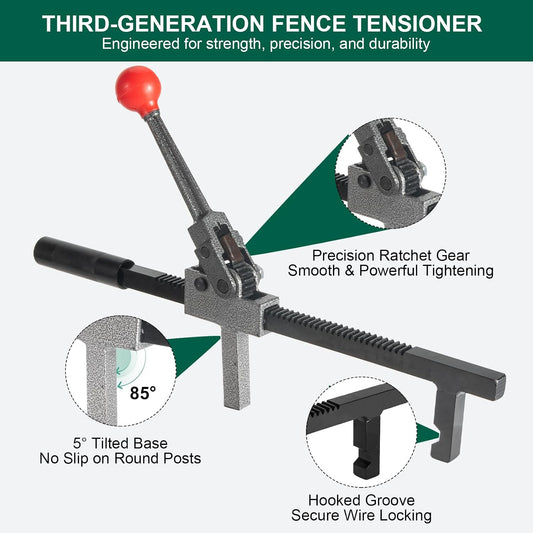
The ratchet teeth lock on every stroke, so the mesh stays where you put it while you reach for a tie. That is the part that normally needs a second person, and it is the whole reason this tool exists.


Ratchet Fence Tightener
$119.00
$187.00
💪 Professional tension for rock-solid property lines
🚜 Rugged forged steel for a lifetime of work
⚡ Effortless ratcheting power to save your back
🛡️ Secure non-slip grip for frustration-free repairs
Overview
A ratcheting stretcher for pulling chain link mesh onto a frame or post. Clamp the base, hook the mesh, and work the lever until it sits flat and square. The ratchet holds the pull while you fasten, so you are not asking someone to hold the other end for you.
Materials
Forged alloy steel body with a sandblasted anti-rust finish, rated to 1,000 lb of pull. The rack bar and claw hook are hardened and coated, the ratchet pawl is spring loaded, and the knurled extension tube gives you leverage without a cheater bar.
Care
Brush grit out of the ratcheting rack after a job and put a few drops of light machine oil on the pawl, spring and pivot once a season. Wipe it down if it has been out in the wet, and store it dry.
The numbers that matter
Four figures that decide whether it earns a place in your kit.
1,000lb
Maximum pull, enough to draw heavy gauge mesh flat and square
3.69lb
Tool weight, light enough to hold against a post one handed
3-1/8 in
Base foot width, fits standard line posts and wider
5°
Base tilt that bites into the post as the pull increases

It holds the pull so your hands are free
The difference one pass makes
Same fence line, same afternoon, one person doing the work.
 Before
Sagging wire, gaps under the line
Loose strands let stock push through and leave the whole run looking neglected.
 After
AfterTight, level, holding under load
Ratcheted to tension and stapled off while the tool held the pull for you.


Built to take the load
How the tool is made, and why each part matters when the mesh fights back.
Precision Forging
High-density alloy steel forged under pressure, so the frame carries 1,000 lb of pull without flexing out of line.
Anti-Rust Armor
Sandblasted then coated, because a stretcher lives in a truck bed and gets rained on more than it gets cleaned.
Machined Claw Hook
The flat claw is cut to catch mesh and tension bars cleanly, so the pull stays centred instead of twisting the panel.
Final Tension Test
Every ratchet is loaded and released before it ships, so the teeth hold under pull and let go when you want them to.
One tool, every wire on your property
If you can hook it, this tool can tension it.

Barbed wire
Pull a sagging strand tight without the barbs fighting you.

Woven field fence
Even tension across the full roll so the mesh sits square.

High-tensile and electric
Enough control for polywire without snapping the line.

Chain link mesh
Stretch a run flat before you tie it off to the post.
Why not just use a come-along?
Fair question. Here is what changes on a one-man repair.
A come-along
- Two people, one holds, one pulls
- Needs a post, tree or truck
- Creeps while you staple off
- Bulky with cable and hooks
- Rig the cable every time
With this tool
- One, the base holds itself
- Braces on the post you are working
- Teeth lock every stroke
- 3.69 lb, hangs on a belt
- Seat, hook, pull

The foot that bites instead of sliding
A 3-1/8 inch foot with a 5 degree tilt. As the pull climbs, the angle draws the base tighter into the post rather than letting it walk up. That is why it stays put without a strap or a helper.
Three moves, start to finish
One person, one hand, and a fence line you can walk away from.

1
First
Seat the base against the post
Set the tilted foot flat against the post so the serrated edge catches. It braces itself from there.

2
Then
Hook the mesh and work the lever
Catch the mesh or tension bar with the claw and ratchet. Every stroke locks, so nothing creeps back.

3
Finally
Fasten off, then release
Tie or staple while the tool holds the pull, flip the release lever, and move to the next bay.
New arrivals
-

 SALE ENDS AT MIDNIGHT
Ratchet Fence Tightener
Regular price $119.00Regular priceUnit price per$187.00Sale price $119.00SALE ENDS AT MIDNIGHT -

 SALE ENDS AT MIDNIGHT
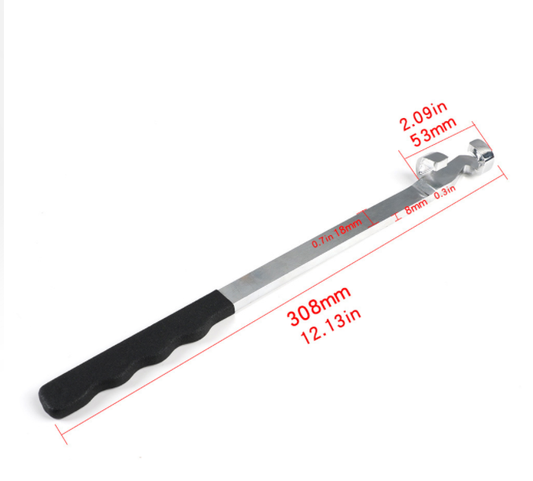
Universal Wrench Extender Bar
Regular price $89.00Regular priceUnit price per$139.00Sale price $89.00SALE ENDS AT MIDNIGHT -

 SALE ENDS AT MIDNIGHT
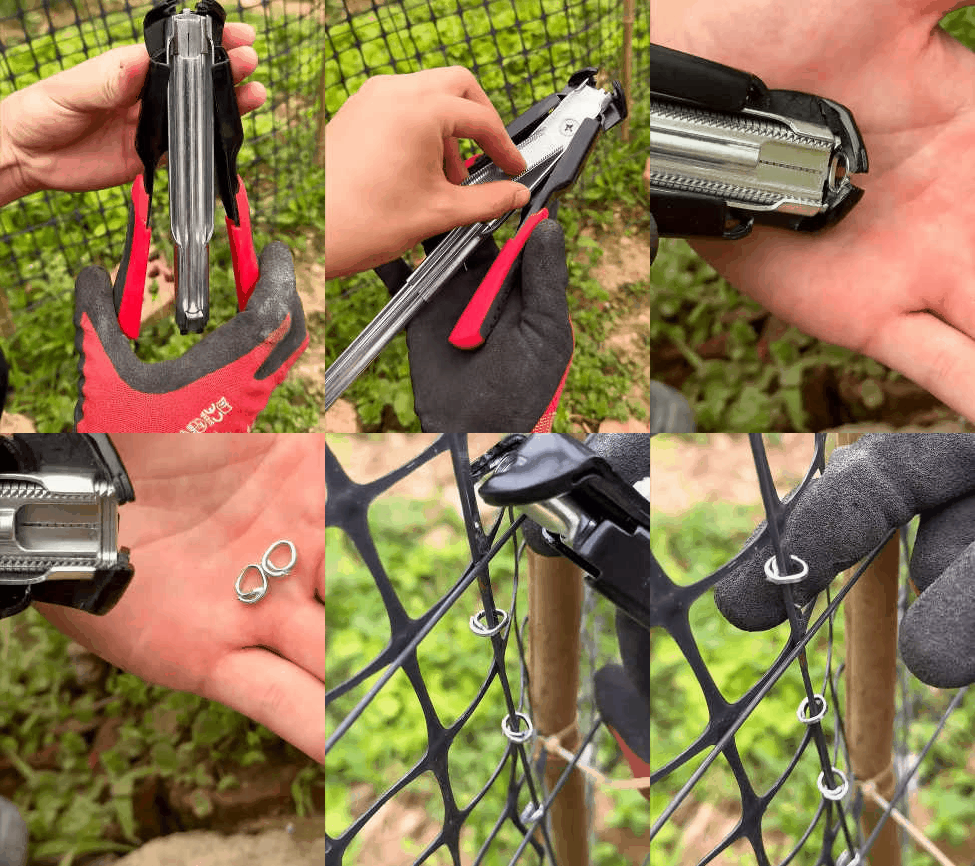
Hog Ring Pliers Kit
Regular price $89.00Regular priceUnit price per$98.00Sale price $89.00SALE ENDS AT MIDNIGHT -

 SALE ENDS AT MIDNIGHT
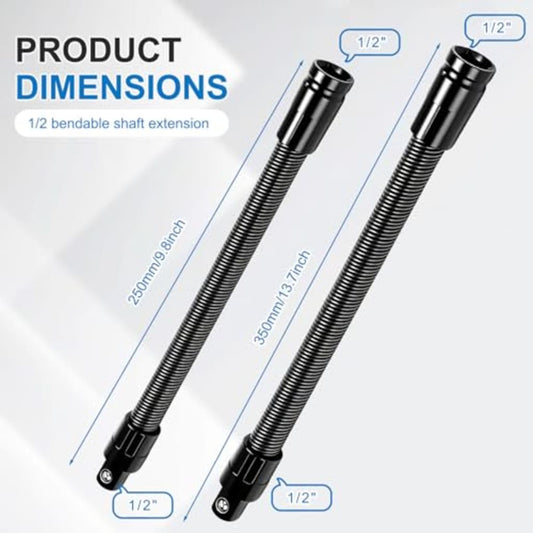
Flexible Socket Extender for Tight Spaces
Regular price $119.00Regular priceUnit price per$215.00Sale price $119.00SALE ENDS AT MIDNIGHT


Why Tradespeople Choose Galixo
Built to lastForged and hardened steel, not pot metal
Saves a tripDoes the job without a second pair of hands
Fits what you ownStandard sizes, no proprietary adapters
90-day returnsWrong tool for the job? Send it back
Yes. The ratcheting design and heavy-duty claw work with barbed wire, woven wire, electric fencing and standard chain link mesh.
Rated to 1,000 lb of pull, which covers even the heaviest agricultural wire.
Yes. The 3 1/8 inch foot and 5 degree tilt accommodate posts wider than the standard 2 3/8 inches.
About 3.69 pounds. Solid enough to feel planted, light enough to carry down the fence line.
Yes, for polywire and high-tensile electric wire. Turn the fence off before you work on it.
Orders ship from the US with tracking on every order. Check our shipping policy for current delivery windows to your state.