
A nut halfway down a length of all-thread stops a normal socket dead, however deep it is. The head on this one is open all the way through, so the rod passes out the back and you keep ratcheting. That single detail is most of the reason to own it.


Pass Through Ratchet Wrench
$44.00
$89.99
✅ Four hex sizes in one wrench: 1/4, 5/16, 3/8 and 7/16 inch SAE
✅ Pass-through head clears long threaded rod and protruding bolts
✅ Ninety-tooth ratchet needs only a small arc to turn a fastener
✅ Reversing switch at each end, so you never flip the wrench
✅ Colour-coded size markings so you grab the right end first time
Want it by Friday, 23. Oct?
What you get
One wrench, four sizes, two at each end: 1/4, 5/16, 3/8 and 7/16 inch SAE. Both ends ratchet and both ends reverse. It is 6.5 inches long and weighs a little over 3 ounces, so it lives in a pouch rather than a case.
Materials
Alloy steel throughout, in a black finish, with the size markings picked out in colour so you can tell the ends apart at a glance rather than turning the wrench over to read a stamp. The ratchet mechanism carries ninety teeth.
Care
A fine-tooth ratchet is the one part that minds dirt. Keep grit out of the heads, work the reversing switch through both directions now and then, and put a drop of light oil in rather than grease, which collects dust and slows the pawl.
Will it cover the sizes you meet?
Four figures that answer it before you buy.
4sizes
1/4, 5/16, 3/8 and 7/16 inch SAE, two on each end of the wrench
90teeth
Four degrees of swing per click, which is what gets you into a panel
2switches
One at each end, so you change direction without lifting off the nut
6.5inch
Short enough to live in a pouch instead of a case in the van

The rod goes straight through it
A nut on a long stud, two ways at it
The thread sticking out is the whole problem.
 Without
The socket bottoms out
Even a deep socket only swallows so much thread, so you end up turning the nut a flat at a time with an open-ended spanner, or cutting the rod down to suit the tool.
 With the wrench
Straight over the rod and keep going
The head is open front to back. The thread passes through and you ratchet the nut the whole way down without ever coming off it.


Four sizes in one wrench
Four things worth knowing before it goes in the pouch.
Pass-Through Heads
Open front to back, so threaded rod, long bolts and studs run clear through instead of stopping the tool.
Ninety-Tooth Ratchet
Four degrees between clicks. In a crowded panel that is the difference between turning the nut and taking the wrench off every stroke.
A Switch At Each End
Reverse the direction with your thumb, on whichever head is in use, without pulling off the fastener and losing your place.
Colour-Coded Sizes
Marked in colour rather than stamped, so you pick the right end by looking at it instead of rolling it over in your hand.
Where a socket set cannot follow
Long thread, short swing, and no room for a case of tools.

Panels and enclosures
Lugs, earth bars and cover nuts in a box with no room to swing anything longer.

Strut channel and hangers
Nuts running down all-thread drops, which is exactly what the open head is for.

Appliances and machines
Covers, brackets and clamps where the fastener is deep in and the access is narrow.

Battery and bracket work
Terminal clamps and studs in an engine bay where a socket and bar will not turn.
Why not just carry a socket set?
Fair question, and the last row is the honest answer.
A ratchet and socket set
- Even a deep socket bottoms out
- Pull the socket, find the next one
- A ratchet handle needs an arc
- A case, or a handful of loose sockets
- Every size, and a bar when you need it
Pass Through Ratchet Wrench
- The rod passes right through
- Turn the wrench round
- Four degrees is enough for a click
- One wrench in a pouch
- Four SAE sizes, hand torque only

Reverse it without letting go
Working blind behind a panel, the worst part of a plain ratchet wrench is having to pull it off and flip it over to go the other way, then spend a minute finding the nut again. A switch sits on each head here, so your thumb changes direction and your hand never moves.
Three moves, start to finish
Most of the time you will do all three without looking at it.

1
First
Pick the end with your size
Two sizes per end, marked in colour. Seat it fully so the load sits on the flats and not on the corners.

2
Then
Set the direction
Flick the switch on that head for tighten or loosen. You can change your mind later without taking the wrench off.

3
Finally
Short strokes, let it click
A fine ratchet is made for small movements. Nudge it and let the teeth do the work rather than hauling on a short handle.
New arrivals
-

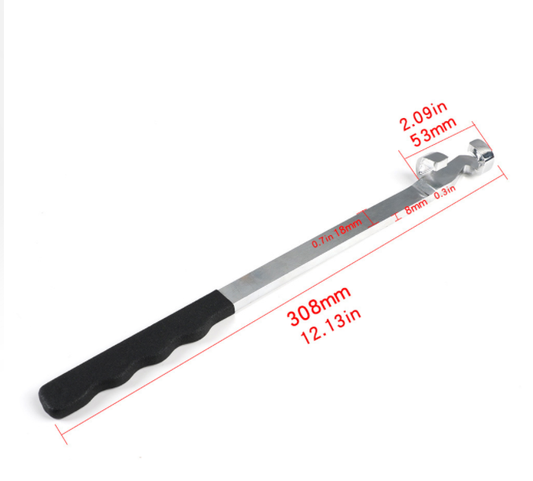 SALE ENDS AT MIDNIGHT
Universal Wrench Extender Bar
Regular price $89.00Regular priceUnit price per$139.00Sale price $89.00SALE ENDS AT MIDNIGHT -

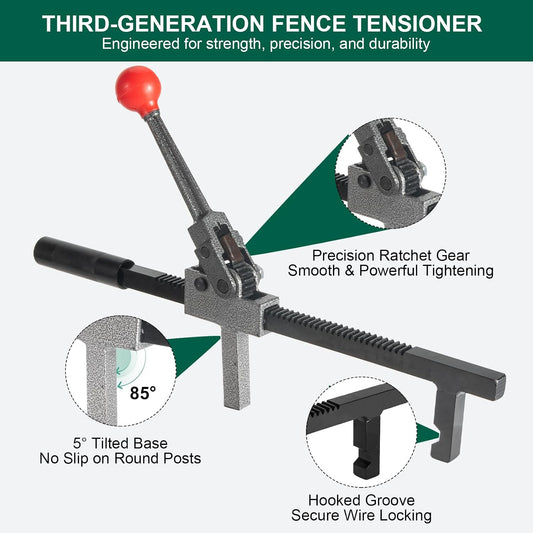 SALE ENDS AT MIDNIGHT
Ratchet Fence Tightener
Regular price $119.00Regular priceUnit price per$187.00Sale price $119.00SALE ENDS AT MIDNIGHT -

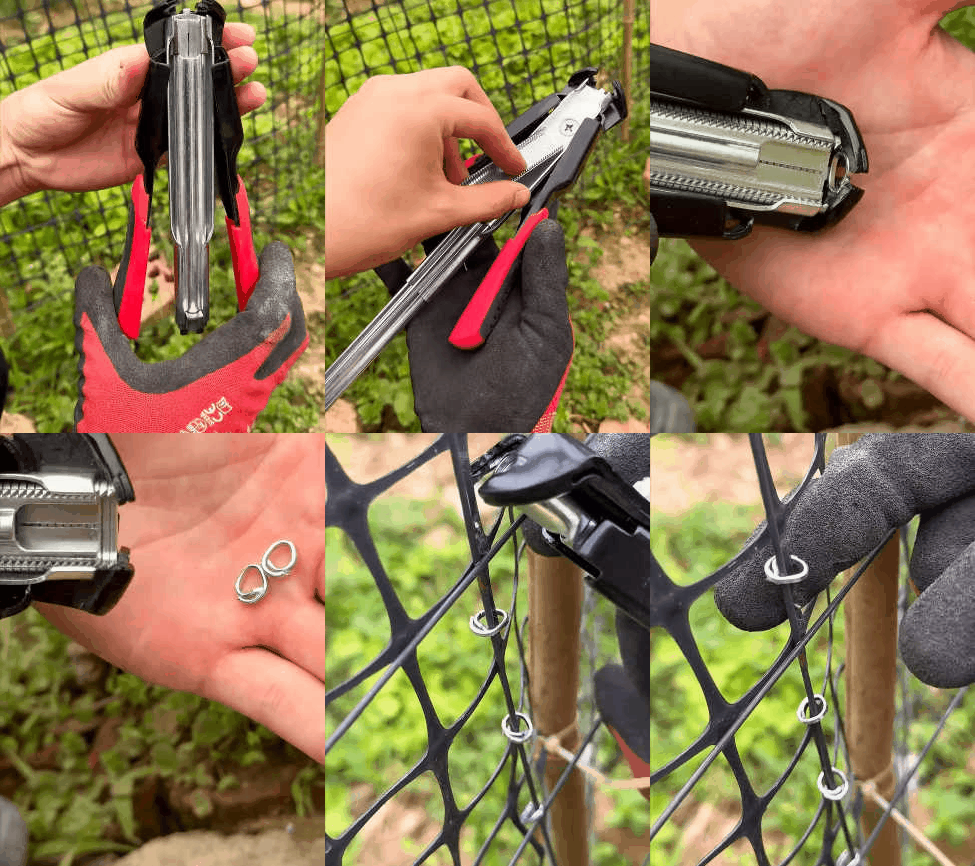 SALE ENDS AT MIDNIGHT
Hog Ring Pliers Kit
Regular price $89.00Regular priceUnit price per$179.00Sale price $89.00SALE ENDS AT MIDNIGHT -

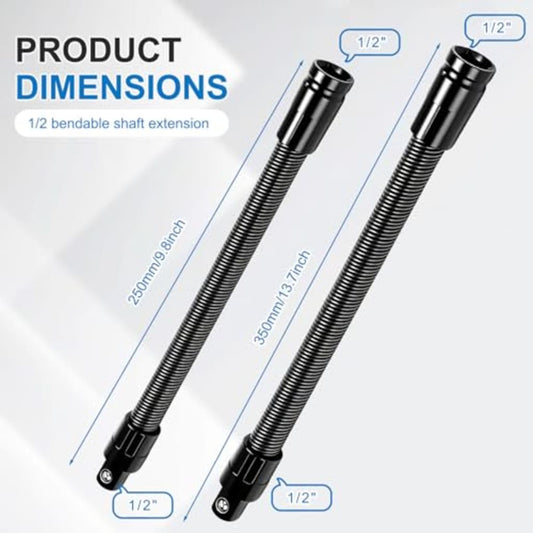 SALE ENDS AT MIDNIGHT
Flexible Socket Extender for Tight Spaces
Regular price $119.00Regular priceUnit price per$215.00Sale price $119.00SALE ENDS AT MIDNIGHT


Why Tradespeople Choose Galixo
Built to lastForged and hardened steel, not pot metal
Saves a tripDoes the job without a second pair of hands
Fits what you ownStandard sizes, no proprietary adapters
Tracked deliveryA tracking number on every order
90-day returnsWrong tool for the job? Send it back
Four, all imperial: 1/4, 5/16, 3/8 and 7/16 inch, with two on each end. Those are the sizes that turn up most often on panels, strut, appliances and light machinery in the US.
The head is open all the way through instead of closed at the back like a socket. A bolt or a length of threaded rod can stick out as far as it likes and the wrench still sits flat on the nut, so you can run a nut the full length of a drop rod without stopping.
Yes, and the first one catches people out. It is imperial only, so if your work is metric this is the wrong wrench and no adapter fixes that. It is also four fixed sizes, not a set. Beyond that it is a hand tool with a fine ratchet and a short handle: no bar over the end, nothing on an impact driver, and for a seized or high-torque fastener break it loose with a proper socket and bar first, then use this to wind it out.
Both ends ratchet and both have their own reversing switch, so whichever end you are using you can change direction with a thumb without lifting the wrench off the fastener.
We ship from two warehouses, one in California and one overseas, and the system picks whichever holds stock. To the US that is 5 to 15 business days in total from a California dispatch, or 12 to 25 business days from overseas. Every order gets a tracking number by email at dispatch. Shipping is free either way.
If your parcel has not arrived within 30 business days of dispatch, email us and we will reship or refund in full, your choice, with nothing to send back. You also have 90 days from delivery to return an item you no longer want. We reply to every message within one business day.