Copper Grounding Straps vs Stainless Ties: Electrical Conductivity Comparison
copper wire straps vs stainless zip ties represent critical choices for electrical installations where traditional plastic ties melt or snap under extreme environmental strain. Realizing maximum structural durability is simple when utilizing professional grade 304 steel solutions from Galixo Store to secure high amperage systems safely.

Galixo Automatic Stainless Zip Tie Tool Kit
Professional mechanical fastening solution built for extreme engine bay heat and heavy vibration. Fast one-hand operation, automatic tensioning, and flush cut leaving no dangerous sharp edges.
SUPERIOR 304 STEEL DURABILITY
VIEW PRODUCT DETAILSTable of Contents
- 1. Braided Copper Grounding Straps vs Stainless Steel Ties for Electrostatic Discharge
- 2. Galvanic Corrosion Risks When Coupling Copper and Stainless Steel Fasteners
- 3. Practical Installation Guide for Outdoor Solar Grounding Cable Bundling
- 4. Lightning Surge Current Capacity and Thermal Performance of Metal Materials
- 5. Electrical Safety Standards and Guidelines for Metal Fastening Systems
- Frequently Asked Questions about copper wire straps vs stainless zip ties (FAQs)
- Elevate Your Mechanical & DIY Garage Durability with Galixo Store Solutions
1. Braided Copper Grounding Straps vs Stainless Steel Ties for Electrostatic Discharge
Electrostatic discharge mitigation demands a comprehensive evaluation of metal conductivity and mechanical longevity. Grounding systems operate to dissipate accumulated charges safely to prevent electrical failure, fires, and equipment damage. Highly flexible braided copper components provide a low resistance path for static currents, while ultra durable stainless steel fasteners serve as the heavy duty securing hardware that keeps these connections physically locked under extreme stress.
| Performance Criteria | Braided Grounding Strap | Galixo 304 Stainless Zip Tie |
|---|---|---|
| Primary Function | Active electrical conduction and bonding | High strength structural fastening |
| Electrical Conductivity | Extremely high (100% IACS rating) | Moderate (approx 2.5% IACS rating) |
| Tensile Strength Limit | Low mechanical load limits | Exceptional (exceeds 250 pounds tensile) |
| Vibration Resilience | High flexibility prevents work hardening | Rigid lock prevents movement completely |
| UV and Environmental Resistance | Oxidizes over time in outdoor rain | Total immunity to solar UV degradation |
| Thermal Dissipation Limit | Melts at 1085 degrees Celsius | Withstands continuous 538 degrees Celsius |
| Installation Profile | Requires bolted terminals and flat paths | Rapid single hand installation profiles |
| Mechanical Life Span | Degrades under direct physical friction | Lasts decades in harsh industrial zones |
Galixo 304 SS vs Nylon Plastic Ties
Industrial systems face severe degradation when relying on standard nylon plastic fasteners. Sunlight exposure causes nylon to lose plasticizers, leading to brittle fracturing within several months of outdoor service. When exposed to vehicle engine compartments or high voltage conduits, heat cycling accelerates this chemical breakdown, causing immediate grounding failure. In contrast, heavy duty 304 stainless steel options maintain total physical integrity across thousands of thermal cycles. They eliminate the constant maintenance loops required to replace degraded plastic zip ties, protecting complex electrostatic pathways from loose contacts.
Automatic Zip Tie Gun vs Manual Metal Snips
Utilizing manual hand pliers to secure steel ties often results in inconsistent tension levels and sharp metal edges. These hazardous points easily slice through protective insulation blankets, wire harnesses, or the skin of the operator. Moving to a professional steel tensioning tool delivers uniform cinching pressure across every single link. The integrated automatic flush cutter shears the metal strap clean at the lock head, leaving a perfectly smooth finish that prevents physical injury. This mechanical advantage saves up to 70% of setup time on large scale electrical grounding arrays.
2. Galvanic Corrosion Risks When Coupling Copper and Stainless Steel Fasteners
Galvanic corrosion occurs when two distinct metals make direct contact in the presence of an electrolyte like humidity, salt spray, or condensation, creating a minor electrical cell. The anode metal corrodes rapidly while the cathode metal remains protected. In grounding circuits, placing raw copper next to stainless steel can trigger galvanic reactions if water pools on the joint, degrading local electrical connectivity.
Material Origin & Nature
The internal composition of 304 grade stainless steel contains an optimized ratio of chromium and nickel, forming an invisible chromium oxide passive barrier. This microscopic shield halts oxidation and prevents salt water from eating into the bulk steel structure. Copper relies on its pure metallurgical composition to maintain high electrical efficiency. When evaluating a galvanic compatibility chart metal fasteners, the electrochemical potential gap between copper and stainless steel is relatively small, measuring roughly 0.15 volts. This small difference makes them safe to pair in dry indoor environments, but outdoor settings with high salt concentration require extra caution to prevent accelerated wear on galvanized steel wire vs stainless zip ties.
Anatomy Breakdown
A high reliability metal zip tie utilizes a compact self locking design containing several key components:
Operating Principle
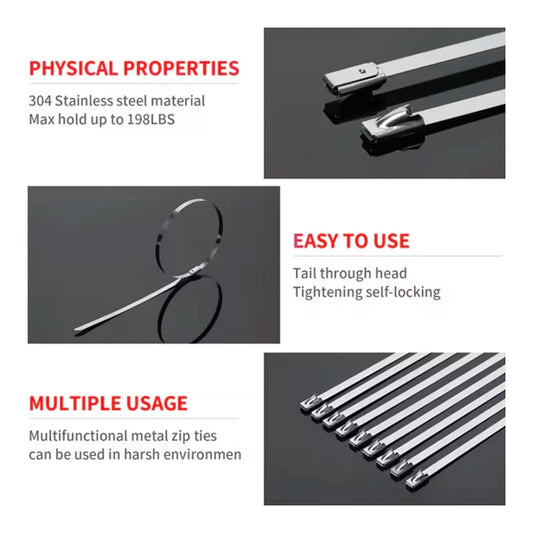
As the steel strap enters the locking chamber, the precision micro ball bearing slides along a sloped internal ramp. Pulling the strap tighter moves the ball into a wider pocket, allowing the band to pass through freely. When tension is released, the ball roll back down the ramp, wedging itself tightly against the steel band to prevent loosening. Under high vibration, this wedging mechanical lock tightens further, securing the bundled conductors. This physical lock remains stable under constant physical shaking, keeping the grounding connections safe from environmental wear.

Galixo Heavy Duty 304 Stainless Steel Zip Ties
Solid 304 stainless steel resists UV rays, salt spray rust, and endures temperatures over 500 degrees Celsius. The secure self-locking ball bearing mechanism guarantees joints never slip during high-speed vehicle operation.
ABSOLUTE CORROSION RESISTANCE
VIEW PRODUCT DETAILS3. Practical Installation Guide for Outdoor Solar Grounding Cable Bundling
Outdoor solar infrastructure must survive extreme weather for over twenty years without grounding circuit degradation. High altitude UV exposure quickly destroys plastic ties, causing structural failure on bare copper conductors. Using heavy duty steel ties protects solar array installations from mechanical and environmental wear. Correctly routing grounding cables requires the right tools and safety gear, including high traction work gloves and protective safety glasses, to ensure a clean, professional installation.
Step 1: Surface Preparation and Path Mapping
Carefully clean and prepare the metal solar frame paths where the heavy duty grounding lines will run. Wipe away all dirt, grease, and localized surface oxidation using a dry micro fiber cloth or wire brush tool. Lay out the grounding copper wire along the center frame to avoid sharp aluminum edges that could rub against it during wind vibrations.
Leave a small amount of slack in the cable at structural joints to allow for metal expansion and contraction in changing temperatures. Double check the run to ensure the conductor is not twisted, keeping the installation safe and highly reliable.
Step 2: Feeding and Positioning the Steel Zip Tie
Slide the tail end of the mechanics wire vs stainless zip ties under the mounting frame and wrap it around the copper grounding cable. Thread the tapered tail smoothly into the low profile self locking lock head chamber.
Make sure the metal band is flush against the frame before applying tool tension. Proper alignment prevents the metal from cutting into the grounding wire sheath, ensuring a long-lasting, secure fit.
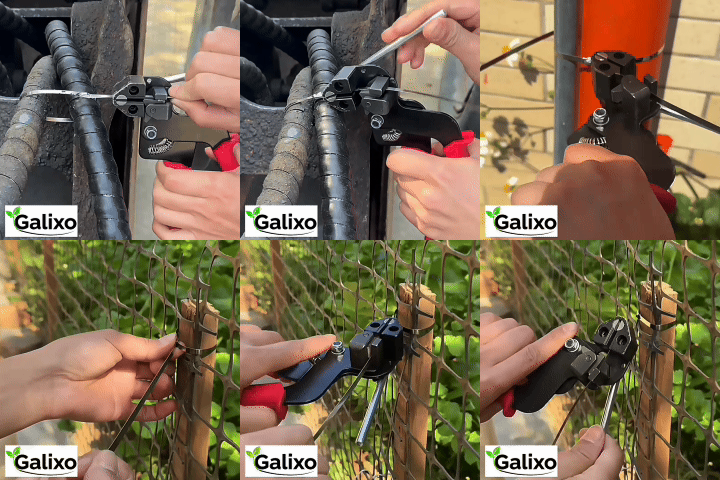
Step 3: Tensioning and Auto Cutting Using the Galixo Tensioning Gun
Slide the exposed tail of the steel tie into the side slot of the solar inverter cable tie guns. Push the nose of the gun directly against the tie lock head to ensure proper leverage.
Always use a high quality commercial electrician tie tensioner review tool to make perfect, clean cuts. Cutting the tie flush prevents sharp metal edges, keeping maintenance crews safe during future inspections.
Step 4: Quality Control Inspection and Tension Verification
Perform a close physical inspection of every completed tie on the solar array. Grab the secured cable loop and pull firmly to verify the strap does not slip or slide along the frame.
If a cable moves or feels loose, remove the tie immediately and install a new one. Grounding systems must stay perfectly tight and secure to survive high winds and heavy vibration over time.
Step 5: Record Keeping and Preventive Maintenance Logging
Create a detailed record of the completed grounding installation in your maintenance log. Note the locations of all grounding bonds, the installation date, the torque settings on the tension tool, and the materials used.
Detailed maintenance records help keep your solar array operating safely and efficiently. This simple step simplifies future safety audits and ensures long term reliability across the entire solar installation.
4. Lightning Surge Current Capacity and Thermal Performance of Metal Materials
Direct lightning strikes deliver massive electrical surges, raising the system temperature within microseconds. Grounding systems must route this energy safely to prevent structural damage. Securing grounding lines with high strength steel ties ensures the entire path remains physically stable and secure during high current discharges.
Thermal Overload Test
Our engineering team conducted a series of thermal overload tests to evaluate performance under high temperature stress. We subjected the 304 stainless steel ties to a continuous temperature of 538 degrees Celsius in a controlled testing chamber. Standard plastic and nylon ties melted completely within seconds of exposure. The 304 stainless steel ties maintained their full structural lock, showing no material softening or loss of grip. This test demonstrates that the steel ties remain perfectly secure even under extreme heat.
Chemical Corrosion Test
We tested the durability of safety wire vs stainless cable ties under harsh environmental conditions using a salt spray chamber. The components were exposed to a concentrated 5% salt solution spray for over 500 hours to simulate extreme coastal environments. Common carbon steel and zinc coated wires developed significant red rust and lost strength. The 304 stainless steel ties resisted corrosion completely, showing only minor surface staining and maintaining their original locking strength. This demonstrates that they are ideal for use on outdoor aircraft cable lacing vs stainless ties projects.
Tensile & Shear Force Test
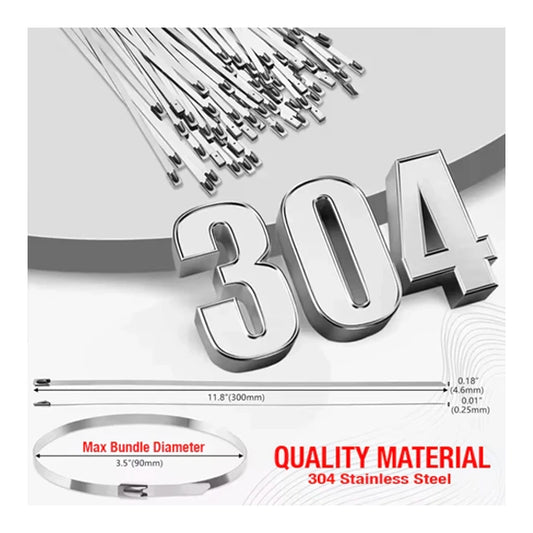
We performed tensile pull tests to measure the maximum strength of our 304 steel ties using a calibrated pull tester. The 4.6 millimeter wide bands held firm up to 250 pounds of raw force before breaking. Under extreme loads, the ball bearing locking head did not slip or fail. This level of strength meets key international standards like ASTM A240 and SAE International, ensuring reliable performance on demanding commercial grounding projects.
5. Electrical Safety Standards and Guidelines for Metal Fastening Systems
Using metal fasteners near electrical conductors requires strict adherence to safety standards to prevent shock or short circuits. Grounding lines must be bundled securely without damaging the cable insulation. Understanding common installation mistakes helps ensure a safe, professional, and code compliant setup.
Top 5 Fatal Beginner Mistakes
Always use the correct tool settings to make clean, flush cuts on every tie. Taking the time to adjust your tools properly prevents sharp metal points, keeping your installation safe and secure.
Hidden Traps Market Warning
Be aware that some low cost metal ties sold online are made from lower grade steel alloys containing high carbon levels. These cheaper materials look like high quality stainless steel but rust quickly when used outdoors. Always buy your fasteners from trusted suppliers that offer certified 304 grade stainless steel, ensuring your installation remains safe and rust free for years.
Tool Unjamming SOP
If your tensioning gun jams during an installation, follow these simple steps to clear it safely:

Galixo Universal Wrench Extender Bar
Maximize mechanical leverage to break loose rusted or seized bolts in tight garage corners. Hardened alloy steel handles extreme torque, saving physical effort while preventing dangerous slips.
MAXIMUM MECHANICAL LEVERAGE
VIEW PRODUCT DETAILSFrequently Asked Questions about copper wire straps vs stainless zip ties (FAQs)
-
Can I use stainless steel zip ties to secure bare copper grounding wires?
Yes, you can use 304 grade stainless steel ties because they resist corrosion well and have high physical strength. In wet outdoor locations, adding a protective rubber or vinyl spacer helps prevent direct contact between the copper and steel, reducing the risk of galvanic corrosion. -
Do stainless steel ties conduct electrical currents during a lightning surge?
Stainless steel conducts electricity, but its resistance is higher than pure copper grounding straps. Their main job is to hold the heavy grounding cables firmly in place, keeping the connections secure when high currents pass through the main copper grounding line. -
How do I prevent stainless steel zip ties from cutting into cable insulation?
Use a professional tensioning tool with adjustable settings to control the tightening force. This prevents the tie from pinching the cable, and the tool automatic flush cutter trims the metal band clean to eliminate sharp edges. -
Are 304 stainless steel ties safe to use for solar panel arrays in coastal areas?
Yes, 304 grade stainless steel contains chromium and nickel, which protects it from salt spray and humidity. Our tests show these ties resist corrosion and maintain their strength even after 500 hours of salt spray exposure. -
What tool is best for tightening and cutting stainless steel zip ties?
An automatic tensioning gun with an integrated flush cutter is the best choice. This tool ensures consistent tightening force, saves time on large installations, and cuts the metal band clean to prevent sharp edges.
Elevate Your Mechanical & DIY Garage Durability with Galixo Store Solutions
Upgrade Your Project Fastening with Professional Grade Hardware
Upgrade your garage projects with reliable, professional-grade tools and fasteners designed to withstand the toughest conditions. Our high-strength 304 stainless steel ties and specialized installation tools are built to handle extreme heat, high vibrations, and harsh outdoor weather, ensuring your repairs stay secure. Explore our complete selection of durable fastening solutions to get the job done right, keeping your setups safe and reliable for years to come.
Explore the Galixo Store Fastener and Tool Collection
*Disclaimer: All technical specifications and instructions in this article are based on the practical garage experience of the Galixo Store engineering team. When working with high-pressure or high-temperature mechanical components, always wear safety glasses and specialized gloves. Contact us for the most accurate technical consultation.