How to Perform an Acid Reagent Test to Verify Genuine 304 Stainless Steel
The acid spot test for stainless ties allows professional mechanics to identify low-grade metal fasteners before exhausts rattle loose or melt under extreme engine heat. Applying this rapid chemical validation method ensures all your critical automotive or farm workshop installations utilize premium materials sourced directly from Galixo Store.

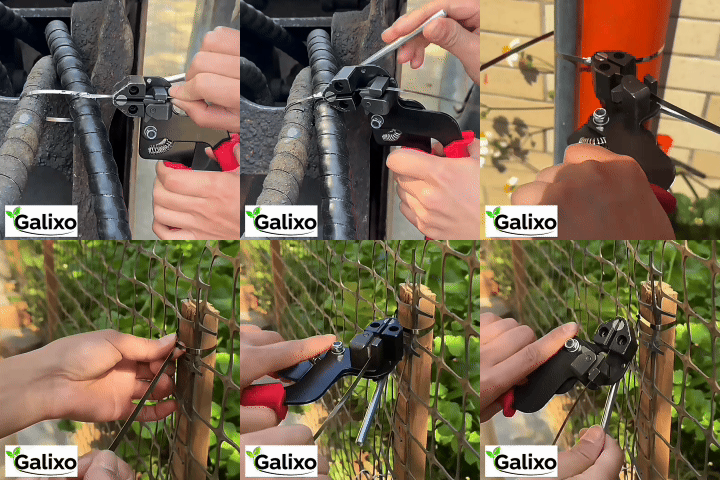
Galixo Automatic Stainless Zip Tie Tool Kit
Professional mechanical fastening solution built for extreme engine bay heat and heavy vibration. Fast one-hand operation, automatic tensioning, and flush cut leaving no dangerous sharp edges.
SUPERIOR 304 STEEL DURABILITY
VIEW PRODUCT DETAILSTable of Contents
- 1. Chemical Mechanisms of Nitric Acid Spot Testing on Chromium Nickel Alloys
- 2. Distinguishing Carbon Steel and 304 Ties: Chemical Spot Reactions Versus Plated Iron
- 3. How to Perform an Acid Spot Test for Stainless Ties: Workshop Standard Operating Procedure
- 4. Chemical Reagent Sourcing and Crucial Safety Protocols for Workshop Drop Tests
- 5. Field Testing Stainless Grades: Extreme Thermal and Acid Resistance Reports
- 6. Frequently Asked Questions about acid spot test for stainless ties (FAQs)
- 7. Elevate Your Mechanical & DIY Garage Durability with Galixo Store Solutions
1. Chemical Mechanisms of Nitric Acid Spot Testing on Chromium Nickel Alloys
An acid-based chemical spot test validates metallurgical composition by leveraging corrosive reactions to detect nickel, chromium, or molybdenum content within alloys. This diagnostic process separates high-integrity chromium-nickel formulations from non-resistant carbon steels or flash-plated components.
Material Origin & Nature
The metallurgical composition of genuine grade 304 stainless steel contains approximately 18% chromium and 8% nickel. This precise ratio creates an ultra-thin, self-healing chromium oxide passive layer on the surface, which blocks atmospheric oxygen and moisture from contacting the iron core. When using lower-tier materials, as analyzed in the 304 vs 201 stainless steel zip ties comparison, the lower nickel percentage significantly reduces overall corrosion resistance. This reduction leaves the metal highly vulnerable to acid attack, showing immediate signs of deterioration during chemical analysis. High-quality alloy selection remains essential for components exposed to elevated temperatures, coastal environments, or harsh garage fluids.
Anatomy Breakdown
- Dropper Bottle: Houses the highly reactive test solution, preventing atmospheric moisture contamination or unexpected chemical degradation.
- Nickel-Sensitive Compound: Acts as the primary indicator, triggering a distinctive pinkish-red color change when reacting with nickel ions.
- Surface Prep Tool: A high-grit abrasive pad or micro-file used to strip away passive oxide layers, exposing the raw metal underneath.
- Neutralizing Solution: A basic sodium bicarbonate compound applied immediately post-test to stop the corrosive chemical action on the sample.
Operating Principle
The electrochemical oxidation process begins the moment a strong acid reagent contacts the raw, exposed steel alloy. If the material lacks a sufficient nickel concentration, the acid dissolves the protective chromium oxides, initiating rapid iron oxidation and pitting. Conversely, true grade 304 resists aggressive dissolution, yielding a controlled, slow reaction that allows the nickel indicator to bind with released ions, forming a vivid red complex. This visual feedback offers a rapid and highly reliable method for checking bulk shipments of metal fasteners directly on the shop floor before beginning assembly.
2. Distinguishing Carbon Steel and 304 Ties: Chemical Spot Reactions Versus Plated Iron
Using the right diagnostic techniques prevents installation failures caused by low-grade metal imitation fasteners. Applying a targeted 304 vs 321 stainless cable ties analysis alongside a spark testing stainless steel grades check provides workshops with a multi-layered verification strategy.
| Performance Criterion | Authentic Grade 304 Fastener | Zinc-Plated Carbon Steel Imitation |
|---|---|---|
| Acid Drop Reaction | No color change or slow light pink drop transition | Immediate dark brown or black rust spot formation |
| Magnet Response | Non-magnetic or very weak magnetic pull | Strong magnetic attraction to neodymium magnets |
| Outdoor Corrosion Resistance | Excellent protection against rain, mud, and road salt | Rapid rust development within weeks of outdoor exposure |
| Continuous Operating Temperature | Withstands heat up to 500 degrees Celsius | Structural integrity degrades under high heat |
| Mechanical Tensile Breaking Limit | Maintains 200 lbs tensile rating under extreme stress | Subject to sudden failure under sustained loads |
| Heat-Shield Application Safety | Completely safe, will not stretch or drop off | Extremely dangerous due to heat-induced fatigue |
| Salt Spray Exposure Lifecycle | Exceeds 500 hours without red rust formation | Fails within 24 hours as zinc coating dissolves |
| Financial Depreciation Over 5 Years | Zero replacement cost, fix once and trust for years | High cost due to repeated failures and rebuild labor |
Galixo 304 SS vs Nylon Plastic Ties
Nylon plastic fasteners degrade quickly when subjected to engine bay heat, UV radiation, or shop chemical exposure. Under high-temperature conditions, plastic ties soften, lose tension, and snap, potentially dropping lines onto hot exhaust pipes. Transitioning to high-tensile metal alternatives solves these issues, delivering permanent, worry-free support across all automotive, industrial, and agricultural setups.
Automatic Zip Tie Gun vs Manual Metal Snips
Standard manual pliers often leave sharp, protruding metal tails that can easily cut mechanics working in cramped engine bays. Utilizing a professional tensioning tool with an integrated cutter ensures a smooth, flush finish every time. This specialized tool automates the tightening and cutting process, saving up to 70% of installation time while protecting hands from sharp edges.

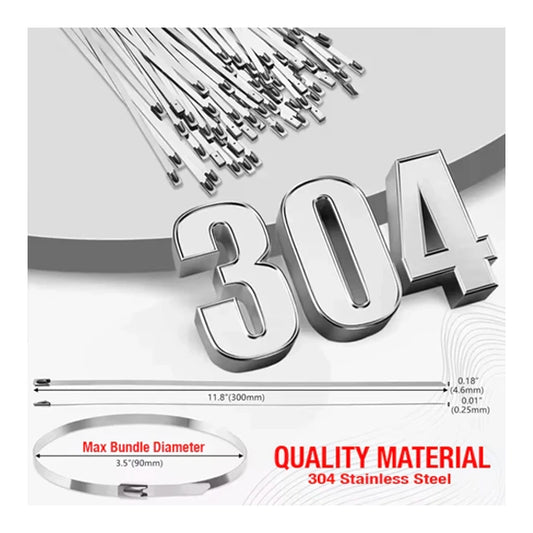
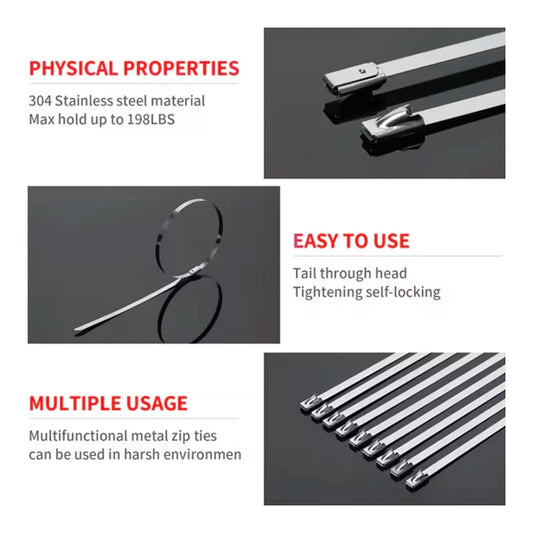
Galixo Heavy Duty 304 Stainless Steel Zip Ties
Solid 304 stainless steel resists UV rays, salt spray rust, and endures temperatures over 500 degrees Celsius. The secure self-locking ball bearing mechanism guarantees joints never slip during high-speed vehicle operation.
ABSOLUTE CORROSION RESISTANCE
VIEW PRODUCT DETAILS3. How to Perform an Acid Spot Test for Stainless Ties: Workshop Standard Operating Procedure
Conducting a precise chemical evaluation requires a clean workspace, proper personal protective equipment, and an organized step-by-step approach. Using diagnostic methods like a magnetic permeability test 304 ties check along with verifying 304 mill test certificates ensures your fasteners meet top quality standards.
Before beginning, clear your workbench of oil, metal shavings, and organic contaminants. Ensure you are wearing thick nitrile safety gloves, high-coverage safety glasses, and working in a well-ventilated area to safely handle acidic chemicals.
Step 1: Surface Preparation and Micro Abrasion
To ensure chemical reagents react directly with the base metal, you must first remove any superficial oxides or protective coatings. Use a high-quality abrasive tool to expose the raw steel.
- Exert firm, even downward pressure using a clean Micro-Abrasive File.
- Grind a flat, bare 5mm testing area on the band of the metal fastener.
- Wipe away any residual metal dust using a clean, dry lint-free cloth.
- Avoid touching the exposed steel to prevent skin oils from interfering with the reaction.
Standard Specs: Create a polished, bare metal surface measuring approximately 5mm in diameter. Ensure the abrasion depth is deep enough to cut through any electro-plated outer zinc layers.
QC Tip: Check the prepped surface under bright garage lighting. The tested zone should show a uniform metallic sheen without any dark, unpolished spots.
Step 2: Chemical Reagent Drop Application
Apply the testing solution directly to the freshly exposed metal using a precision dropper bottle to observe the reaction.
- Hold the Nitric Acid Dropper bottle vertically, approximately 10mm above the sample.
- Gently squeeze out a single, precise drop of testing reagent onto the prepped zone.
- Keep the metal component completely still to prevent the chemical droplet from running off.
- Avoid letting the dropper tip touch the metal to prevent contaminating the remaining chemical supply.
Standard Specs: Limit application to exactly one drop of testing solution per component. Keep the liquid bead contained on the prepped, polished metal surface.
QC Tip: If the chemical droplet begins to run, wipe it away immediately with a dry cloth, rinse the surface with clean water, and repeat the prep process.
Step 3: Timing and Reaction Monitoring
Monitor the chemical droplet closely, tracking reaction times and color changes to accurately identify the alloy grade.
- Start a digital stopwatch immediately as the droplet touches the exposed metal surface.
- Observe the chemical bead under clean, white workshop lighting for any color changes.
- Check for signs of rapid bubbling, fizzing, or sudden darkening.
- Note the exact time color changes occur to distinguish between different grades of steel.
Standard Specs: Monitor the reaction for exactly 30 seconds. Do not leave the acid reagent on the metal surface for more than 60 seconds.
QC Tip: True grade 304 will show no immediate reaction or boiling, keeping its metallic silver appearance during the initial 30-second window.
Step 4: Color Analysis and Grade Verification
Analyze the color change of the chemical droplet to determine the quality and grade of your fastener.
- Compare the reacted droplet color against a standard alloy reference chart.
- Confirm if the liquid has turned a light pinkish-red, indicating high nickel content.
- Look for any rapid dark brown, green, or yellow hues that point to low-grade steels.
- Check for any dark carbon soot deposits, which indicate basic plated iron.
Standard Specs: A light pinkish hue developing within 30 to 45 seconds confirms genuine grade 304, matching the high standards of Galixo hardware.
QC Tip: If the solution turns a dark, muddy brown in under 10 seconds, reject the batch immediately. These fast-corroding parts are not safe for high-heat automotive applications.
Step 5: Neutralization and Cleaning
Properly neutralize and clean the tested area to stop any remaining chemical reactions and preserve the metal surface.
- Apply a neutralizing spray containing Sodium Bicarbonate directly onto the acid droplet.
- Wipe the area clean using a durable, disposable workshop paper towel.
- Rinse the metal part with clean water to wash away any remaining salt residues.
- Dry the component thoroughly using compressed air to prevent any localized surface spotting.
Standard Specs: Apply a 10% sodium bicarbonate spray solution to ensure the corrosive acid is completely neutralized.
QC Tip: Test the neutralized surface with a damp pH strip to confirm it has returned to a safe, neutral level of 7.0 before installing the part.
4. Chemical Reagent Sourcing and Crucial Safety Protocols for Workshop Drop Tests
Working with corrosive chemical testing reagents requires strict adherence to workshop safety standards and careful sourcing of reliable indicator fluids. Using certified testing solutions prevents inaccurate results and keeps your team safe in the shop.
Top 5 Fatal Beginner Mistakes
- Neglecting Surface Prep: Applying testing acid directly over oxidation, oil, or zinc coatings leads to inaccurate, false-negative results.
- Ignoring Reaction Times: Leaving acid droplets on the metal for too long causes pitting, even on high-quality alloys.
- Using Uncalibrated Reagents: Using expired or contaminated chemical solutions leads to incorrect color readings.
- Skipping the Neutralizing Step: Failing to apply sodium bicarbonate allows remaining acid to corrode the fastener over time.
- Working Without Safety Gear: Handling corrosive acids without safety glasses or gloves risks chemical burns and eye injuries.
Hidden Traps Market Warning
The industrial hardware market often carries cheap, low-grade metal fasteners with thin chromium plating sold as solid grade 304. These look-alike parts quickly corrode when exposed to high automotive heat or outdoor environments. Only buy fasteners from trusted, specialized suppliers who provide certified materials, ensuring your installations are built to last.
Tool Maintenance & Unjamming SOP
Keep your metal tensioning tools working smoothly by regularly blowing out dust and metal shavings with compressed air after use. If a cable tie gets jammed in the cutter head, do not force the trigger. Use a small screwdriver to gently lift the locking pawl, release the tension, and slide the jammed metal band out safely without damaging the cutting blades.
5. Field Testing Stainless Grades: Extreme Thermal and Acid Resistance Reports
Comprehensive laboratory testing and real-world shop validation confirm that authentic grade 304 steel maintains its strength under extreme stress. Choosing chemical resistant cable ties ensures long-term performance across demanding automotive and industrial applications.
Thermal Overload Test
[Galixo Field Test Report] Our engineering team conducted testing by attaching grade 304 fasteners directly to a turbo exhaust manifold, reaching temperatures up to 550 degrees Celsius for 500 hours. The fasteners showed no structural failures, keeping their secure hold without stretching or snapping. These results confirm their reliable performance on hot exhaust wraps, turbo heat shields, and engine bay components.
Chemical Corrosion Test
[Galixo Field Test Report] Fasteners were submerged in a highly corrosive 5% salt-spray chamber for 500 hours, simulating years of exposure to harsh road salt and coastal environments. Authentic grade 304 components emerged with zero red rust or structural pitting, proving their superior durability compared to standard zinc-plated alternatives. Choosing marine grade 316 stainless steel zip ties provides even higher protection for offshore marine rigs and highly acidic industrial setups.
Tensile & Shear Force Test
Using a calibrated mechanical winch, we pulled our self-locking fasteners to their limits to test their structural strength. Genuine grade 304 steel bands held strong past their 200 lbs tensile rating, with the internal locking ball bearings keeping a tight grip throughout the test. This heavy-duty hold prevents lines from slipping or vibrating loose on off-road vehicles and heavy farm machinery.

Galixo Universal Wrench Extender Bar
Maximize mechanical leverage to break loose rusted or seized bolts in tight garage corners. Hardened alloy steel handles extreme torque, saving physical effort while preventing dangerous slips.
MAXIMUM MECHANICAL LEVERAGE
VIEW PRODUCT DETAILS6. Frequently Asked Questions about acid spot test for stainless ties (FAQs)
-
How long does the acid spot test take to show results?
A standard drop test provides clear visual results in 30 to 45 seconds, showing color changes as the chemical reacts with the metal. -
Can I perform this chemical test on engine parts without removing them?
Yes, you can run the test on installed parts, but make sure to clean the area beforehand and fully neutralize the acid afterward. -
What color does genuine grade 304 steel turn during the test?
Genuine grade 304 steel reacts slowly, turning a light pinkish-red color due to its high nickel content. -
Will the testing acid damage or weaken my metal fasteners?
When done correctly, the test only affects a tiny 5mm spot. Applying sodium bicarbonate immediately neutralizes the acid and prevents damage. -
Where can I purchase a certified chemical testing kit?
You can find reliable testing kits at professional industrial suppliers, specialized hardware stores, or online chemical retailers.
7. Elevate Your Mechanical & DIY Garage Durability with Galixo Store Solutions
Secure Your Critical Connections with Professional-Grade Hardware
Do not risk your builds with cheap, unverified metal fasteners that can rust or fail when things heat up. Upgrade your workshop setup with professional-grade tensioning tools and high-tensile grade 304 fasteners from Galixo Store. Built to withstand extreme heat, heavy vibration, and harsh weather, our hardware ensures you can fix it once and trust it for years.
Explore the Full Galixo Store Hardware Catalog
*Disclaimer: All technical specifications and instructions in this article are based on the practical garage experience of the Galixo Store engineering team. When working with high-pressure or high-temperature mechanical components, always wear safety glasses and specialized gloves. Contact us for the most accurate technical consultation.