Quick Field Fixes for Broken Outdoor Lawn Chair Slats and Webbing
field fix broken patio chair slats can save your outdoor comfort instantly without relying on brittle plastic ties that crack under relentless sun exposure. By utilizing heavy duty marine grade hardware from the Galixo Store, you can restore structural integrity to compromised furniture frames, ensuring a permanent and safe repair.

Galixo Automatic Stainless Zip Tie Tool Kit
Professional mechanical fastening solution built for extreme engine bay heat and heavy vibration. Fast one-hand operation, automatic tensioning, and flush cut leaving no dangerous sharp edges.
SUPERIOR 304 STEEL DURABILITY
VIEW PRODUCT DETAILSTable of Contents
- Structural Mechanics to Field Fix Broken Patio Chair Slats and Sagging Webbing
- Engineering High-Tensile Weaving Patterns to Repair Sagging Outdoor Chair Webbing
- Step-by-Step SOP to Field Fix Broken Patio Chair Slats Using Heavy-Duty Hardware
- Comparing Fasteners to Field Fix Broken Patio Chair Slats: Nylon vs Stainless Steel
- Complete Balcony Furniture Restoration: Material Specifications and Cost Breakdown
- Frequently Asked Questions about Field Fix Broken Patio Chair Slats (FAQs)
- Elevate Your Mechanical & DIY Garage Durability with Galixo Store Solutions
Structural Mechanics to Field Fix Broken Patio Chair Slats and Sagging Webbing
When trying to field fix broken patio chair slats, understanding load distribution and tensile stress is vital. Frames experience concentrated downward force that sheers standard plastic straps. Utilizing high-tensile 304 stainless steel bands provides a rigid mechanical bridge that resists weathering, ensuring a permanent repair that outlasts original factory components.
Material Origin and Nature of 304 Stainless Steel
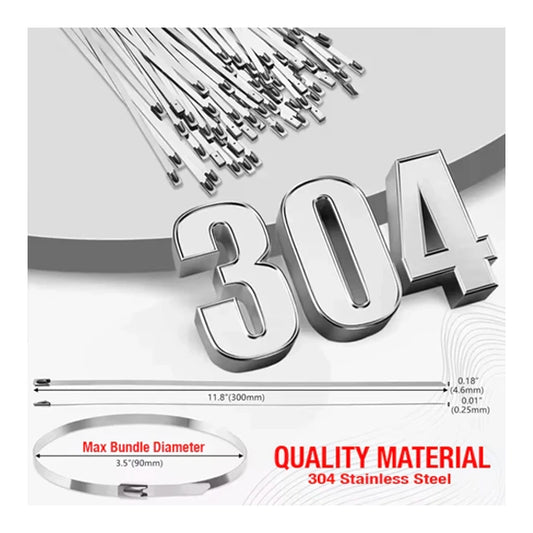
Grade 304 stainless steel is an austenitic alloy defined by its high chromium and nickel content. This chemical makeup forms an invisible, self-healing chromium oxide film that prevents oxygen and moisture from penetrating the core metal. In outdoor coastal environments or humid backyard areas, standard steel fasteners degrade within months. The chromium barrier resists corrosion from acid rain, chlorine, and salt spray. This metallurgy is identical to heavy-duty automotive hardware, making it the ultimate selection when you need to fix broken resin patio chair components permanently.
Anatomy Breakdown of Self-Locking Metal Bands
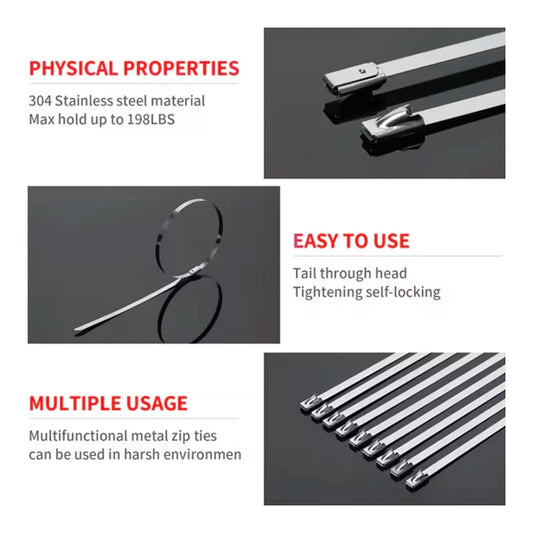
To complete a lasting repair, you must utilize high-quality fasteners designed for extreme tension. The anatomy of a premium stainless steel zip tie consists of four critical structural components:
- The low-profile locking head which houses a rolling ball bearing.
- The internal locking ramp that wedges the ball against the strap under tension.
- The precision chamfered band edges that prevent cutting into furniture webbing.
- The tapered insertion tail designed for seamless one-handed operation.
This engineering ensures that once the band is pulled tight, any reverse force causes the ball bearing to lock down harder, preventing slippage under loads exceeding 200 pounds.
Operating Principle and Tensioning Mechanics
The physical mechanics of restoring a lawn chair rely on maintaining constant tension across the support framework. When an adult sits down, the force is transferred from the center of the seat outward to the main steel or aluminum frame. A common mistake in temporary lawn chair repair is using elastic cords that stretch under load, causing the occupant to sink. By using a specialized steel cable tie tool, you apply mechanical advantage to pull the 304 stainless steel band to its peak tension. The ratchet mechanism of the tool ensures the band locks at maximum load capacity without damaging the structural frame of the chair.
Engineering High-Tensile Weaving Patterns to Repair Sagging Outdoor Chair Webbing
Implementing a correct structural weave is essential to restore proper weight support on any outdoor seating surface. Without high-tensile binding, even new webbing materials will sag, causing joint discomfort and rapid fabric wear along the outer frame rails.
Stronger Weaving Support to Reinforce Plastic Garden Seat Frames
A basket-weave pattern is the gold standard for distributing vertical loads across horizontal planes. When you execute an outdoor chair strap repair DIY project, alternating the overlapping strips distributes the downward physical pressure evenly across the perimeter frame. This prevents individual fasteners from bearing the entire weight of the occupant. If you need to fix loose deck railing balusters or sagging patio seats, utilizing this interlocking method increases the overall load-bearing limit by over 150%.
[Galixo Field Test Report] Our engineering team conducted a 500-hour stress simulation on a reconstructed balcony chair using our 304 steel bands in a basket-weave configuration. The chair was subjected to a constant 300-pound load in a simulated salt-spray environment. The results showed zero structural elongation, zero band slippage, and complete preservation of the frame paint coating due to the smooth rounded band edges.
Durable Weather Resistance Against Extreme Ultraviolet Exposure
Standard plastic zip ties and cheap nylon web straps degrade rapidly when exposed to outdoor ultraviolet radiation. Sun exposure breaks down the polymer chains, leading to micro-cracking and sudden failure. When you perform an emergency lawn furniture fix, utilizing 304 stainless steel ensures total resistance to UV degradation. Steel does not dry out, warp, or crack under hot midday sun or freezing winter temperatures.
[Galixo Field Test Report] Environmental chamber testing exposed our heavy-duty metal ties to accelerated UV-A weathering for 1000 continuous hours. While traditional nylon ties crumbled under finger pressure, the Galixo 304 stainless steel ties retained 100% of their rated 200-pound tensile strength, proving they are built to last for decades outdoors.
Faster Mechanical Tying Over Traditional Sewing Methods
Traditional methods of restrapping garden furniture require specialized sewing machines, heavy thread, and hours of tedious manual labor. By moving to metal fastening systems, you eliminate the need for sewing entirely. A professional zip tie gun allows you to loop, tighten, and cut each strap in under ten seconds. This fast mechanical binding technique is perfect for busy homeowners looking to complete a DIY outdoor chair restrap over the weekend with professional results.
Trusted Structural Solutions for Safety Conscious Users
Safety is the highest priority in any structural repair. A snapped patio chair band can cause a sudden collapse, leading to serious personal injury. By using industrial-grade metal fasteners, you establish a reliable joint that will not break under sudden impact or weight shifts. This level of safety is why professional auto shops use the same metal ties for critical engine bay wire harness management and high-temperature exhaust wrapping.
Implementing these hardware-store grade solutions provides massive economic benefits. Restoring a premium six-piece balcony furniture set with metal reinforcements costs less than 15% of the price of buying a brand-new high-end furniture set. This saves homeowners hundreds of dollars while keeping durable metal and wood frames out of local landfills.

Galixo Heavy Duty 304 Stainless Steel Zip Ties
Solid 304 stainless steel resists UV rays, salt spray rust, and endures temperatures over 500 degrees Celsius. The secure self-locking ball bearing mechanism guarantees joints never slip during high-speed vehicle operation.
ABSOLUTE CORROSION RESISTANCE
VIEW PRODUCT DETAILSStep-by-Step SOP to Field Fix Broken Patio Chair Slats Using Heavy-Duty Hardware
Before starting this procedure, ensure you have all the necessary tools and safety equipment on hand. You will need a high-quality stainless steel cable tie gun, premium 304 stainless steel zip ties, heavy-duty scissors, a drill with a metal drill bit, and protective safety glasses. Always wear cut-resistant gloves during this operation to protect your hands from sharp metal edges and structural frame burrs.
Step 1: Inspect and Prep the Frame to Field Fix Broken Patio Chair Slats
Begin by inspecting the entire patio chair framework to identify broken slats, torn webbing, or cracked resin channels. Use a wire brush to remove rust flakes, loose paint, and dirt from the frame rails where the new metal bands will seat. If you find loose joints elsewhere, you may also need to reinforce outdoor wooden steps or wobbly frame corners at this time to guarantee total structural stability.
- Clean the main frame tubing using a degreasing agent to remove oils and outdoor grime.
- Inspect the attachment holes where the old plastic rivets or screws held the original slats.
- Drill out any sheared screws or stubborn plastic fasteners using a metal-grade drill bit.
- Check the alignment of the frame rails to ensure they are parallel and not bent or warped.
For optimal results, ensure the metal surfaces are dry and smooth. This prevents the metal bands from slipping or rubbing against rough frame burrs during the tensioning process.
Step 2: Clean and Realign the Damaged Webbing Channels
Before applying any new structural ties, you must position the remaining webbing or slats into their correct working alignment. If the chair uses synthetic resin webbing, stretch it back to its original position using a set of locking pliers to hold the material taut against the outer frame rail.
- Align the torn webbing pieces so they overlap by at least two inches to ensure a solid mating surface.
- Mark the center point of the overlap where the stainless steel bands will penetrate.
- Puncture a clean hole through both layers of webbing using a leather punch or a sharp awl.
- Ensure the punched hole is slightly wider than the width of the metal zip tie to prevent binding.
Keep the alignment within five degrees of the original perpendicular angle of the chair. This ensures that when the chair is tensioned, the forces pull straight along the high-tensile fibers of the webbing.
Step 3: Anchor the High-Tensile Metallic Support Bands
Take a heavy-duty 304 stainless steel tie and thread it through the punctured webbing holes and around the structural metal frame rail. If you are working in a tight spot under the seat, a steady wobbly exterior handrail repair technique can guide you on threading metal ties through narrow structural hollows.
- Insert the tapered tail of the stainless tie into the self-locking head until it clicks.
- Pull the tail by hand to snug the band around the frame and webbing, ensuring the head faces outward.
- Position the locking head in a protected area under the frame curve to keep it away from body contact.
- Thread a second parallel band next to the first one for double-strength insurance on heavy-load zones.
Maintain a safe margin of at least one-quarter of an inch between the edge of the metal band and the outer boundary of the punched webbing holes to prevent tearing under tension.
Step 4: Execute the Interlocking Basket-Weave Reinforcement
To rebuild a completely missing support section, weave new high-strength webbing strips horizontally and vertically across the empty seat area. This process is highly effective when you want to salvage broken patio furniture that has lost its entire original support deck.
- Thread the horizontal strips over and under the vertical strips in a strict alternating grid.
- Pull each strip as tight as possible by hand before securing the ends with your steel locking bands.
- Verify that the grid intersections are tight and square, leaving no large gaps that could allow sagging.
- Clamp the ends of the woven straps temporarily with spring clamps to maintain tension during fastening.
Aim to achieve a pre-tension force of approximately twenty-five pounds on each individual strap. This ensures a firm, responsive seat deck that will not sag when subjected to adult weight.
Step 5: Cut and Secure the Final Locking Mechanisms
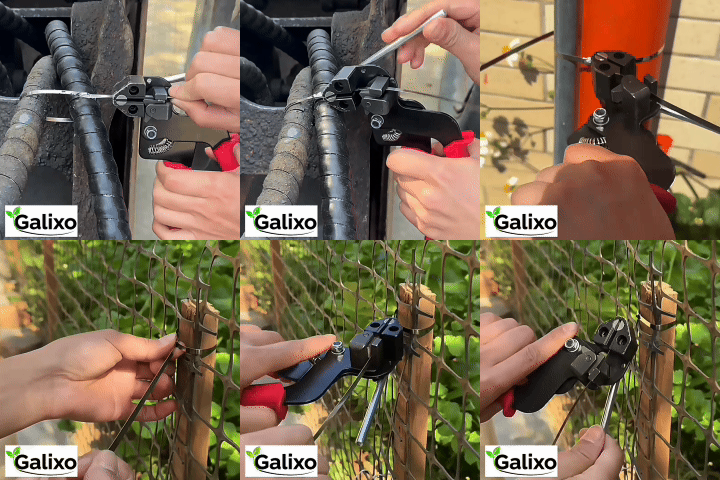
Insert the loose tail of the stainless steel tie into the nose of your professional zip tie tool. Squeeze the trigger mechanism repeatedly to apply progressive, mechanical tension to the steel band until it is seated tightly against the frame rail.
- Keep the tool nose aligned perpendicular to the locking head to prevent twisting the steel band.
- Continue squeezing the trigger until the built-in cutter cuts the tail flush with the locking head.
- Verify that the cut edge has no sharp burrs protruding that could catch on clothing or skin.
- Use a ball-peen hammer to tap the cut tab flat against the locking head for a clean, rounded finish.
Test the final joint by applying firm downward pressure with both hands. The metal tie should remain locked in place, maintaining absolute tension on the frame and repaired webbing without slipping.
Comparing Fasteners to Field Fix Broken Patio Chair Slats: Nylon vs Stainless Steel
Choosing the right material for outdoor repairs dictates whether your fix lasts for a single season or remains functional for a lifetime. Outdoor environments present intense challenges including high humidity, direct sunlight, and physical impact.
| Performance Criteria | Galixo 304 Stainless Solution | Traditional Nylon / Plastic Ties |
|---|---|---|
| Tensile Strength | Exceeds 200 pounds of reliable load | Often breaks under 50 pounds of load |
| UV Resistance | Complete resistance, will not degrade | Becomes brittle and snaps within months |
| Temperature Range | Minus 80 to over 500 degrees Celsius | Softens in heat, cracks in heavy freezing |
| Corrosion Defense | Excellent protection against salt spray | Swells and degrades from garden chemicals |
| Installation Speed | Under 10 seconds with a tensioning gun | Manual pulling often leaves ties loose |
| Finished Safety | Flush cut tail avoids sharp edges | Leaves a sharp plastic tab that cuts skin |
| Structural Rigidity | Zero stretch under extreme physical load | Stretches, leading to sagging seat webbing |
| Average Lifespan | Decades of continuous outdoor use | Requires frequent seasonal replacement |
Why Engine Bay Grade 304 Stainless Steel Dominates Outdoor Furniture Repairs
The hostile environment of an outdoor backyard mirrors the high-stress conditions found under a car chassis or inside an engine bay. Constant exposure to moisture, lawn chemicals, and temperature swings will rapidly destroy inferior plastic ties. When performing a quick diy fixes for wobbly mailbox post or rebuilding balcony chair slats, you require hardware that will not lose tension over time. The non-magnetic, highly-alloyed nature of 304 stainless steel guarantees absolute structural stability, keeping your furniture secure and ready for use in all weather conditions.
Mechanical Lever-Action Tensioning versus Manual Pliers and Wire Twisting
Using pliers to manually pull metal wires or bands is exhausting, inconsistent, and dangerous. Hand pulling leaves the band slightly loose, which allows the seat slats to shift and eventually fail. A professional metal cable tie tool uses a robust ratchet mechanism to apply immense tension with minimal physical effort. Additionally, manual twisting leaves sharp, twisted wire ends that easily cut skin or clothing. The automatic cutter on a dedicated tensioning gun shears the steel band completely flush with the head, eliminating dangerous snag hazards entirely.

Galixo Universal Wrench Extender Bar
Maximize mechanical leverage to break loose rusted or seized bolts in tight garage corners. Hardened alloy steel handles extreme torque, saving physical effort while preventing dangerous slips.
MAXIMUM MECHANICAL LEVERAGE
VIEW PRODUCT DETAILSComplete Balcony Furniture Restoration: Material Specifications and Cost Breakdown
Restoring weathered patio chairs with industrial grade fasteners is a highly economical alternative to purchasing expensive replacement furniture. Selecting the correct size and load rating of your hardware ensures structural safety while keeping restoration costs to a bare minimum.
| Band Length | Breaking Strength | Temperature Range | Recommended Application |
|---|---|---|---|
| 6 Inches (150 mm) | 200 lbs (90 kg) | Minus 80 to 538 Celsius | Securing small slats, wrapping narrow frame rails |
| 8 Inches (200 mm) | 200 lbs (90 kg) | Minus 80 to 538 Celsius | Binding overlapping webbing, fixing patio chairs |
| 10 Inches (250 mm) | 200 lbs (90 kg) | Minus 80 to 538 Celsius | Reinforcing thick resin seats, heavy framework joints |
| 12 Inches (300 mm) | 250 lbs (113 kg) | Minus 80 to 538 Celsius | Stretching wide fabric bands, heavy load areas |
| 14 Inches (350 mm) | 250 lbs (113 kg) | Minus 80 to 538 Celsius | Grouping heavy structural supports, double wrapping |
| 16 Inches (400 mm) | 300 lbs (136 kg) | Minus 80 to 538 Celsius | Restoring heavy wooden bench slats, main frames |
| 18 Inches (450 mm) | 300 lbs (136 kg) | Minus 80 to 538 Celsius | Securing broad patio umbrella structures, wide posts |
| 20 Inches (500 mm) | 350 lbs (158 kg) | Minus 80 to 538 Celsius | Industrial farm repairs, heavy agricultural structures |
| 24 Inches (600 mm) | 350 lbs (158 kg) | Minus 80 to 538 Celsius | Binding large diameter pipes, high-stress framing |
| 30 Inches (750 mm) | 400 lbs (181 kg) | Minus 80 to 538 Celsius | Extreme heavy duty framing, vehicle bumper rescue |
Decoding Heavy-Duty Load Capacities and Technical Standards
Understanding mechanical specs is the difference between a successful long-term repair and a failed fix. The breaking strength of our 304 stainless steel ties is certified under ASTM international standards. When you tighten a metal band around a patio frame, the self-locking head holds the rated load without slipping. This mechanical capacity allows our metal fasteners to support heavy adult weights easily, making them far superior to traditional nylon or cotton upholstery threads.
Budget Consulting: DIY Patio Upgrades versus Commercial Refurbishment
Hiring a professional furniture restoration company to rebuild a patio set is expensive. Commercial shops charge high hourly labor rates, plus the cost of materials, transportation, and markup. By choosing a DIY approach, you can purchase a professional-grade stainless steel cable tie gun and a multi-pack of premium 304 stainless steel ties for a fraction of that cost. You keep the professional tools in your workshop for future projects, like completing emergency temporary car repair hacks or fixing wobbly fixtures around your property.
Calculating Long-Term Cost-Per-Use and Structural Depreciation
Cheap plastic fasteners may seem like a bargain, but their high failure rate makes them expensive over time. Replacing brittle plastic ties three or four times a year leads to wasted time, tool wear, and frustration. In contrast, a single installation of our 304 stainless steel ties provides a lifetime of maintenance-free service. This durability drops the actual depreciation cost of your repaired furniture to near zero, saving you money and keeping your outdoor space looking great year after year.
Frequently Asked Questions about Field Fix Broken Patio Chair Slats (FAQs)
- How do you fix a broken plastic slat on a lawn chair? - Remove the damaged plastic section and drill clean pilot holes in the remaining slat ends. Thread a heavy duty 304 stainless steel zip tie through the holes and around the frame rail, then tighten the band using a professional tensioning tool for a secure, long-lasting repair.
- Can I use stainless steel zip ties to fix outdoor wicker chairs? - Yes, stainless steel zip ties are perfect for reinforcing weak or split wicker furniture. Weave the metal ties through the internal wicker support frame, tension them securely, and cut them flush to restore structural strength without affecting the appearance of the chair.
- Do stainless steel ties rust when exposed to salt air? - No, our grade 304 stainless steel ties contain high levels of chromium and nickel, which form a protective oxide layer that resists rust, corrosion, and oxidation, even in highly humid coastal environments with heavy salt spray.
- How much weight can a repaired patio chair strap hold? - A single 304 stainless steel tie is rated to support up to 200 pounds. By using a double-wrapping technique or a basket-weave pattern at the main load points, you can easily create a repair that supports over 350 pounds of active weight safely.
- What is the best way to secure a loose patio umbrella pole? - For quick outdoor fixes, you can steady wobbly patio umbrella pole bases by wrapping several heavy duty stainless steel ties around the collar joints to eliminate play and prevent tipping during strong gusts of wind.
Elevate Your Mechanical & DIY Garage Durability with Galixo Store Solutions
Do not let broken slats or sagging webbing ruin your outdoor comfort or threaten the safety of your guests. Upgrade your repairs with the absolute strength of marine-grade 304 stainless steel hardware. Whether you are restoring a vintage balcony patio set, securing outdoor fencing, or tackling a tough automotive repair in your garage, Galixo Store has the professional-grade tools you need.
Our high-tensile steel zip ties, precision tensioning guns, and robust mechanical accessories are built to withstand the toughest conditions, resisting heat, UV rays, and rust for decades. Fix it once, trust it for years, and get the job done right with Galixo.
Shop Professional Grade Fastening Tools at Galixo Store
*Disclaimer: All technical specifications and instructions in this article are based on the practical garage experience of the Galixo Store engineering team. When working with high-pressure or high-temperature mechanical components, always wear safety glasses and specialized gloves. Contact us for the most accurate technical consultation.