Can You Use Metal Zip Ties for CV Joint Boot Repairs?
metal zip ties for cv joint boot provide a rugged alternative to traditional band clamps when road debris tears your axle boot or causes grease leaks. Finding a reliable, heat-resistant fastener is essential for DIY mechanics working in tight garage spaces, which is why the team at Galixo Store designs heavy-duty steel solutions that survive extreme underbody abuse.

Galixo Automatic Stainless Zip Tie Tool Kit
Professional mechanical fastening solution built for extreme engine bay heat and heavy vibration. Fast one-hand operation, automatic tensioning, and flush cut leaving no dangerous sharp edges.
SUPERIOR 304 STEEL DURABILITY
VIEW PRODUCT DETAILSTargeted Mechanical Search Intents Addressed:
1. Evaluating if marine-grade 304 steel zip ties can safely replace original CV axle band clamps under extreme torque loads.
2. Step-by-step professional tensioning procedures to guarantee a leak-free seal that prevents grease sling at high velocities.
3. Directly comparing the sealing threshold, fatigue life, and material resilience of OEM ears versus self-locking steel bands.
4. Standardizing the mechanical tensioning tools and torque specs required to safely squeeze down ties without tearing rubber.
5. Implementing reliable roadside emergency bypasses and technical troubleshooting for split boots during off-road travel.
Table of Contents
- 1. The Engineering Viability of Using Metal Zip Ties for CV Joint Boot Applications
- 2. Step-by-Step SOP: How to Install Metal Zip Ties for CV Joint Boot Repairs
- 3. Head-to-Head Comparison: OEM Clamps vs Metal Zip Ties for CV Joint Boot Performance
- 4. Tooling and Specifications: Selecting the Best Metal Zip Ties for CV Joint Boot Operations
- 5. Roadside Emergencies and Crucial Mistakes When Securing CV Joint Boots
- 6. Frequently Asked Questions about metal zip ties for cv joint boot (FAQs)
- 7. Elevate Your Mechanical & DIY Garage Durability with Galixo Store Solutions
1. The Engineering Viability of Using Metal Zip Ties for CV Joint Boot Applications
Utilizing high-tensile fasteners to secure flexible rubber enclosures around rotating drivetrain components requires materials capable of resisting centrifugal load, chemical degreasing agents, and extreme temperature variations. Standard steel bands perform this task admirably, but modern alloy equivalents provide matching clamping force when installed with correct mechanical tension. By analyzing material science and physical load dynamics, mechanics can safely utilize alternative fasteners to achieve complete grease containment.
Metallurgical Benefits of Using Metal Zip Ties for CV Joint Boot Protection
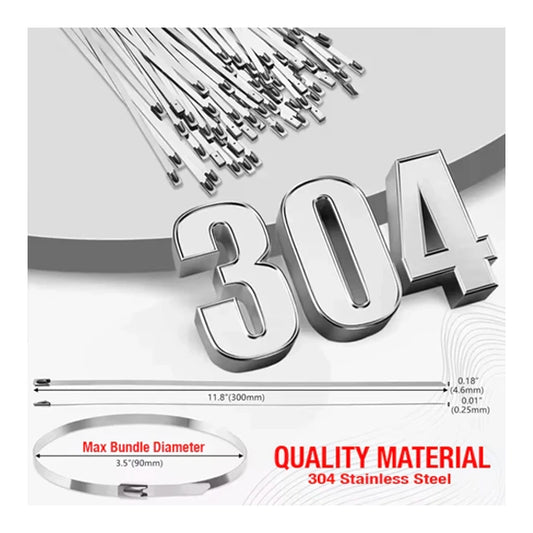
The metallurgical composition of premium automotive fasteners determines their resistance to mechanical failure under the chassis. Marine-grade 304 stainless steel contains approximately 18% chromium and 8% nickel, creating an alloy that resists salt spray, road acids, and moisture oxidation according to global ASTM International standards. This robust element structure prevents structural rust from forming, which ensures the bands do not snap when pelted with gravel, thick mud, or heavy off-road grit. Additionally, this material resists high-temperature degradation, allowing it to function flawlessly near exhaust downpipes and hot brakes where temperatures regularly exceed 300 degrees Celsius.
Anatomy Breakdown of Self-Locking Metal Bands
To understand how these high-strength fasteners secure underhood elements like radiator intercooler hose fasteners, one must examine their multi-part structural construction. Each high-tensile link contains specific functional regions engineered to prevent mechanical slippage:
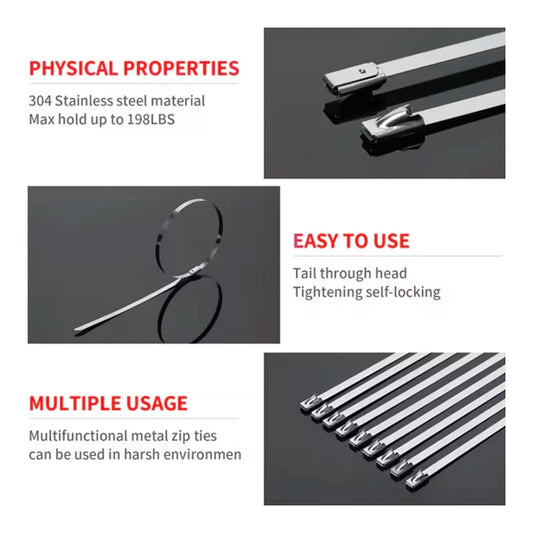
- Self-Locking Ball Bearing Mechanism: A low-profile head housing a hardened steel ball that wedges against the strap, allowing one-way insertion and preventing backward movement.
- Deburred Smooth Band Edges: Rounded lateral borders designed specifically to prevent the metal from cutting into delicate rubber boots during high-speed rotation.
- Low-Profile Head Entryway: A streamlined buckle design that keeps clearance high, preventing contact with nearby steering knuckles or brake lines.
- High-Tensile Steel Strap: A rolled steel band engineered to handle high tensile forces without stretching or expanding over thousands of miles.
Operating Principle Under High Centrifugal Stress
When a vehicle moves, the drive axle spins at speeds exceeding 1500 revolutions per minute, creating intense centrifugal forces that push internal grease outward. The self-locking mechanism utilizes friction physics to lock the band into position under continuous vibration. As outward pressure mounts, the internal steel ball rolls back slightly into a tapered channel, clamping down tighter on the inserted tail. This locking process ensures that the overall tension remains stable, preventing grease from leaking past the seal and saving the axle from catastrophic wear.
2. Step-by-Step SOP: How to Install Metal Zip Ties for CV Joint Boot Repairs
Achieving a lasting, leak-proof seal on rotating drivetrain boots requires a systematic approach that mimics professional shop techniques. Skipping cleaning steps or using improper tensioning methods will lead to premature grease loss and mechanical joint failure. Follow this standardized operating procedure to secure your drive axles with confidence using heavy-duty stainless steel bands.
Mandatory Preparation and Safety Equipment
Before starting this mechanical repair, wear ANSI-approved safety glasses and cut-resistant mechanic gloves to protect your hands from sharp metal edges. Gather the necessary tools including a high-quality degreaser, clean shop towels, replacement grease, a reliable tensioning tool, and marine-grade 304 locking ties. Always support the vehicle safely on heavy-duty jack stands placed on flat, solid ground before climbing under the chassis.
Step 1: Thorough Surface Degreasing and Joint Cleanliness
To ensure a slip-free connection, you must eliminate all old grease, road grime, and oils from the boot mounting surface. Spray a high-quality solvent degreaser onto a microfiber shop towel and wipe down the mating grooves on both the metal axle housing and the rubber boot. This dry surface prevents the steel band from slipping off the mounting lip when high torque loads are applied to the drivetrain. Ensure no chemical residue remains on the rubber material, as this can degrade the synthetic polymer over time. This preparation is similar to mounting constant tension clamps vs metal ties on pressurized coolant hoses.
Step 2: Aligning the Boot and Threading the Steel Strap
Carefully slide the synthetic boot back into its designated metal groove on the outer CV joint housing, making sure it sits straight without twisting. Take your marine-grade steel band and wrap it around the clamping section, taking care to thread the tail cleanly through the low-profile locking head. Use your fingers to pull the tail as tight as possible, ensuring the band lies flat within the center of the boot mounting groove. Do not let the band twist or sit at an angle, as this uneven alignment will create localized pressure points that pinch the rubber and cause tearing.
Step 3: Engaging the Specialized Tensioning Gun
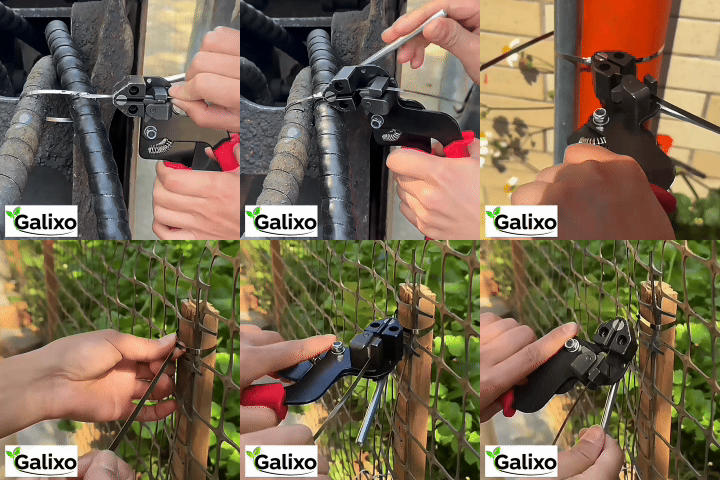
Insert the loose end of the steel tail into the side slot of your stainless steel cable tie tool. Slide the nose of the tensioning gun directly up against the locking head of the tie, maintaining a clean, perpendicular angle of 90 degrees. Hold the tool firmly with one hand while keeping the axle stationary with your other hand to prevent the boot from twisting out of its groove. Ensuring the tool sits flat against the head prevents the band from warping or losing tension during the pulling phase.
Step 4: Applying Controlled Squeeze and Proper Tension
Gently squeeze the lever of the tensioning tool to pull the steel band tight, watching the rubber boot compress slowly. Continue pulling until the rubber boot fits snugly around the axle housing with no visible gaps or loose pockets. Avoid over-tightening, as applying excessive pressure can slice through thin rubber boots and cause grease leaks. For maximum safety, target a mechanical holding force of roughly 45 pounds of torque, which matches the standards of traditional worm gear clamps vs stainless zip ties.
Step 5: Executing the Flush Cut and Verifying the Seal
Once correct tension is achieved, actuate the cutting lever on your tensioning tool to slice through the steel band tail. The tool will cut the band flush with the locking head, leaving no sharp metal edges to puncture the boot or cut your hands during future maintenance. Inspect the finished seal by twisting the boot gently with your hands; it should remain firmly anchored on the axle housing without sliding or letting grease escape. Finally, spin the axle by hand to confirm the low-profile head clears all nearby chassis components.

Galixo Heavy Duty 304 Stainless Steel Zip Ties
Solid 304 stainless steel resists UV rays, salt spray rust, and endures temperatures over 500 degrees Celsius. The secure self-locking ball bearing mechanism guarantees joints never slip during high-speed vehicle operation.
ABSOLUTE CORROSION RESISTANCE
VIEW PRODUCT DETAILS3. Head-to-Head Comparison: OEM Clamps vs Metal Zip Ties for CV Joint Boot Performance
Choosing between original equipment manufacturer ear clamps and high-strength aftermarket bands requires evaluating their long-term performance under demanding road conditions. Standard ear clamps provide uniform tension but require special crimping tools that are difficult to use in tight spaces. Conversely, modern stainless steel bands offer quick installation and durable hold when paired with a quality tensioning gun, making them a popular choice for fast, reliable repairs.
| Performance Metric | OEM Factory Ear Clamps | Galixo 304 Stainless Steel Bands |
|---|---|---|
| Material Construction | Soft Zinc-Plated Carbon Steel | Grade 304 Marine Stainless Steel |
| Tensile Strength Rating | 150 to 180 lbs | Over 200 lbs Minimum Force |
| Installation Speed | Slow (Requires specific side-cut pliers) | Fast (One-hand gun operation) |
| Working Temperature Range | Up to 150 degrees Celsius | Exceeds 500 degrees Celsius |
| Clearance Level Profile | Raised protruding ear (10 mm) | Ultra-Low profile head (4 mm) |
| Corrosion Resistance | Moderate (Prone to winter salt rust) | Excellent (Rust-proof in acid environments) |
| Tightening Reusability | None (Destroyed upon removal) | None (Single-use security lock) |
| Sealing Effectiveness | High (When using perfect sizing) | Equal (Fully adjustable sizing) |
Comparing Lifespans: Metal Zip Ties for CV Joint Boot and Nylon Substitutes
Many amateur mechanics consider using heavy-duty nylon zip ties to secure CV boots, but this substitution often leads to rapid mechanical issues under the chassis. Nylon is a synthetic polymer that quickly degrades when exposed to heat, road salt, ozone, and motor oils. Within weeks, engine bay heat makes nylon brittle, causing it to snap under high rotational loads. Conversely, marine-grade stainless steel resists environmental wear, maintaining structural integrity over years of use and outlasting traditional t-bolt clamps vs metal zip ties in tough underbody environments.
Comparing Locking Mechanisms: Self-Locking Ball Bearing vs Mechanical Ear Crimp
Standard factory clamps utilize an ear crimp design that requires dedicated pneumatic or manual crimping pliers to pinch the metal loop closed, securing the band. While this creates a strong seal, these large crimping tools are difficult to use inside tight wheel wells or cramped engine bays. In contrast, the self-locking ball bearing mechanism allows the strap to slide smoothly into the locking head with minimal friction. This low-profile head design prevents interference with nearby steering knuckles or brake lines, offering a simpler, more compact repair solution.
4. Tooling and Specifications: Selecting the Best Metal Zip Ties for CV Joint Boot Operations
Using the right tool and hardware specifications is crucial for achieving a secure, lasting hold on automotive boots. Choosing the wrong band width or thickness can cause uneven pressure, while hand-tightening without a tool often results in loose seals and grease leaks. Choosing professional-grade tools guarantees correct tensioning and a clean, flush cut every time.
| Band Length (mm) | Band Width (mm) | Tensile Strength (lbs) | Optimal Application Scope |
|---|---|---|---|
| 100 mm | 4.6 mm | 200 lbs | Small CV axle shaft collars and wiring harnesses |
| 150 mm | 4.6 mm | 200 lbs | Motorcycle fork seals and small coolant pipes |
| 200 mm | 4.6 mm | 200 lbs | Inner CV boot joints on compact front-wheel drive cars |
| 250 mm | 4.6 mm | 200 lbs | Standard outer CV boots and exhaust heat shields |
| 300 mm | 4.6 mm | 200 lbs | Large SUV outer CV boots and radiator coolant hoses |
| 350 mm | 7.9 mm (Heavy Duty) | 350 lbs | Truck driveshafts and heavy machinery coolant lines |
| 400 mm | 7.9 mm (Heavy Duty) | 350 lbs | Agriculture tractor boots and heavy equipment wraps |
| 500 mm | 7.9 mm (Heavy Duty) | 350 lbs | Intercooler piping, turbo inlets, and exhaust wraps |
| 600 mm | 12.0 mm (Extreme) | 500 lbs | Industrial fence structural tensioners and heavy pipes |
| 800 mm | 12.0 mm (Extreme) | 500 lbs | Heavy construction column wraps and main water pipes |
Core Specifications and Mechanical Load Limits
Selecting the right fastener size depends on your specific vehicle and drivetrain configuration. For standard passenger cars and light crossovers, bands with a width of 4.6 mm and a length of 250 mm offer the ideal balance of flexibility and strength. These sizes provide a 200-pound tensile strength rating, ensuring the band holds tight under intense rotation. For larger commercial trucks or heavy farm machinery, choosing wider bands (7.9 mm or larger) is recommended to handle the higher loads, matching the standards used for high vibration machinery zip ties.
Tool Selection Guide: Manual Pliers vs. Tensioning Guns
While some try to tighten metal zip ties using standard needle-nose pliers and flathead screwdrivers, this manual approach often fails to apply enough tension. Manual tightening rarely compresses the rubber boot enough to prevent grease leaks, and cutting the steel with standard wire cutters leaves sharp, dangerous edges. Using a dedicated tensioning gun applies uniform pressure and cuts the steel flush with the locking head, protecting nearby components and your hands during future maintenance.
The Economics of High-Quality Garage Tooling
Investing in professional-grade fastening tools saves time and reduces long-term maintenance costs for auto shops and DIYers alike. While standard plastic zip ties cost less upfront, their frequent failures require constant replacement, resulting in higher long-term expenses. Investing in a professional-grade steel tie gun and marine-grade 304 stainless steel ties ensures a permanent, reliable repair, saving you time and avoiding costly axle replacements.
5. Roadside Emergencies and Crucial Mistakes When Securing CV Joint Boots
Dealing with drivetrain repairs on the trail or road requires quick thinking and reliable tools. A split boot can quickly fling grease onto hot brake rotors, creating a smoking mess and risking damage to the joint if dirt gets inside. Learning how to perform temporary repairs and avoiding common installation mistakes will help keep your vehicle moving safely until you can reach a garage.
Top 5 Fatal Beginner Mistakes and Mechanical Fixes
- Mistake 1: Leaving a sharp protruding tail after cutting. Slicing the metal with standard diagonal pliers leaves a sharp edge that can slash adjacent rubber. Correction: Always use a dedicated tensioning tool to make a clean, flush cut directly at the locking head.
- Mistake 2: Failing to thoroughly clean grease off the mounting seat. Grease left on the metal neck acts as a lubricant, causing the band to slip off during driving. Correction: Degrease the axle collar with a quality spray cleaner and wipe it dry before wrapping the tie.
- Mistake 3: Under-tightening the band. If the band is too loose, centrifugal force will push grease out, leading to joint wear. Correction: Use a tensioning gun to snug the band securely into the boot groove.
- Mistake 4: Over-tightening and slicing the rubber. Applying excessive tension can cut through soft rubber boots, creating new leaks. Correction: Stop tightening once the rubber compresses slightly and holds the joint firmly.
- Mistake 5: Squeezing the band at an angle. Misaligned bands can slip off the boot lip under load. Correction: Ensure the band sits centered and square within the boot mounting groove.
The Hazard of Cheap Carbon Steel Substitutions
Many budget-grade fasteners on the market are made from cheap carbon steel coated with a thin layer of zinc rather than solid 304 stainless steel. While these cheaper bands look similar, they quickly rust when exposed to rain, snow, road salt, and dirt. Once rusted, the lock head can fail, causing the boot to slip and let grease escape. For a reliable, long-lasting repair, always use high-grade 304 stainless steel fasteners to secure critical underbody parts, including automotive wire harness securing tools.
Field Guide: Safe and Speedy Roadside Repair Hacks
If your boot splits while driving off-road, a quick temporary fix can prevent dirt from entering the joint and ruining the axle. Clean the area around the tear, wrap it tightly with high-quality self-amalgamating silicone tape, and secure both ends with durable stainless steel bands. This temporary fix keeps grease inside and contaminants out, allowing you to drive safely to a garage for a proper replacement, similar to other emergency temporary car repair hacks.

Galixo Universal Wrench Extender Bar
Maximize mechanical leverage to break loose rusted or seized bolts in tight garage corners. Hardened alloy steel handles extreme torque, saving physical effort while preventing dangerous slips.
MAXIMUM MECHANICAL LEVERAGE
VIEW PRODUCT DETAILS6. Frequently Asked Questions about metal zip ties for cv joint boot (FAQs)
- Can I use a metal zip tie for a permanent CV joint boot repair? Yes, marine-grade 304 stainless steel bands offer a durable, permanent repair that matches the sealing performance of original equipment manufacturer clamps when installed with a tensioning gun.
- Do I need a special tool to install stainless steel zip ties? Yes, using a dedicated steel tie tool is highly recommended. Manual tightening with pliers often fails to apply enough tension, which can lead to loose seals and grease leaks.
- Will the metal zip tie cut into the rubber boot? High-quality stainless steel bands feature rounded, deburred edges specifically designed to prevent cutting or tearing the rubber boot during high-speed axle rotation.
- Can I reuse stainless steel zip ties if I need to adjust them? No, these heavy-duty bands feature a single-use locking ball bearing mechanism that cannot be backed out or reused once tensioned and cut.
- How do I know if the zip tie is tight enough? A properly tightened band should compress the rubber boot slightly and hold it firmly in its groove, preventing the boot from sliding when twisted by hand.
7. Elevate Your Mechanical & DIY Garage Durability with Galixo Store Solutions
Fix It Once, Trust It for Years
Don't let low-quality plastic ties or weak factory clamps ruin your vehicle's drivetrain on the road. Galixo Store offers professional-grade 304 stainless steel ties and heavy-duty tensioning tools designed to provide permanent, leak-proof seals on CV boots, coolant lines, and exhaust wraps. Equip your garage with tools built to handle tough, high-vibration conditions and enjoy reliable, long-lasting performance.
Explore Professional Fastening Solutions at Galixo Store
*Disclaimer: All technical specifications and instructions in this article are based on the practical garage experience of the Galixo Store engineering team. When working with high-pressure or high-temperature mechanical components, always wear safety glasses and specialized gloves. Contact us for the most accurate technical consultation.