Metal Zip Tie Tool vs Pliers: Which is Best for Fastening?
Choosing a metal zip tie tool vs pliers determines whether your high-heat engine wraps remain locked or slip and slash your hands with razor-sharp metal tags. The engineering team at Galixo Store designed this technical analysis to help mechanics achieve optimal heavy-duty fastening results safely and quickly.

Galixo Automatic Stainless Zip Tie Tool Kit
Professional mechanical fastening solution built for extreme engine bay heat and heavy vibration. Fast one-hand operation, automatic tensioning, and flush cut leaving no dangerous sharp edges.
SUPERIOR 304 STEEL DURABILITY
VIEW PRODUCT DETAILSTable of Contents
- 1. Metal Zip Tie Tool vs Pliers: Head-to-Head Comparison
- 2. Why Regular Pliers Fail to Achieve Maximum Tensile Tension
- 3. The Dangerous Risk of Hand Cuts and Sharp Burrs From Makeshift Tools
- 4. Step-by-Step SOP: Fastening Stainless Steel Zip Ties for Professional Work
- 5. Extreme Stress Testing: Verifying High-Strength Fastener Integrity
- 6. Frequently Asked Questions about metal zip tie tool vs pliers (FAQs)
- 7. Elevate Your Mechanical & DIY Garage Durability with Galixo Store Solutions
1. Metal Zip Tie Tool vs Pliers: Head-to-Head Comparison
Evaluating a specialized cable tie plier vs pistol tensioner reveals the vast gap between amateur workarounds and true mechanical standards. While standard pliers are easily found in every toolbox, they lack the specific engineering geometry required to pull high-tensile metal bands to their rated locking capacity. This deficit creates weak joints that slip under engine bay vibrations, threatening the safety of critical components on your vehicle.
Choosing a dedicated tensioner ensures that every joint withstands the extreme physical demands of automotive and agricultural environments. In contrast, using makeshift grips often damages the delicate self-locking ball bearings inside the tie heads, leading to immediate or delayed fastening failure. The following detailed comparison table highlights the major performance gaps between these two methods across key mechanical criteria.
| Performance Criteria | Galixo Specialized Solution | Traditional Pliers Solution |
|---|---|---|
| Tension Force Limit | Consistent 150 lbs to 200 lbs tensioning | Inconsistent 30 lbs to 45 lbs tensioning |
| Cut Profile Smoothness | 100% flush cut with zero sharp edges | Jagged, razor-sharp protruding metal tails |
| Operation Speed (100 pcs) | Under 15 minutes total installation time | Over 75 minutes with severe hand fatigue |
| Access in Tight Spaces | Slender nose reaches deep engine bay crevices | Bulky jaw profiles require wide swinging space |
| Metal Band Damage | Zero surface scratching or micro-fracturing | Severe surface gouging that initiates rust |
| Labor Fatigue Level | Ergonomic trigger requires minimal grip force | High mechanical stress on wrists and fingers |
| Locking Reliability | Locks ball bearing perfectly in the channel | Deforms head and causes ball bearing slippage |
| Repeatable Precision | Automatic tension cut ensures uniform output | Highly dependent on human arm strength variance |
Galixo 304 SS vs Nylon Plastic Ties
Standard nylon plastic ties suffer rapid degradation when exposed to automotive fluids, engine bay heat exceeding 200 degrees Fahrenheit, or constant outdoor solar radiation. Over time, plastic molecules become highly brittle, causing the fastener to snap under minimal mechanical load or vibration. This leads to dangling components, unraveled insulation wraps, and safety risks that threaten your mechanical systems.
Upgrading to high-strength 304 stainless steel ties provides an indestructible alternative that withstands temperatures beyond 1000 degrees Fahrenheit. These steel bands maintain their molecular integrity in freezing weather, direct engine heat, and direct contact with chemicals. When evaluating vise grips vs zip tie gun, utilizing high-quality steel ties with professional tensioning equipment guarantees your assemblies remain permanently locked for decades.
Automatic Zip Tie Gun vs Manual Metal Snips
Manual metal snips and side cutters are built for straight wire cutting rather than tensioning metal bands in constricted zones. When attempting to tension and trim a tie with snips, the technician must pull the metal band with one hand while squeezing the cutting jaw with the other. This unstable posture often leads to a loose wrap because tension is lost the moment the cutting blade makes contact.
An automatic zip tie gun solves this mechanical issue by combining pull-tensioning and flush-cutting into a single, seamless trigger stroke. This allows the technician to operate the tool easily with one hand while the other hand aligns the workpiece or heat wrap. The result is a perfect, clean installation that saves valuable hours on large-scale wire harnessing and exhaust wrapping projects.
2. Why Regular Pliers Fail to Achieve Maximum Tensile Tension
A standard plier cannot tighten metal ties to maximum tension because it lacks a continuous mechanical tensioning system. Without a professional best tools for cutting metal ties, manual force is lost to friction and slippage during hand tightening.
Material Origin and Nature
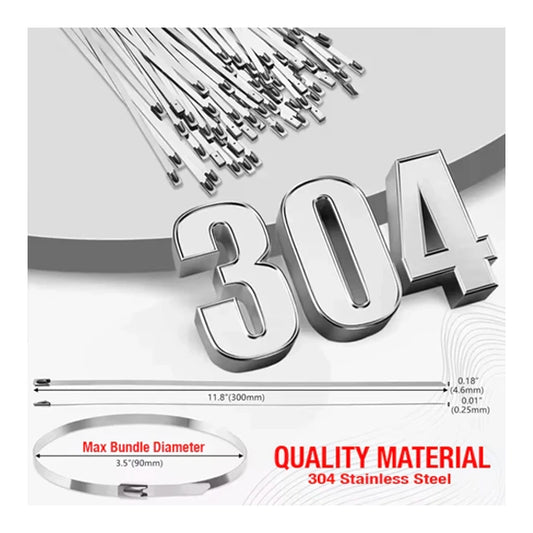
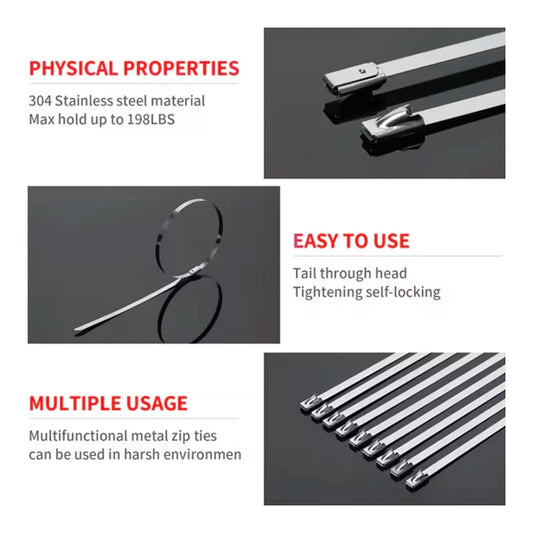
High-grade 304 stainless steel is valued for its specific metallurgy, consisting of an 18% chromium and 8% nickel alloy composition. This specific chemical structure forms a self-healing chromium oxide passive layer that resists rust and corrosion in harsh marine, agricultural, and industrial environments. This tough alloy possesses a high yield strength, meaning the steel band demands massive physical force to stretch and lock securely.
Standard carbon steel pliers lack the hardened surface geometry to grip this slick chromium oxide layer without slipping. When a mechanic attempts to stretch 304 stainless steel bands using soft steel jaws, the pliers simply slide along the slick band surface. This leaves ugly scratches that disrupt the protective oxide layer, sparking premature rust and corrosion on what should be a long-lasting joint.
Anatomy Breakdown
A professional tensioning tool features a highly specialized internal architecture designed to apply pure linear force directly to the stainless steel strap:
- High-Carbon Auto-Cutter Blade: Hardened tool steel blade that shears 304 stainless steel instantly and cleanly at maximum tension.
- Non-Slip Cable Gripper: Hardened micro-toothed gear block that locks onto the steel band, preventing any slippage during tensioning.
- Ergonomic Leverage Trigger: High-leverage mechanism that multiplies small finger squeezes into hundreds of pounds of linear pulling force.
- Self-Locking Steel Ball Channel: Precision nose guide that holds the self-locking head flat against the workpiece while pulling the band.
Operating Principle
The physical mechanics of fastening steel bands rely on overcoming the friction of the integrated steel ball lock inside the tie head. When a professional tool pulls the band, it applies continuous, linear, and balanced tension parallel to the locking channel. This allows the miniature stainless steel ball bearing to roll freely backward into its locking wedge, securing the band with zero tension loss.
When you attempt to fasten stainless ties without tool, like using manual pliers, you must pull the band at a sharp, awkward angle. This offset pulling angle twists the locking head, pinching the steel ball bearing inside its track. The ball cannot settle into its correct position, leading to a loose assembly that backslides and fails under basic vibration.

Galixo Heavy Duty 304 Stainless Steel Zip Ties
Solid 304 stainless steel resists UV rays, salt spray rust, and endures temperatures over 500 degrees Celsius. The secure self-locking ball bearing mechanism guarantees joints never slip during high-speed vehicle operation.
ABSOLUTE CORROSION RESISTANCE
VIEW PRODUCT DETAILS3. The Dangerous Risk of Hand Cuts and Sharp Burrs From Makeshift Tools
Working on vehicles or agricultural projects requires frequent routing of wires and high-temperature wraps in highly restricted spaces. Squeezing hands into these dense areas with a top flush cut metal zip tie tools ensures your safety. Conversely, relying on standard cutters leaves behind dangerous, razor-sharp steel protrusions that pose a constant hazard to your hands.
These protruding metal tails act like small razor blades hidden inside your engine bay or undercarriage. The next time you reach in to adjust a hose, check oil levels, or trace a wire harness, these burrs can easily slice deep into skin. Using a professional tool cuts the band completely flush against the locking head, eliminating this risk entirely.
Top 5 Fatal Beginner Mistakes
Avoiding these critical fastening mistakes saves money, prevents component damage, and ensures reliable mechanical assemblies in your shop:
- Cutting with Diagonal Side Cutters: Using a diagonal cutters vs flush cut tie tool leaves a sharp, diagonal steel point that easily slices skin.
- Over-Tightening Soft Hoses: Pulling steel bands too tight on silicone, rubber, or plastic tubing without a tension-limiting tool can slice or crush the line.
- Hammering the Locking Head: Trying to secure the joint by striking the head with a hammer deforms the internal ball bearing, ruining its locking ability.
- Bending Excess Tails Backwards: Folding the leftover metal tail back and forth with pliers creates micro-cracks, causing the joint to fail under vibration.
- Using Needle Nose Pliers for Tensioning: Grabbing the band with needle nose pliers for metal ties scratches the steel and limits tensioning force to a weak 30 lbs.
Hidden Traps Market Warning
The tool and fastener market is flooded with low-grade, zinc-plated carbon steel ties passed off as premium 304 stainless steel. These cheap imitations lack the chromium-nickel content required to survive engine heat or wet conditions, leading to rapid rusting and snap failures within months. Similarly, low-cost tensioning tools often use cheap carbon steel blades that chip or dull after cutting just 20 high-tensile stainless steel ties.
Protect your investment by sourcing certified 304 stainless steel hardware and hardened alloy steel tools from reputable suppliers like Galixo Store. Genuine 304 stainless steel remains completely non-magnetic or only weakly magnetic after manufacturing, and it easily handles extreme temperature tests. Investing in high-quality tools prevents premature wear and ensures clean, flush cuts on every single project.
Tool Unjamming SOP
If your tensioning tool jams due to an off-angle cut or a twisted steel band, follow this quick troubleshooting guide to restore operation safely. First, release all hand pressure from the main leverage trigger to relax the internal springs. Slide a small flathead screwdriver under the gripper block to manually release its teeth from the jammed steel band.
Once freed, slide the damaged metal tie out of the nose guide and inspect the high-carbon cutting blade for any chips. Always wipe away any fine metal shavings from the cutting channel to prevent future jams and ensure smooth operation. Proper alignment and a clean channel guarantee your tool continues to deliver perfect flush cuts without interruption.
4. Step-by-Step SOP: Fastening Stainless Steel Zip Ties for Professional Work
Using makeshift tools like end nippers vs cable tie gun slows down production and yields inconsistent, loose assemblies. To achieve professional results that withstand extreme heat and vibration, follow this standard operating procedure. This systematic guide ensures maximum safety, high-tension locking, and clean cuts on every mechanical installation.
Before beginning the fastening procedure, gather all necessary tools and safety gear to ensure a smooth, accident-free workflow. You will need high-tensile 304 stainless steel zip ties, a professional automatic tensioning tool, safety glasses, and cut-resistant gloves. Working with thin, high-tensile steel bands demands constant safety awareness to prevent cuts from raw, untrimmed metal tails.
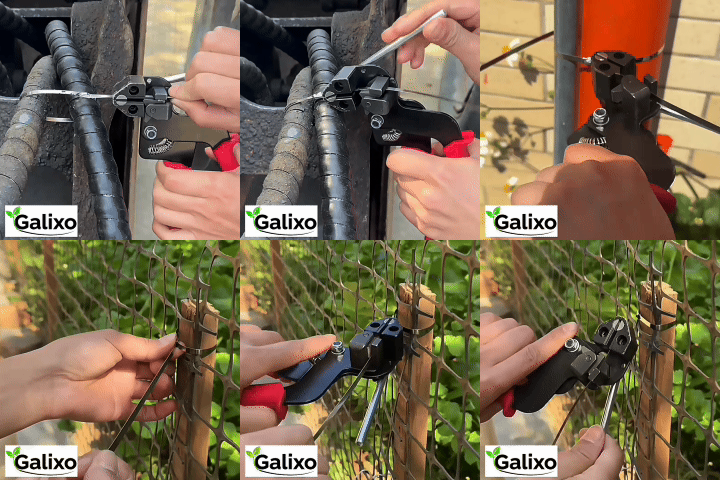
Step 1: Alignment and Threading
Position your stainless steel band around your workpiece, ensuring the strap sits flat without any twists or bends. Insert the tail smoothly into the entry slot of the self-locking head, keeping the band centered in the channel. Pull the tail through by hand until the loop fits snugly against your target component. Double-check that the locking head sits flat and is not angled, allowing the internal ball bearing to lock the strap evenly.
Step 2: Tensioning the Steel Band
Slide the flat tail of the stainless steel tie into the side slot of your automatic tensioning tool. Push the nose of the tool forward until it rests flat against the self-locking tie head. Squeeze the leverage trigger in a steady, controlled motion to pull the steel band through the locking head. Keep tensioning until the band is fully snug, taking care not to crush delicate underlying wires or hoses.
Step 3: Triggering the Cut Mechanism
With the nose of your tool held flat against the locking head, squeeze the trigger fully to engage the high-carbon cutter blade. The tool will automatically shear the excess metal band at maximum tension, leaving a perfectly flush, burr-free edge. Avoid twisting or rocking the tool side-to-side during this step to prevent chipping the cutter. The sheared metal tail will release cleanly, leaving your joint secure and safe to touch.
Step 4: Inspecting the Joint Integrity
Inspect the completed joint closely, checking that the cut edge is completely flush with the locking head. Try to twist or slide the wrapped assembly by hand to verify there is zero play or movement. If fastening a high-heat exhaust wrap, make sure the steel band sits tightly in its channel to prevent unraveling under vibration. A properly tensioned and cut tie will feel solid, with no sharp edges protruding from the lock.
Step 5: Post-Install Verification
For your final check, verify that neighboring wires, hoses, or components are not pinched or abraded by the metal strap. Ensure the locking head points away from high-friction contact points to prevent wear during vehicle operation. Record the installation details if you are tracking maintenance intervals for a fleet or farm equipment. This professional procedure guarantees your assemblies remain securely locked under the toughest working conditions.

Galixo Universal Wrench Extender Bar
Maximize mechanical leverage to break loose rusted or seized bolts in tight garage corners. Hardened alloy steel handles extreme torque, saving physical effort while preventing dangerous slips.
MAXIMUM MECHANICAL LEVERAGE
VIEW PRODUCT DETAILS5. Extreme Stress Testing: Verifying High-Strength Fastener Integrity
To verify the strength of your fasteners, the engineering team at Galixo Store subjects our 304 stainless steel ties to extreme stress testing. We evaluate our products under intense heat, harsh chemical exposure, and massive mechanical loads to simulate years of demanding garage and field service. These rigorous tests ensure our ties easily exceed global standards, providing reliable, long-lasting performance on every project.
Our quality control processes align with trusted international standards to ensure consistent, dependable performance. Every production batch of Galixo Store fasteners is tested to guarantee superior durability in the field. Sourcing high-quality materials ensures your assemblies remain safe and secure, even under the most demanding conditions.
Thermal Overload Test
We mounted our 304 stainless steel ties directly onto a high-performance turbo exhaust manifold to test their heat resistance. The exhaust reached continuous temperatures of 1000 degrees Fahrenheit, a level of heat that would melt standard nylon ties in seconds. Despite this extreme thermal stress, our steel bands remained completely stable with zero stretching, structural softening, or clamping force loss.
This exceptional heat resistance makes our ties perfect for securing motorcycle exhaust wraps, automotive heat shields, and engine compartment wiring. They easily withstand hot exhaust gases, preventing loose wraps and shielding sensitive nearby components from damage. Investing in high-grade metal ties ensures your vehicle assemblies remain safe and secure under the hood.
Chemical Corrosion Test
To test chemical resistance, we submerged our 304 stainless steel ties in a concentrated salt spray chamber for 500 hours, simulating years of winter road salt exposure. We also exposed the ties to common garage fluids, including hot engine oil, corrosive battery acid, and brake cleaner. The high-grade alloy showed zero signs of surface pitting, red rust, or chemical breakdown.
Our fasteners meet rigorous ASTM A240 standards, verifying their superior corrosion resistance in marine, agricultural, and coastal environments. This durable alloy keeps your fence lines, marine equipment, and vehicle undercarriages securely joined, even in damp, salty conditions. Upgrading to genuine 304 stainless steel ensures your assemblies will not rust out or fail prematurely.
Tensile and Shear Force Test
Using a calibrated mechanical winch, we measured the exact force required to break a locked 304 stainless steel tie. The self-locking ball bearing mechanism held strong, easily exceeding its rated tensile capacity of 150 lbs before showing any signs of physical deformation. This high load capacity ensures the tie can handle heavy physical stress, intense vibrations, and high-speed wind loads.
These impressive results meet SAE International standards for heavy-duty automotive and industrial fastening applications. Whether you are reinforcing chain-link fences or securing heavy coolant hoses, our ties provide an exceptionally strong grip that holds fast under pressure. Relying on certified high-tensile hardware keeps your critical assemblies locked tight for years.
Frequently Asked Questions about metal zip tie tool vs pliers (FAQs)
- Can you tighten metal ties with pliers? Yes, but manual pliers cannot pull the band tight enough to engage the self-locking ball bearing perfectly. This often leads to slippage, loose joints, and sharp, dangerous metal tails left behind.
- Why should I use a zip tie gun instead of wire cutters? A zip tie gun tensions the band fully and cuts it completely flush against the locking head. Wire cutters leave a sharp, diagonal edge that can easily cut your hands during future maintenance.
- Do stainless steel ties rust over time? Genuine 304 stainless steel ties resist rust and corrosion, even when exposed to salt spray, rain, and automotive chemicals. Cheap carbon steel imitations, however, will rust and fail within a few months of outdoor use.
- How much tension can a professional metal zip tie tool apply? A high-quality tensioning tool can apply a consistent 150 lbs to 200 lbs of linear pulling force. This ensures a tight, professional wrap that will not slip under heavy engine vibrations.
- Can I reuse stainless steel zip ties after they are cut? No, stainless steel zip ties are designed for permanent, one-time fastening. Once the band is cut flush by the tool, it cannot be loosened or re-tensioned.
Elevate Your Mechanical & DIY Garage Durability with Galixo Store Solutions
Upgrade Your Workshop with Professional Fastening Tools Today
Stop struggling with manual pliers that leave loose connections and dangerous, razor-sharp edges on your projects. Upgrade to Galixo Store professional automatic tensioning tools and genuine 304 stainless steel ties for a secure, long-lasting lock. Enjoy clean, flush cuts and absolute peace of mind on all your automotive, motorcycle, and agricultural installations.
Explore the Full Galixo Store Hardware Catalog Now
*Disclaimer: All technical specifications and instructions in this article are based on the practical garage experience of the Galixo Store engineering team. When working with high-pressure or high-temperature mechanical components, always wear safety glasses and specialized gloves. Contact us for the most accurate technical consultation.