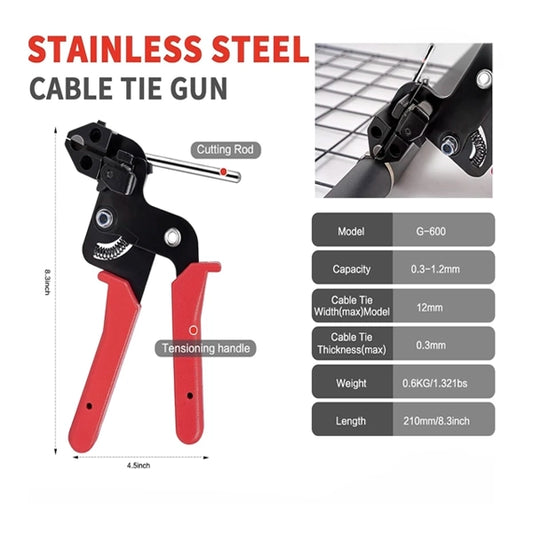
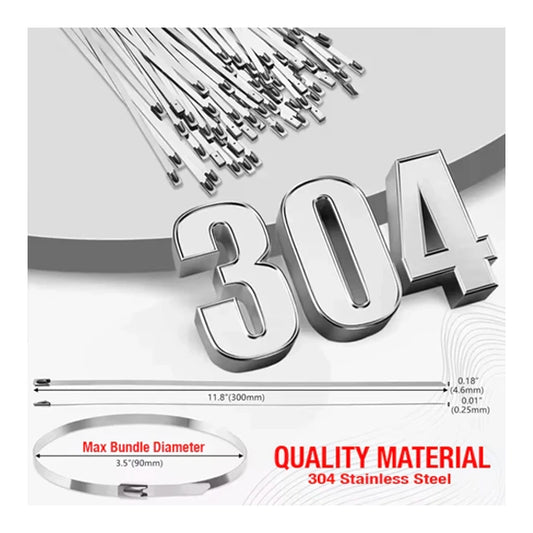
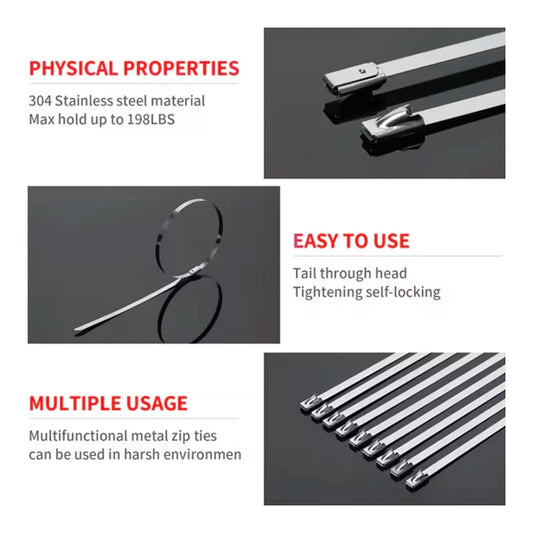
Stainless Steel vs Plastic Zip Ties: Which Should You Use?
Stainless vs plastic zip ties represent two distinct approaches to securing materials in environments ranging from home workshops to high-heat industrial settings. This in-depth guide on metal and nylon fastening solutions will help you determine the most durable option for your specific project while exploring the engineering behind galixo.store professional grade kits. Understanding the trade-offs between tensile strength, weather resistance, and thermal tolerance ensures your work remains secure and professional without the risks associated with premature material failure or degradation.
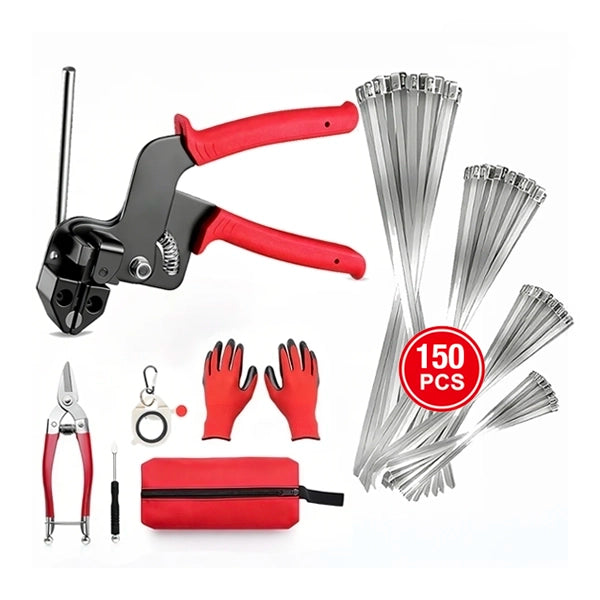
GALIXO Stainless Steel Zip Tie Tool Kit
This all-in-one kit features a professional-grade tensioning gun and 150 heavy-duty 304 stainless steel ties. Perfect for any task requiring a strong, durable, and clean fastening solution. Our team at Galixo store is ready to help you choose the right package for your needs.
Why Proper Stainless vs Plastic Zip Ties Choice is Crucial? A Direct Impact on Durability and Safety
Selecting the wrong fastening material can lead to catastrophic failure in technical applications. Plastic zip ties, often made of Nylon 66, are susceptible to ultraviolet degradation and thermal embrittlement. In outdoor environments, solar radiation breaks the molecular chains of the polymer, causing it to snap under minimal load within months. Conversely, stainless steel variants offer immunity to UV rays and can withstand temperatures exceeding 1000 degrees Fahrenheit. This makes the choice between stainless vs plastic zip ties a matter of safety and long-term structural integrity. When high-tension loads or extreme weather conditions are present, relying on plastic often results in loose components, damaged wiring, or total assembly collapse. Professional technical work demands materials that match the environmental stressors they will encounter over several years of service.
Using a stainless steel zip tie gun correctly ensures every fastening achieves optimal tension, delivering a professional, safe finish and extending the project lifespan, instead of facing loose ties, dangerous sharp edges, or material damage.
- • Material Composition: 304 Stainless Steel vs Polyamide 66 Plastic.
- • Tensile Strength: Heavy-duty metal ties often support over 200 lbs of force.
- • Temperature Tolerance: Metal remains stable from negative 112 to 1000 degrees Fahrenheit.
- • UV Resistance: Steel provides absolute protection against solar-induced brittleness.
- • Chemical Stability: High resistance to acids, salts, and industrial solvents in metal options.
Need Help Choosing the Right Fastening Solution? Galixo.store is Ready to Assist 24/7
In just 5 minutes, our expert team can provide a free consultation to find the perfect tool kit for your project.
A Detailed 3-Step Guide to Choosing and Using Zip Ties for Beginners
To properly tension a stainless steel tie, set the tool adjustment knob to a low setting for delicate wiring and a higher setting for securing heavy-duty components like exhaust pipes. Beginners often struggle with the manual tightening process which leaves ties loose and prone to sliding. Transitioning to a mechanical tensioning gun allows for a uniform application of force that plastic ties cannot always withstand. By following a structured installation process, you can achieve industrial-grade results in your home workshop. This guide focuses on the mechanical advantages of using professional tools from Galixo.store to ensure that every fastening point is both permanent and aesthetically pleasing. Using the right technique prevents the common issue of sharp metal burrs and over-stretched plastic teeth that lead to premature failure.

Step 1: Prepare and Thread the Stainless Steel Tie
First, select a tie with the appropriate length and width for your application. Metal ties typically come in 4.6mm or 7.9mm widths, providing different levels of tensile strength. Thread the end of the tie through the self-locking head which contains a small steel ball mechanism for securing. Wrap it around the object and pull it snug by hand to secure the initial position. Ensure the tie is flat and not twisted to maintain maximum surface contact with the bundled items. Preparing the tie correctly ensures that the mechanical tool can grip the tail without slipping during the high-tension phase.
Step 2: Engage the Tool and Apply Tension
Insert the excess tail of the tie into the front opening of the tensioning tool. Hold the gun perpendicular to the tie head to avoid uneven pressure. Squeeze the handle repeatedly to tighten the tie beyond what is possible by hand. You can adjust the tension control knob at the bottom of the handle to achieve the desired tightness for your specific material. The ergonomic design of the Galixo.store tool ensures that you can apply up to 200 lbs of force with minimal hand fatigue. This mechanical advantage is necessary for securing heavy items like metal pipes or engine components where stability is paramount.
Step 3: Automatically Cut for a Clean Finish
Once the pre-set tension is reached, the tool automatic cut-off mechanism will activate with a final squeeze. This cleanly severs the excess metal tail flush with the head. This leaves a smooth, professional finish with no dangerous sharp edges that could cause injury during future maintenance. Unlike manual cutting with pliers, which creates a jagged splinter, the integrated blade in the tensioning gun provides a flat shear. This clean finish is essential for safety in tight spaces like engine bays or electrical panels where hands often reach near the fastened points. Always inspect the cut surface to confirm it is flush and safe for handling.
Advanced Techniques: Professional Methods for Faster and Stronger Results
Based on our team experience at Galixo.store, achieving superior results involves understanding the nuances of material metallurgy and environmental engineering. Professional technicians often utilize metal ties because they do not suffer from the creep effect seen in plastic polymers. Creep is the tendency of a solid material to move slowly or deform permanently under the influence of persistent mechanical stresses. For heavy-duty applications, we recommend a tension setting of at least 3 on our professional tools to ensure the ball-lock mechanism fully engages with the steel strap. This prevents the tie from loosening over time due to thermal expansion and contraction cycles commonly found in automotive exhaust systems or outdoor infrastructure. An advanced tip from professional mechanics is to use multiple ties in a staggered pattern for extremely heavy loads to distribute the stress evenly across the fastening points.
Choosing Between 304 and 316 Stainless Steel
The 304 stainless steel ties included in the GALIXO kit offer excellent corrosion resistance for most residential and industrial applications. This alloy contains 18 percent chromium and 8 percent nickel, making it highly effective against rust in standard outdoor conditions. However, for marine environments or exposure to high concentrations of chlorides and salts, consider upgrading to 316 stainless steel for superior saltwater protection. The addition of molybdenum in 316 steel provides an extra layer of defense against pitting corrosion. Selecting the correct grade of steel ensures that your fasteners will last for decades without structural degradation or aesthetic staining.
Automotive Applications: Securing Exhaust Wrap and Wiring Looms
In the garage, this tool is essential for securing exhaust heat wrap, which must withstand extreme temperatures generated by internal combustion engines. Plastic ties would melt within minutes of engine operation, leading to a fire hazard or wrap failure. It is also perfect for neatly bundling wiring looms in the engine bay, ensuring a secure and tidy setup that resists vibration and oil exposure. Using metal ties on high-vibration areas prevents the harness from rubbing against sharp chassis edges. The professional finish provided by a tensioning gun ensures that your engine bay looks as good as it performs while meeting safety standards for high-performance vehicles.
GALIXO Stainless Steel Zip Tie Tool Kit
This all-in-one kit features a professional-grade tensioning gun and 150 heavy-duty 304 stainless steel ties. Perfect for any task requiring a strong, durable, and clean fastening solution. Our team at Galixo.store is ready to help you choose the right package for your needs.
Troubleshooting Common Issues with Fastening Tools
Even high-quality tools require proper technique to function optimally. A common problem is the tie slipping from the gripper, which often occurs if the tail is not inserted deeply enough or if the gripper teeth are clogged with debris. Another issue involves the tool not cutting after tensioning. Solution: You may not have reached the set tension level, or the tension knob is set too low. Try increasing the tension setting or squeezing the handle a few more times. Also, check the cutting blade for wear or debris. If the tie head is not sitting flat against the object, it may be due to improper threading. Always ensure the strap is fed through the locking mechanism in the correct orientation so the ball lock can engage with the metal surface. These small adjustments can save time and prevent the waste of valuable materials during a complex installation project.
- • Tie Slippage: Ensure at least 3 inches of the tail are fed into the tool for a secure grip.
- • Incomplete Cut: Increase the tension dial setting to trigger the automatic blade.
- • Jagged Edges: Hold the tool perfectly perpendicular to the tie head during the final squeeze.
- • Plastic Breaking: Do not use metal tensioning guns on nylon ties as the force will snap the polymer.
- • Tool Jamming: Periodically clean the internal mechanism with compressed air to remove metal shavings.
Technical Comparison Table: Stainless vs Plastic Zip Ties
To help you visualize the differences between material types, we have compiled a technical breakdown of performance metrics. This data is essential for engineers and DIY enthusiasts who must comply with specific safety regulations or load-bearing requirements. While plastic ties are cost-effective for indoor organization, metal ties are the clear choice for any structural or environmental application. Reviewing these specifications allows you to calculate the necessary safety margins for your project and select the appropriate kit from Galixo.store based on real-world performance needs. Every kit includes our 90-Day Guarantee and Free Worldwide Shipping to ensure your investment is protected regardless of your project scale.

| Performance Feature | 304 Stainless Steel Tie | Standard Nylon Tie | Application Choice |
|---|---|---|---|
| Tensile Strength | 200 lbs to 350 lbs | 50 lbs to 120 lbs | Structural vs Light-duty |
| Operating Temperature | Up to 1000 Degrees F | Up to 185 Degrees F | Industrial vs Household |
| UV Radiation Resistance | Superior (No Degradation) | Poor (Becomes Brittle) | Outdoor vs Indoor |
| Corrosion Resistance | High (Rustproof Alloy) | High (Chemical Resistant) | Universal Material Use |
| Outdoor Lifespan | 20 Years or More | 1 to 2 Years | Permanent vs Temporary |
| Locking Mechanism | Stainless Ball Lock | Plastic Ratchet Teeth | Secure vs Adjustable |
| Installation Method | Tensioning Gun Required | Manual or Pliers | Professional vs Rapid |
| Flammability Rating | Non-combustible | Combustible (UL94 V2) | Fire Safety Critical |
Which GALIXO Stainless Zip Tie Tool Kit is Right for You? Expert Advice from Galixo.store
Selecting the appropriate tool kit ensures that your workflow is efficient and your project results are durable. For starting out with home DIY projects, the Pro Kit, with one gun and 150 ties, is the perfect choice. It provides everything you need to tackle fence repairs, garden projects, or general household fixes without needing to purchase additional components separately. This entry-level kit is designed for users who need a reliable solution for occasional tasks but still want a professional finish that only a mechanical tensioner can provide. Having a complete set allows you to master the tool quickly and implement secure fastenings in areas where plastic ties have failed in the past.
If you are a frequent user or want a backup, the 2 Kits Pack is the most popular choice, offering a 20 percent discount and making a great gift for a fellow DIYer. This package is ideal for home garages where automotive maintenance is performed alongside general repairs. For professional garages, construction crews, or workshops, the 3 Kits Pack is the most economical solution, providing a 30 percent discount and ensuring every team member is properly equipped. Large scale projects benefit from having multiple tools available to avoid downtime. Order today to elevate your work with products that are built to last and supported by our dedicated technical team at Galixo.store.
Need Help Choosing the Right Fastening Solution? Galixo.store is Ready to Assist 24/7
In just 5 minutes, our expert team can provide a free consultation to find the perfect tool kit for your project.
Quick FAQs on Stainless Steel vs Plastic Cable Ties
-
What is the maximum temperature for stainless steel zip ties?
Standard 304 stainless steel zip ties, like those from GALIXO STORE, can typically withstand continuous operating temperatures up to 1000 degrees Fahrenheit and intermittent exposure to temperatures as high as 1600 degrees Fahrenheit, making them ideal for high-heat applications like securing exhaust wrap. -
How do you remove a stainless steel zip tie?
Due to their high tensile strength and self-locking mechanism, stainless steel zip ties cannot be unfastened manually. They must be cut off using heavy-duty diagonal cutters, snips, or a cutting wheel. Always wear safety glasses during removal to protect against small metal fragments. -
What does a 200 lbs tensile strength mean?
A 200 lbs tensile strength means the zip tie can withstand up to 200 pounds of pulling force before it will break. This specification indicates a heavy-duty capacity suitable for securing heavy bundles, pipes, and components in demanding industrial or automotive environments without snapping. -
Can this tool be used with plastic zip ties?
No, the GALIXO tool is specifically designed for metal cable ties. Its tensioning and cutting mechanisms are engineered for the hardness and thickness of stainless steel. Using it with plastic ties could damage the tool and will not provide a clean or secure result because the force exceeds the polymer limit. -
Are 304 stainless steel ties magnetic?
Grade 304 stainless steel is generally non-magnetic in its raw state. However, the manufacturing process of forming it into a zip tie can induce a slight magnetism. For most practical purposes, it is considered non-magnetic and safe for use near most electronic components.
Complete Any Project with Confidence and Professionalism from Galixo.store
At Galixo.store, we deliver a high-quality stainless steel zip tie tool kit that saves you time and ensures professional results. We are committed to durable, easy-to-use products and excellent customer support. Our team understands the critical nature of fastening solutions in both home and industrial environments. Upgrade your toolkit and tackle any job with confidence. To get this professional-grade tool kit for your workshop, order yours today or chat with us on WhatsApp for an instant response from our technical experts.
Need Help Choosing the Right Fastening Solution? Galixo.store is Ready to Assist 24/7
In just 5 minutes, our expert team can provide a free consultation to find the perfect tool kit for your project.
Disclaimer: The instructions in this article are based on practical experience with GALIXO STORE products. Always follow safety best practices when working with tools. Please contact contact@galixo.store for detailed support regarding your specific application. Note: The guidance and prices in this article are for reference at the time of publishing and are subject to change. Please contact Galixo.store directly for the most current information.