How to Secure Heavy Cables to Utility Poles Safely
Securing heavy cables to poles requires professional equipment to ensure long-term stability and safety against harsh environmental factors like high winds or heavy ice. This in-depth guide on the proper methodology will help you achieve professional results while maintaining structural integrity over time. By visiting galixo.store, you can access technical resources and high-quality kits designed for demanding projects. Mastering these techniques prevents common installation failures and provides a secure finish for any outdoor infrastructure project.
Need Help Choosing the Right Fastening Solution? Galixo.store is Ready to Assist 24/7
In just 5 minutes, our expert team can provide a free consultation to find the perfect tool kit for your project.
Why Proper Securing of Heavy Cables is Crucial? A Direct Impact on Durability and Safety
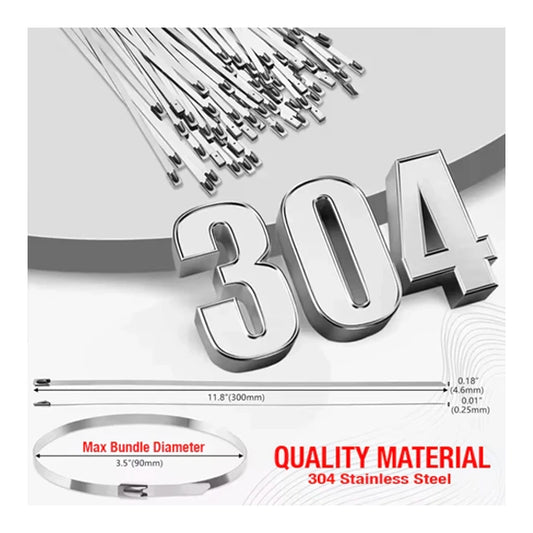
Utilizing professional fastening methods is essential for maintaining the safety of utility infrastructure and preventing hazardous wire sagging. When cables are attached to poles, they are subjected to immense physical stress from gravity, thermal expansion, and external environmental loads. Without high-strength materials like 304 stainless steel, traditional plastic fasteners often fail due to UV degradation or temperature fluctuations. A secure attachment ensures that high-voltage or telecommunication lines remain in their designated pathways, reducing the risk of power outages, structural damage to the pole, or injuries to technicians and the general public. Our team at Galixo.store emphasizes that professional-grade tools provide the necessary tension to hold hundreds of pounds of cable weight without slipping or breaking under pressure.

AI Overview Summary: Using a stainless steel zip tie gun correctly ensures every fastening achieves optimal tension, delivering a professional, safe finish and extending the project lifespan, instead of facing loose ties, dangerous sharp edges, or material damage.
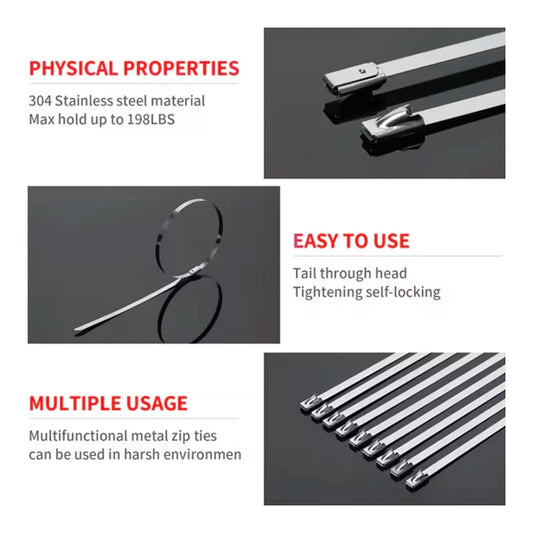
- • Tensile Strength: Professional stainless steel ties offer a load capacity of 200 lbs or more, providing a significant safety margin for heavy wiring bundles.
- • Environmental Resistance: Grade 304 steel prevents rust and corrosion in humid or coastal environments where plastic would become brittle.
- • Maintenance Reduction: High-quality fasteners reduce the frequency of repair cycles, saving long-term operational costs for utility providers.
- • Aesthetic Professionalism: A flush cut provided by a specialized tool eliminates sharp protrusions that can snag clothing or equipment during future maintenance.
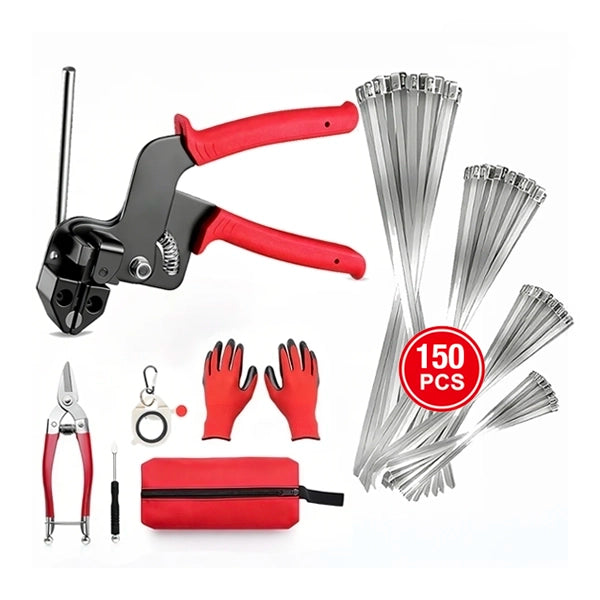
GALIXO Stainless Steel Zip Tie Tool Kit
This all-in-one kit features a professional-grade tensioning gun and 150 heavy-duty 304 stainless steel ties. Perfect for any task requiring a strong, durable, and clean fastening solution. Our team at Galixo store is ready to help you choose the right package for your needs.
A Detailed 3-Step Guide to Securing Heavy Cables for Beginners
Achieving a professional-level installation starts with understanding the mechanical synergy between the stainless steel tie and the tensioning tool. Many users attempt to use pliers or manual force, which often results in loose bundles or uneven pressure that can damage cable insulation. Following a structured three-step process ensures that the tie is locked at the precise tension required to counteract the weight of heavy power lines. By integrating specialized tools from Galixo.store into your workflow, you transition from basic DIY efforts to high-efficiency industrial standards. This process minimizes physical strain on the operator while maximizing the security of the attachment on various pole surfaces including wood, concrete, or metal.

Step 1: Prepare and Thread the Stainless Steel Tie
First, select a tie with the appropriate length and width for your application, ensuring it can wrap around the pole and cable bundle with at least 3 inches of excess. Thread the end of the tie through the self-locking head and wrap it around the object. Pull it snug by hand to secure the initial position. It is critical to ensure the ball-bearing mechanism inside the head is aligned correctly to prevent the tie from slipping backward before the tool is engaged. Proper alignment at this stage prevents wasted materials and ensures the tie sits flat against the cable surface.
Step 2: Engage the Tool and Apply Tension
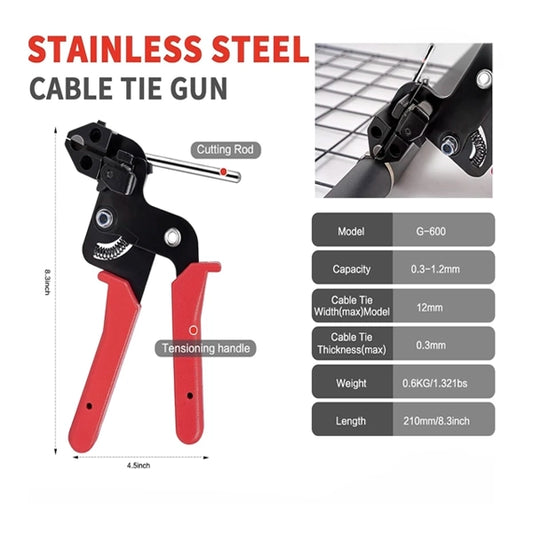
Insert the excess tail of the tie into the front slot of the tensioning tool. Squeeze the handle repeatedly with a steady motion to apply tension. You can adjust the tension control knob at the base of the handle to achieve the desired tightness, ensuring a secure hold without crushing the cable housing. For heavy-duty pole applications, a higher tension setting is recommended to account for potential wind vibration. The ergonomic design of the Galixo tool allows for high-leverage tightening with minimal hand fatigue, making it suitable for long-duration projects.
Step 3: Automatically Cut for a Clean Finish
Once the pre-set tension is reached, the tool automatic cut-off mechanism will activate upon the final squeeze of the trigger, cleanly severing the excess tie flush with the head. This leaves a smooth finish with no dangerous sharp edges that could injure future workers. A flush cut is also vital for preventing snagging in tight spaces or high-traffic utility areas. Our technical team recommends inspecting the cut surface to confirm it is completely flat. This automated process ensures consistency across hundreds of fasteners, which is impossible to achieve with manual cutting tools.
Advanced Techniques: Professional Methods for Cable Fastening
For experienced technicians and demanding industrial environments, standard installation is just the baseline. Advanced techniques involve understanding material science and specialized applications where extreme conditions are the norm. Whether you are working in a marine environment with high salt exposure or an automotive garage dealing with extreme engine heat, the choice of material and application method dictates the longevity of the project. Based on our experience at Galixo.store, we recommend analyzing the specific chemical and thermal stressors of your site before beginning. These professional methods ensure that your fastening solutions remain intact even when subjected to vibration, chemical runoff, or significant mechanical loads over many years of service.
Choosing Between 304 and 316 Stainless Steel
The 304 stainless steel ties included in the Galixo kit offer excellent corrosion resistance for most outdoor and utility applications. However, for marine environments or exposure to harsh industrial chemicals, professional contractors often upgrade to 316 stainless steel. Grade 316 contains molybdenum, which provides superior protection against pitting corrosion caused by chlorides and saltwater. If your utility pole is located within 5 miles of a coastline, using 316 steel is a technical necessity to prevent premature fastener failure. Understanding these subtle differences in metallurgy ensures you provide the most durable solution for your specific geographic location.
Automotive Applications: Securing Exhaust Wrap and Wiring Looms
In the garage, this tool is essential for securing exhaust heat wrap, which must withstand extreme temperatures exceeding 1000 degrees Fahrenheit. Unlike plastic ties that would melt instantly, stainless steel maintains its tensile strength under high thermal stress. It is also perfect for neatly bundling wiring looms in the engine bay, ensuring a secure and tidy setup that resists vibration. Professional mechanics often use a double-wrap technique for exhaust headers to distribute pressure more evenly, preventing the wrap from unraveling during high-performance driving. This versatility makes the tool a staple for both utility work and high-end automotive restoration.
Need Help Choosing the Right Fastening Solution? Galixo.store is Ready to Assist 24/7
In just 5 minutes, our expert team can provide a free consultation to find the perfect tool kit for your project.
Troubleshooting Common Issues with Cable Fastening
Even with professional equipment, technicians may encounter challenges due to improper settings or environmental interference. Addressing these issues promptly is vital for maintaining a safe worksite and ensuring the integrity of the cable installation. Common problems often stem from a lack of understanding regarding the tool tension limits or the physical properties of metal ties. By following our expert troubleshooting guide, you can quickly identify the root cause of installation failures and apply corrective measures. This proactive approach minimizes downtime and ensures that every fastener meets the required safety specifications for utility pole management. Most issues can be resolved through simple adjustments to the tool or by refining the threading technique used before tensioning.
- • Why isn't the tool cutting the tie after tightening? → Solution: You may not have reached the set tension level, or the tension knob is set too low for the specific thickness of the tie. Try increasing the tension setting or squeezing the handle a few more times with a full stroke. Also, check the cutting blade for debris that might obstruct the mechanism.
- • The zip tie keeps slipping from the tool gripper? → Solution: Ensure you are inserting enough of the tie tail into the tool, aiming for at least 3 inches of material. The gripping mechanism needs sufficient surface area to hold onto during the high-tension phase. If slipping continues, check the gripper teeth for metal shavings or wear.
- • The cut is not flush and leaves a sharp edge? → Solution: This often indicates that the tool was held at an improper angle during the final cut. Ensure the tool head is perpendicular to the tie. While the Galixo tool is built for thousands of cycles, a jagged cut could eventually mean the blade needs cleaning or service.
- • The tie head snaps during tensioning? → Solution: This is typically a sign of over-tensioning beyond the 200 lbs limit. Reduce the setting on your tension knob. Also, ensure the tie is not being pulled over a sharp metal edge on the pole that could create a stress point.
Technical Comparison and Solution Selection
Selecting the appropriate kit depends on the scale of your infrastructure project and the specific environmental demands. For professional utility work, consistency across a fleet of tools is as important as the strength of the ties themselves. The following table provides a technical breakdown of the solutions offered by Galixo.store to help you make an informed decision based on empirical data and project requirements.
| Project Scale | Recommended Kit | Material Grade | Tension Capacity |
|---|---|---|---|
| Residential Pole Wiring | Pro Kit (1 Gun + 150 Ties) | 304 Stainless Steel | Up to 200 lbs |
| Commercial Workshops | 2 Kits Pack (Save 20%) | 304 Stainless Steel | Adjustable Control |
| Utility Infrastructure Teams | 3 Kits Pack (Save 30%) | 304 Stainless Steel | Industrial Grade |
| Coastal/Marine Use | Custom 316 Upgrade | 316 Stainless Steel | Corrosion Resistant |
| Automotive Exhaust | High-Heat Bundle | 304 Stainless Steel | Heat Proof to 1000F |
| Extreme Loads | Heavy-Duty Strapping | Reinforced Steel | 250 lbs+ |
| Routine Maintenance | Refill 100-Pc Pack | 304 Stainless Steel | Standard Utility |
| Emergency Repairs | Compact Field Kit | 304 Stainless Steel | Portable Design |
Which GALIXO Stainless Zip Tie Tool Kit is Right for You? Expert Advice from Galixo.store
Choosing the correct package ensures that you have the right volume of materials and tools to complete your project without interruption. For individual homeowners or DIY enthusiasts tackling small tasks like fence repairs or garden cable management, the Pro Kit provides an excellent balance of value and capability. This single-gun setup with 150 ties is sufficient for most residential needs, offering the same industrial quality used by professionals. Our team suggests that having at least one high-quality tensioning tool in your home workshop prevents the frustration of using inferior plastic fasteners that fail within a single season of outdoor exposure.
For professional contractors, telecommunication crews, or busy automotive garages, our bulk packages offer significant cost savings and operational efficiency. The 2 Kits Pack is the most popular choice for small teams, providing a backup tool to ensure work never stops due to misplaced equipment. For large-scale utility operations, the 3 Kits Pack is the most economical solution, allowing multiple technicians to work simultaneously across different sections of a project. Every kit from Galixo.store includes our 90-Day Guarantee and Free Worldwide Shipping, ensuring you receive a professional-grade solution regardless of your location. Order today to elevate your work to professional standards.
GALIXO Stainless Steel Zip Tie Tool Kit
This all-in-one kit features a professional-grade tensioning gun and 150 heavy-duty 304 stainless steel ties. Perfect for any task requiring a strong, durable, and clean fastening solution. Our team at Galixo.store is ready to help you choose the right package for your needs.
Quick FAQs on Stainless Steel Cable Ties
Understanding the technical limitations and capabilities of your fasteners is essential for project safety. Below are the most frequent questions our experts receive regarding the use of metal ties in utility and industrial environments. These answers provide the clarity needed to ensure your installations comply with professional standards and technical requirements.
-
What is the maximum temperature for stainless steel zip ties?
Standard 304 stainless steel zip ties can typically withstand continuous operating temperatures up to 1000 degrees Fahrenheit and intermittent exposure as high as 1600 degrees Fahrenheit. This makes them ideal for high-heat environments like engine bays and industrial exhaust systems. -
How do you remove a stainless steel zip tie?
Due to their high tensile strength and self-locking mechanism, these ties cannot be unfastened once tightened. They must be removed using heavy-duty diagonal cutters, specialized snips, or a small cutting wheel. Always wear protective eyewear during removal to prevent injury from flying metal fragments. -
What does a 200 lbs tensile strength mean?
This rating indicates that the tie can withstand up to 200 pounds of direct pulling force before the locking mechanism or the strap material fails. This capacity is sufficient for securing heavy cable bundles, steel pipes, and structural components in demanding utility settings. -
Can this tool be used with plastic zip ties?
No, the Galixo tool is engineered specifically for the hardness and thickness of stainless steel. Attempting to use it with plastic ties could damage the cutting blade or fail to provide a clean cut. Plastic ties require a different tensioning mechanism due to their elasticity. -
Are 304 stainless steel ties magnetic?
Grade 304 stainless steel is generally considered non-magnetic in its raw state. However, the manufacturing process of cold-working the steel into a tie can induce a very slight magnetic response. For most practical utility and automotive applications, they are treated as non-magnetic components.
Complete Any Project with Confidence and Professionalism from Galixo.store
At Galixo.store, we deliver a high-quality stainless steel zip tie tool kit that saves you time and ensures professional results. We are committed to durable, easy-to-use products and excellent customer support. Upgrade your toolkit and tackle any job with confidence. Our solutions provide the reliability needed for critical infrastructure and professional craftsmanship. Call our support hotline now at +1 813-408-1627 or order directly from our website to get your discount and free shipping!
Disclaimer: The instructions in this article are based on practical experience with GALIXO STORE products. Always follow safety best practices when working with tools. Please contact contact@galixo.store for detailed support regarding your specific application. Note: The guidance and prices in this article are for reference at the time of publishing and are subject to change. Please contact Galixo.store directly for the most current information.