Ultimate Guide to Marine Grade 316 Stainless Steel Zip Ties
Marine grade 316 stainless zip ties provide an unparalleled solution for saltwater environments where standard 304 steel or nylon fasteners succumb to rapid corrosion. This in-depth guide on marine-grade fastening from galixo.store will help you master the installation process while understanding technical specifications like molybdenum content and tensile strength. By utilizing our professional tensioning tools, you ensure your nautical projects maintain maximum structural integrity and safety, effectively preventing mechanical failure in harsh offshore conditions across any global location.
Need Help Choosing the Right Fastening Solution? Galixo.store is Ready to Assist 24/7
In just 5 minutes, our expert team can provide a free consultation to find the perfect tool kit for your project.
Why Proper Marine Grade 316 Stainless Zip Ties are Crucial? A Direct Impact on Durability and Safety
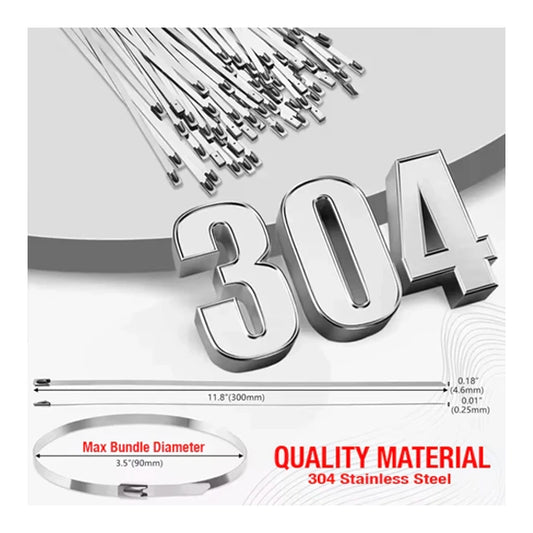
Selecting the correct grade of steel for coastal or offshore applications is not merely a preference but a safety requirement. Standard 304 stainless steel, while excellent for general use, lacks the chemical resistance needed to withstand constant exposure to chlorides and salty mist. Marine grade 316 stainless steel contains an addition of molybdenum, typically between 2 to 3 percent, which significantly increases resistance to pitting and crevice corrosion. In offshore drilling, boat rigging, or coastal electrical installations, a failed fastener can lead to mechanical breakdown, electrical shorts, or structural collapse. Using a high-quality marine grade tie ensures that the self-locking mechanism remains operational even after years of saltwater submersion, providing a permanent solution that standard nylon or lower-grade metal ties cannot match. The structural integrity of 316 grade metal ensures your wiring looms and fuel lines stay exactly where they belong during heavy seas.
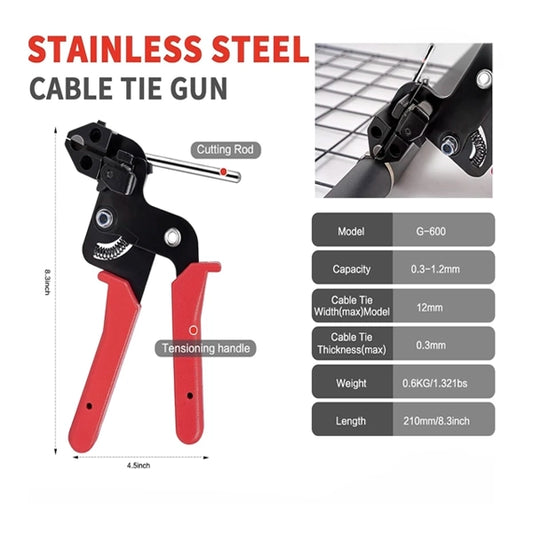
Professional-grade tools also allow for consistent tensioning, which is critical for projects exposed to high vibration or extreme temperatures. A loose tie can lead to rattling and eventual fatigue of the metal, while an over-tightened tie may damage the bundled materials. By utilizing a professional kit from Galixo.store, you ensure every fastening meets the required tensile strength specifications without creating a hazardous work environment. Marine technicians often face tight bilges where sharp edges present a major risk. Our automatic cutting mechanism shears the tie flush, eliminating the possibility of razor-sharp burrs that cause severe lacerations. Using a stainless steel zip tie gun correctly ensures every fastening achieves optimal tension, delivering a professional, safe finish and extending the project lifespan, instead of facing loose ties, dangerous sharp edges, or material damage.
- • Molybdenum Content: Grade 316 offers superior resistance to chloride-induced pitting compared to standard 304 steel.
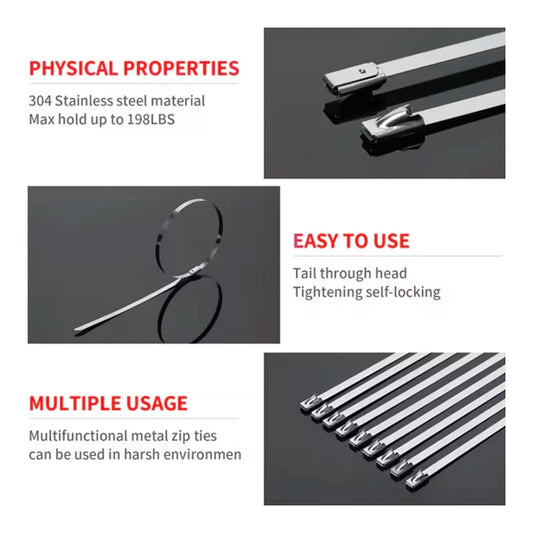
- • Tensile Strength: Heavy-duty metal ties support loads exceeding 200 lbs without stretching or mechanical failure.
- • Temperature Range: Fully operational from negative 112 degrees to over 1000 degrees Fahrenheit.
- • UV Protection: Complete immunity to ultraviolet degradation that typically destroys nylon ties in outdoor boat rigging.
- • Flush Cut Technology: Integrated cutters in Galixo tools eliminate sharp burrs for user safety in confined spaces.
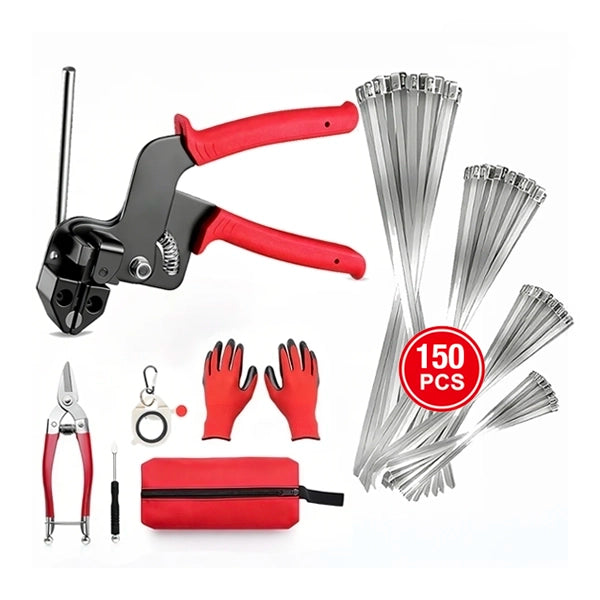
GALIXO Stainless Steel Zip Tie Tool Kit
This all-in-one kit features a professional-grade tensioning gun and 150 heavy-duty 304 stainless steel ties. Perfect for any task requiring a strong, durable, and clean fastening solution. Our team at Galixo store is ready to help you choose the right package for your needs.
A Detailed 3-Step Guide to Marine Grade Fastening for Beginners
To properly tension a stainless steel tie, set the tool adjustment knob to a low setting (e.g., level 1-2) for delicate boat wiring and a higher setting (e.g., 3-4) for securing heavy-duty underwater conduits or exhaust pipes. Beginners often struggle with achieving the correct tightness by hand, which is virtually impossible given the hardness of 316 grade metal. Mechanical tensioning ensures the internal ball-lock mechanism is fully engaged, preventing the tie from sliding under high-vibration conditions. This guide provides a simple yet effective workflow to achieve professional results every time, protecting your equipment and your hands from unnecessary damage. Our expert technicians at Galixo store have tested these procedures in various marine environments to ensure maximum reliability and ease of use for homeowners and professionals alike.

Step 1: Prepare and Thread the Stainless Steel Tie
First, select a tie with the appropriate length and width for your application. In boat rigging, common widths are 4.6mm and 7.9mm. Thread the end of the tie through the self-locking head and wrap it around the object. Pull it snug by hand to secure the initial position. Ensure the tie is not twisted, as a flat surface contact provides a better grip and prevents the strap from cutting into rubber hoses or electrical insulation. Leaving at least 3 inches of the tail exposed is recommended to allow the tool gripper enough material to grab effectively during the high-tension phase. Proper orientation of the head is vital for the ball-lock to function correctly.
Step 2: Engage the Tool and Apply Tension
Insert the excess tail of the tie into the front opening of the tensioning tool. Squeeze the handle repeatedly to tighten the tie beyond manual capability. You can adjust the tension control knob to achieve the desired tightness, ensuring a secure hold without damaging the bundled items. For marine grade 316 ties, which are slightly more ductile than standard steel, a firm mechanical tension is required to lock the internal ball mechanism into place permanently. The ergonomic handle of the Galixo tool reduces hand strain, allowing you to secure dozens of ties across a hull or engine room without fatigue or palm bruising. Consistent tension prevents cable movement during nautical travel.
Step 3: Automatically Cut for a Clean Finish
Once the pre-set tension is reached, the tool automatic cut-off mechanism will activate, cleanly severing the excess tie flush with the head. This leaves a smooth, professional finish with no dangerous sharp edges. In confined spaces like a bilge or an engine compartment, this flush cut is vital because it prevents cables from catching on the fastener and protects technicians from cuts during future maintenance. A manual snip with pliers can never achieve this level of precision. Once the cut is made, the tie is permanently locked and ready to withstand extreme nautical conditions. Inspect the finish with your finger to ensure the cut is completely flat against the locking head.
Advanced Techniques: Professional Methods for Marine and Industrial Use
Based on our team experience at Galixo.store, achieving superior durability in offshore settings involves more than just pulling a trigger. Professional installers often use a staggered pattern for ties on high-vibration pipes to distribute stress evenly across multiple points. For heavy-duty applications, we recommend a tension setting of at least 3 to ensure the 316 grade metal conforms tightly to the substrate. Another expert tip is to use a protective rubber sleeve or heat shrink over the tie if it is being used to secure extremely delicate fiber optic cables or thin-walled hydraulic lines. This prevents the high tensile strength of the metal from causing unintentional crushing while still providing the permanent rustproof security that marine grade 316 steel offers in high-salinity zones.
Choosing Between 304 and 316 Stainless Steel
The 304 stainless steel ties included in the GALIXO kit offer excellent corrosion resistance for most applications, including automotive repair and outdoor fencing. For marine environments or exposure to harsh chemicals like cleaning solvents and sulfuric acids, consider upgrading to 316 stainless steel for superior saltwater protection. The primary difference is the presence of molybdenum in grade 316, which acts as a barrier against the pitting effect caused by sodium chloride. While 304 may show surface rust or tea staining in coastal areas, 316 remains bright and structurally sound for decades in subsea or splash zone conditions. Selecting the appropriate alloy prevents premature maintenance cycles on expensive nautical equipment.
Nautical and Automotive Applications: Securing Exhaust Wrap and Mast Rigging
In the garage, this tool is essential for securing exhaust heat wrap, which withstands extreme temperatures. On a boat, it is perfect for neatly bundling wiring looms in the engine bay or securing rigging components on a mast, ensuring a secure and tidy setup. The non-flammable nature of stainless steel makes it the only safe choice for high-heat areas near manifold systems. Professionals also use 316 ties for securing underwater lighting conduits and bilge pump hoses, where the constant presence of water would cause standard fasteners to fail within months. The versatility of these tools ensures a professional finish on every nautical project, protecting against the structural failures common with nylon ties.
Troubleshooting Common Issues with Marine Fastening Tools
Even with high-grade materials, improper tool settings or maintenance can lead to installation errors. Understanding the mechanical feedback of your tensioning gun is a sign of an expert user. Most issues with metal zip ties arise from either too much or too little tension during the initial threading phase. A properly maintained tool should provide a clean shear every time. If you encounter resistance or a jagged cut, it is often a sign the internal blade needs cleaning or the tension dial is incorrectly matched to the tie thickness. Following these troubleshooting steps will ensure your Galixo.store equipment performs at its peak throughout the life of your nautical project. Addressing these problems early prevents wasted materials and ensures every connection is industrial-grade.
- • Why is the tool not cutting the tie after tightening? → Solution: You may not have reached the set tension level, or the tension knob is set too low. Try increasing the tension setting or squeezing the handle a few more times. Also, check the cutting blade for wear or debris.
- • The zip tie keeps slipping from the tool gripper? → Solution: Ensure you are inserting enough of the tie tail into the tool (at least 2-3 inches). The gripping mechanism needs sufficient material to hold onto during the tensioning process. Clean the gripper teeth with a wire brush if buildup is present.
- • The cut is not flush and leaves a sharp edge? → Solution: This can indicate a worn-out cutting blade or an incorrect tool angle. While the GALIXO tool is built for thousands of cuts, ensure you are holding the tool perpendicular to the tie head during the final shear.
- • The tie snaps before cutting? → Solution: The tension setting may be too high for the specific width of the tie. Reduce the dial setting and try again. Ensure the tie is properly aligned in the tool channel.
- • The tool handle feels stuck? → Solution: Periodically lubricate the internal pivot points with a drop of light machine oil. Check for any metal fragments that may have entered the mechanism during heavy use.
Technical Comparison: Marine Grade 316 vs Standard Fasteners
When planning a marine or coastal project, understanding the data behind your material choice is critical. The following table provides a clear breakdown of how marine grade 316 stainless steel performs compared to other common materials. This technical overview highlights why 316 grade metal is the industry standard for nautical safety and longevity. Every kit from Galixo.store is calibrated to meet these rigorous standards, providing users with the data-backed confidence needed for offshore applications. Our technicians always recommend checking the tensile strength ratings before beginning any structural fastening task to ensure the safety of the entire assembly. Using the correct data prevents over-engineering or, more dangerously, under-engineering critical components.

| Technical Property | Marine 316 Stainless | Standard 304 Stainless | Application Guide |
|---|---|---|---|
| Molybdenum Content | 2.0 to 3.0 Percent | Zero Percent | Offshore vs Inland |
| Tensile Strength | 200 to 350 lbs | 200 to 300 lbs | Heavy Load Bearing |
| Pitting Resistance | Superior (Offshore) | Moderate (Coastal) | Saltwater Environments |
| UV Light Resistance | Absolute Immunity | Absolute Immunity | Sunlight Exposure |
| Melting Point | 2500 Degrees F | 2550 Degrees F | Engine Bay Safety |
| Acid Resistance | Very High | High | Chemical Exposure |
| Lifespan (Nautical) | 20 Years Plus | 5 to 10 Years | Permanent Fixing |
| Magnetic Quality | Generally Non-Magnetic | Generally Non-Magnetic | Electronic Equipment |
Which GALIXO Stainless Zip Tie Tool Kit is Right for You? Expert Advice
Selecting the appropriate tool kit is the first step toward achieving a professional-grade finish on your nautical project. For starting out with home DIY projects or small boat repairs, the Pro Kit, with one gun and 150 ties, is the perfect choice. It provides everything you need to tackle fence repairs, garden projects, or general household fixes while introducing you to the power of mechanical tensioning. This kit is ideal for owners of small watercraft who need to organize electrical wiring or secure bilge pump hoses without the fatigue of manual hand tools. Every kit from Galixo.store includes our 90-Day Guarantee and Free Worldwide Shipping, ensuring your investment is protected from the moment you order. Proper equipment ensures your projects stay secure and look aesthetically pleasing.
If you are a frequent user or want a backup for your boat workshop, the 2 Kits Pack is the most popular choice, offering a 20% discount and making a great gift for a fellow nautical enthusiast. This is the preferred option for hobbyists who maintain multiple vessels or vehicles. For professional garages, offshore construction crews, or large workshops, the 3 Kits Pack is the most economical solution, providing a 30% discount and ensuring every team member is properly equipped with industrial-grade tools. Having multiple guns available prevents downtime during complex installations. Order today to elevate your work with tools that are built to withstand the harshest saltwater environments on earth and deliver professional results every single time. Our kits are engineered for durability, safety, and ease of use in even the most demanding conditions.
Need Help Choosing the Right Fastening Solution? Galixo.store is Ready to Assist 24/7
In just 5 minutes, our expert team can provide a free consultation to find the perfect tool kit for your project.
Quick FAQs on Marine Grade Stainless Steel Cable Ties
-
What is the maximum temperature for stainless steel zip ties?
Standard 316 stainless steel zip ties from GALIXO STORE can typically withstand continuous operating temperatures up to 1000 degrees Fahrenheit (538 degrees Celsius). They can handle intermittent exposure to temperatures as high as 1600 degrees Fahrenheit, making them ideal for high-heat applications like securing exhaust wrap on marine engines. -
How do you remove a marine grade stainless steel zip tie?
Due to their high tensile strength and self-locking mechanism, these ties cannot be unfastened once locked. They must be cut off using heavy-duty diagonal cutters, industrial snips, or a cutting wheel. Always wear safety glasses during removal as the metal can spring back with significant force. -
What does a 200 lbs tensile strength mean?
A 200 lbs tensile strength means the zip tie can withstand up to 200 pounds of pulling force before structural failure occurs. This indicates a heavy-duty capacity suitable for securing large cable bundles, industrial pipes, and nautical components in high-stress offshore environments. -
Can this tool be used with plastic zip ties?
No, the GALIXO tool is specifically designed for metal. Its tensioning and cutting mechanisms are engineered for the hardness and thickness of stainless steel. Using it with plastic ties could snap the material prematurely or damage the tool blade. It is a specialized professional implement for metal fasteners. -
Are 316 stainless steel ties magnetic?
Grade 316 stainless steel is generally non-magnetic in its raw state. However, the cold-working process used to form the ties can induce a very slight magnetism. For most practical offshore and sensitive electronic applications, they are considered non-magnetic and safe for use.
Complete Any Project with Confidence and Professionalism from Galixo.store
At Galixo.store, we deliver a high-quality stainless steel zip tie tool kit that saves you time and ensures professional results. We are committed to durable, easy-to-use products and excellent customer support for all your marine and industrial needs. Upgrade your toolkit and tackle any job with the confidence that your fasteners will never rust or fail. To get this professional-grade tool kit for your boat or workshop, order yours today! Call our support hotline now at +1 813-408-1627 or order directly from our website to get your discount and free shipping!
GALIXO Stainless Steel Zip Tie Tool Kit
This all-in-one kit features a professional-grade tensioning gun and 150 heavy-duty 304 stainless steel ties. Perfect for any task requiring a strong, durable, and clean fastening solution. Our team at Galixo store is ready to help you choose the right package for your needs.
Note: The guidance and prices in this article are for reference at the time of publishing and are subject to change. Please contact Galixo.store directly for the most current information. Disclaimer: The instructions in this article are based on practical experience with GALIXO STORE products. Always follow safety best practices when working with tools. Please contact contact@galixo.store for detailed support regarding your specific application.