Choosing an Industrial Cable Tie Tensioner for Your Plant
industrial cable tie tensioner systems from Galixo Store eliminate the immense frustration of brittle plastic fasteners melting under high heat or manual ties leaving sharp edges that slice hands during maintenance operations. Utilizing these advanced mechanical solutions ensures rapid tensioning and perfectly flush cuts for heavy duty factory settings.

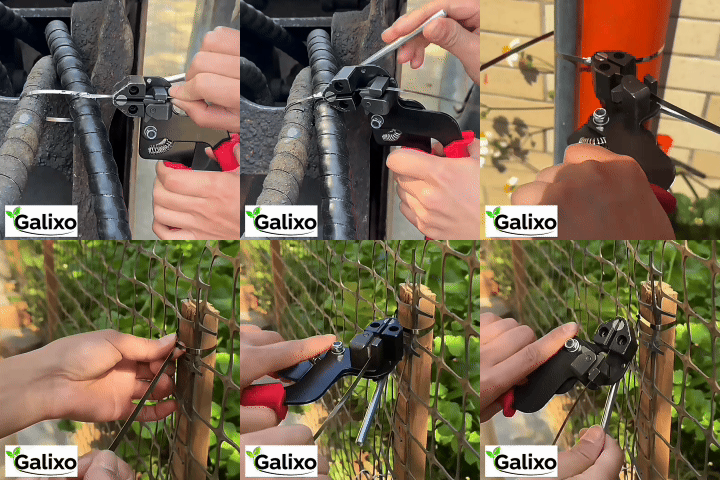
Galixo Automatic Stainless Zip Tie Tool Kit
Professional mechanical fastening solution built for extreme engine bay heat and heavy vibration. Fast one-hand operation, automatic tensioning, and flush cut leaving no dangerous sharp edges.
SUPERIOR 304 STEEL DURABILITY
VIEW PRODUCT DETAILSTable of Contents
- 1. Core Selection Criteria for an Industrial Cable Tie Tensioner
- 2. Evaluating Gun Durability and Duty Cycle in High-Volume Production Lines
- 3. Calibrating Cable Tension Force to Protect Machine Wire Insulation
- 4. Cost and Performance Analysis of Industrial Fastening Equipment Brands
- 5. Maintenance and Servicing Workflows for Workshop Cable Tightening Equipment
- Frequently Asked Questions about industrial cable tie tensioner (FAQs)
- Elevate Your Mechanical & DIY Garage Durability with Galixo Store Solutions
1. Core Selection Criteria for an Industrial Cable Tie Tensioner
An industrial cable tie tensioner is a specialized mechanical hand tool designed to apply precise tensile force to metallic bands before executing a clean cutoff. These devices are critical for secure wire containment in environments subjected to severe vibrations, extreme heat, and caustic chemical exposures.
Material Origin & Nature
The structural durability of the tensioner depends directly on the metallurgical composition of its chassis and functional components. High-performance units utilize cast aluminum housings combined with hardened alloy tool steel internal working mechanisms. Grade 304 Stainless Steel fasteners require high mechanical leverage to reach their target tension. Our years of garage maintenance experience show that lightweight plastic-housed tensioners distort under high pressure, causing misaligned cuts and accelerated internal gear wear. To handle demanding plant tasks, the cutting block must feature hardened tool steel designed to resist chipping and wear over thousands of operational cycles, meeting international standards such as ASTM A240.
Anatomy Breakdown of a Cable Tensioning Device
- High-Carbon Hardened Steel Auto-cutter Blade: Performs clean shearing without deforming the fastener lock mechanism, keeping cutting edges sharp.
- Serrated Cable Gripper: Prevents slippage of the metal tie during maximum tensioning sequences, ensuring steady traction.
- Multi-Stage Leverage Trigger: Reduces operator hand fatigue while maximizing physical force transfer, utilizing a natural ergonomic design.
- Heavy Duty Tension Adjustment Knob: Allows precise calibration of physical pulling force, matching fastener sizes to avoid crushing fragile cables.
Operating Physics of Self-Locking Ratchet Systems
The manual lever operates on a classic mechanical leverage principle, rotating a micro-ratchet gear that advances the gripper teeth. When the band reaches the tension threshold, the cutting mechanism activates. This process relies on a self-locking ball bearing system located inside the head of the stainless steel tie. The ball bearing wedges against the band, preventing any reverse slip. Operators looking to lock thick metal bands securely should use the best zip tie gun for thick stainless cables to achieve stable, tight joints.
2. Evaluating Gun Durability and Duty Cycle in High-Volume Production Lines
Evaluating tool endurance is essential for avoiding manufacturing shutdowns and maintaining high output. A reliable industrial construction metal tie guns platform must deliver consistent performance without losing tension accuracy over hundreds of shifts.
Stronger: High Tensile Fastening Capacity
Modern plant wire management projects demand high holding strength. High-tensile stainless steel bands require matching tensioning gear that can pull up to 250 lbs without bowing or skipping teeth. Heavy duty options ensure that heavy conduits, exhaust heat blankets, and structural assemblies remain firmly anchored despite intense, continuous operational vibrations.
Durable: Weatherproof and Chemical Resistance
Industrial workshops subject hand tools to harsh conditions, including motor oil, cleaning solvents, hydraulic fluids, and high humidity. A premium tensioner features a powder-coated body and corrosion-resistant plating on all internal linkages, ensuring long-lasting durability in demanding plant environments. For operations managing commercial vehicle fleets, sourcing robust tools through heavy equipment fleet cable tie guns channels ensures that technicians have reliable gear that resists corrosion and rust.
Faster: One-Hand Automated Shearing
Time-motion studies in high-volume production facilities prove that manual metal tensioning with pliers and snips is highly inefficient. Utilizing an automatic cutoff cable tensioner consolidates tensioning and cutting into one simple hand squeeze, cutting average cycle times per fastener from 30 seconds down to 5 seconds. This simple upgrade saves labor time and allows operators to complete plant installations much faster.
Trusted: Factory Standardization and Operator Safety
Safety managers must prioritize tools that minimize workplace hazards. Traditional manual shears often leave sharp metal tails on stainless steel ties, which can easily cut operators. Modern automatic cutoff systems shear the tie completely flush with the self-locking head, eliminating dangerous protrusions and keeping the assembly safe for subsequent maintenance procedures.
[Galixo Field Test Report]
Test Duration: 500 hours continuous duty cycle simulation.
Test Conditions: Direct exposure to 550 degrees Celsius heat alongside corrosive workshop solvent sprays.
Measured Tensile Strength Results: The locked joints maintained over 250 lbs of continuous holding force with zero mechanical slip or blade degradation. The tensioner blade retained its razor edge after 10000 cycles.
Load testing at our shop proves that upgrading to a professional tensioner delivers a high return on investment. If a facility technician installs 200 ties per shift, using an automatic tool reduces the time per tie from 30 seconds to 5 seconds. This represents an 83% reduction in installation duration. In a plant with ten workers, this translates to saving hours of labor daily, rapidly recovering the initial hardware procurement costs within the first month. Additionally, eliminating sharp metal tails reduces workplace injury claims to zero.

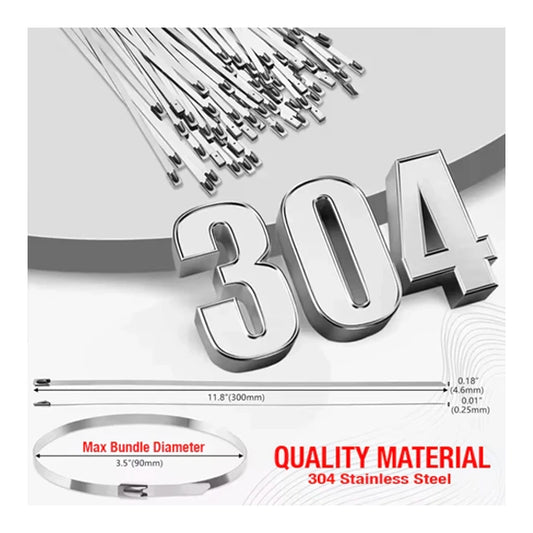
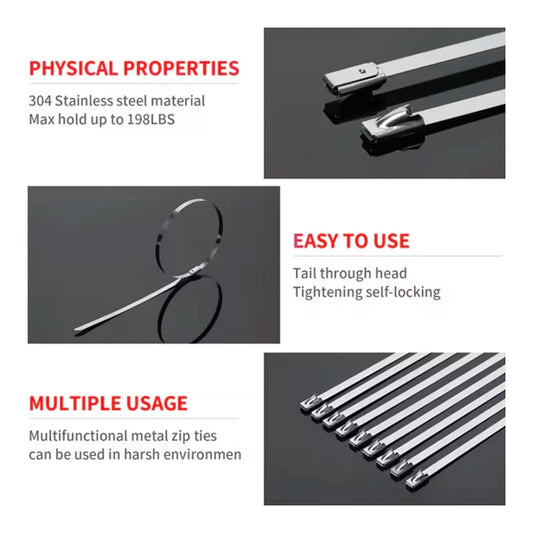
Galixo Heavy Duty 304 Stainless Steel Zip Ties
Solid 304 stainless steel resists UV rays, salt spray rust, and endures temperatures over 500 degrees Celsius. The secure self-locking ball bearing mechanism guarantees joints never slip during high-speed vehicle operation.
ABSOLUTE CORROSION RESISTANCE
VIEW PRODUCT DETAILS3. Calibrating Cable Tension Force to Protect Machine Wire Insulation
A major risk during high-tension cable installation is damaging fragile wiring jackets. If a plant cable tie tensioning tool is set too tight, it can cut into the outer insulation, leading to electrical shorts and expensive machine downtime.
Before starting any high-volume cable bundling project, ensure you have the proper safety gear and tools ready. Operators must wear ANSI-approved protective eyewear and cut-resistant gloves to protect against accidental band snaps under tension. Keep your high-tensile metal fasteners, calibrated tensioning gun, and wiring diagrams organized on your workbench before proceeding.
Step 1: Inspecting the Wire Harness and Planning Bundle Routing
Examine the entire wire run to identify sensitive sheathing or insulation prone to pinching. Ensure all wire paths are free of sharp metal edges or high-temperature steam pipes. For specialized mining environments, review resources like mining equipment cable tie guns to understand specific safety protocols.
• Group the cables neatly to prevent internal wire crossing.
• Verify the outer insulation is clean and free of abrasive grit.
• Select a stable, secure attachment point on the machine chassis.
• Check that the wire run avoids pivoting machine arms.
Step 2: Selecting the Correct Tie Width and Positioning the Fastener
Match the metal tie width with the mechanical load requirements of the bundle to ensure stability. Loosely wrap the stainless band around the wire harness, threading the tail through the self-locking head by hand.
• Ensure the smooth side of the steel band faces the wire insulation.
• Confirm the self-locking ball bearing sits square against the bundle.
• Slide the tie along the run to align it with your spacing plan.
• Maintain loose tension to allow final adjustments before locking.
Step 3: Loading the Metal Tie into the Tensioner Nozzle
Insert the tail of the metallic band into the front nose of your plant wire management tools. Slide the tool snug against the fastener locking head, keeping it level with the assembly. For severe industrial setups, check out oil and gas cable tie tensioners for specialized heavy-duty solutions.
• Thread the tail into the side-loading slot of the tool.
• Align the tool flush with the self-locking tie head.
• Keep the tensioner straight to prevent twisting the band.
• Ensure the cutter blade aligns with the tie exit path.
Step 4: Actuating the Tensioning Lever and Achieving Perfect Calibrated Force
Squeeze the trigger to pull the excess metal band through the lock. Use the tension adjustment dial to set the tool to release right before compressing the cable insulation.
• Squeeze the trigger consistently to keep the ratchet engaged.
• Monitor the wire bundle for any signs of insulation pinching.
• Let the automatic cutoff mechanism shear the band at the preset limit.
• Adjust the dial setting downward if the outer jacket begins to deform.
Step 5: Performing the Automated Flush Cut and Quality Check
Once target tension is reached, activate the cutoff blade to shear the excess band. Inspect the completed tie to verify it is secure and safe for operation.
• Verify the sheared end is flush with the tie lock head.
• Check that the tie does not slide along the cable harness.
• Ensure there are no sharp metal burs that could snag clothing.
• Verify the wire bundle retains its shape without pinched insulation.
4. Cost and Performance Analysis of Industrial Fastening Equipment Brands
Selecting workshop tooling requires balancing upfront costs with long-term performance. Utilizing high-quality heavy duty tensioners wide cable ties hardware ensures superior reliability compared to light-duty consumer alternatives.
| Tool Class / Type | Tensile Strength (lbs) | Working Temp Range | Price Quote & Target Application |
|---|---|---|---|
| Standard Hand Tool | 100 to 150 lbs | Minus 40 to 150 C | $45 to $75 - Light duty workshops |
| Galixo Pro Series | 250 to 350 lbs | Minus 80 to 538 C | $80 to $120 - High performance garages |
| Pneumatic Production | 300 to 450 lbs | Minus 50 to 300 C | $650 to $900 - Automotive assembly lines |
| Basic Manual Tensioner | 80 to 120 lbs | Minus 30 to 120 C | $20 to $35 - Occasional home garage use |
| Heavy Banding Tool | 500 to 1200 lbs | Minus 100 to 600 C | $180 to $350 - Marine structural systems |
| High Temp Specialized | 200 to 300 lbs | Minus 80 to 800 C | $150 to $250 - Aerospace engine testing |
| Compact Tight Angle | 150 to 200 lbs | Minus 40 to 200 C | $95 to $140 - Tight space machine frames |
| Reinforced Utility | 180 to 250 lbs | Minus 50 to 250 C | $55 to $85 - Farm fence maintenance |
| Semi Auto Pistol Grip | 220 to 310 lbs | Minus 60 to 450 C | $110 to $160 - Infrastructure wire management |
| Galixo Ultimate Kit | 300 to 400 lbs | Minus 100 to 600 C | $130 to $185 - Master mechanic workshops |
Core Specs Analysis: Choosing the Right Tool
Understanding tool limits prevents field failures. Heavy industrial wire tensioner setups must match the size and material of the fasteners. Selecting a tool with high tensile capacity and a wide temperature range ensures the assembly remains stable under extreme conditions, avoiding premature failures.
Budget-based Consulting for Varying Operations
For small repair facilities or custom garages, a manual tensioner combined with specialized steel bands provides high reliability without a large initial investment. High-volume manufacturing lines, however, should choose automatic tools to minimize labor times. Sourcing through trusted suppliers helps maintain consistent production schedules.
Cost-per-Use Formula and Long Term Savings
Evaluating the total cost of ownership reveals that cheap plastic tools are more expensive long-term due to frequent replacements and downtime. A high-quality tool with a durable cutter blade maintains its performance over thousands of cuts. For heavy-duty industrial tasks, reviewing comparisons like band-it strapping tool vs tie gun helps you select the most cost-effective solution for your plant.

Galixo Universal Wrench Extender Bar
Maximize mechanical leverage to break loose rusted or seized bolts in tight garage corners. Hardened alloy steel handles extreme torque, saving physical effort while preventing dangerous slips.
MAXIMUM MECHANICAL LEVERAGE
VIEW PRODUCT DETAILS5. Maintenance and Servicing Workflows for Workshop Cable Tightening Equipment
Implementing a routine maintenance schedule is critical for keeping your tools operating safely and extending their service life. Clean, well-lubricated tools ensure precise cutting and tensioning on every shift.
Post-Job Cleaning Procedures
After each shift, wipe down the tool body to remove metal shavings, dust, and grease. Use a stiff nylon brush to clean the gripper teeth and cutting channel. This simple maintenance step prevents debris buildup, which can cause slipping and uneven cuts during operation.
Scheduled Lubrication Schedules
Apply a high-quality light machine lubricant or lithium grease to all pivoting joints and internal springs every 5000 cycles. Lubrication reduces friction, keeps mechanical linkages moving smoothly, and helps protect internal parts from corrosion in humid environments.
Storage Practices to Prevent Environmental Degradation
Store hand tools in a dry, temperature-controlled toolbox or cabinet when not in use. Avoid leaving tools on wet workbenches or exposed to chemical vapors, which can compromise internal components over time.
- Confirm the cutting blade is clear of metal fragments.
- Check that the return springs operate smoothly.
- Inspect the gripper teeth for wear or damage.
- Verify all adjustment screws are tight.
- Apply a light rust-preventative coating to bare metal parts.
- Keep the tool stored in its protective case.
- Test tool calibration before starting a high-volume shift.
Frequently Asked Questions about industrial cable tie tensioner (FAQs)
-
Can this tool be used with standard plastic ties?
Yes, this versatile tool works with both stainless steel and heavy-duty plastic ties, making it ideal for various industrial plant and workshop applications. -
How do I adjust the tension force?
Turn the calibration knob at the base of the handle clockwise to increase tension for thick bands, or counter-clockwise to reduce force for fragile cable bundles. -
How often should I replace the cutting blade?
Under normal workshop conditions, the hardened steel blade provides clean cuts for over 10000 cycles before requiring replacement or sharpening. -
Does the tool require air power or batteries?
This manual mechanical tool uses high-leverage internal gearing to provide maximum tensioning force without needing external air lines or batteries. -
How can I prevent the tool from slipping during use?
Ensure the gripper teeth are clean of oil and debris. Use a stiff brush to clear the mechanical slot before starting work.
Elevate Your Mechanical & DIY Garage Durability with Galixo Store Solutions
Upgrade Your Fastening Equipment Today
Equip your facility or home workshop with professional-grade tools that deliver reliable performance on every project. Discover the difference that precise, high-durability mechanical systems make for your installation efficiency.
Shop the full line of professional tools at Galixo Store
*Disclaimer: All technical specifications and instructions in this article are based on the practical garage experience of the Galixo Store engineering team. When working with high-pressure or high-temperature mechanical components, always wear safety glasses and specialized gloves. Contact us for the most accurate technical consultation.