How to Use Stainless Steel Zip Ties Safely and Securely
Learning how to use stainless steel zip ties secures critical automotive or outdoor equipment without risking the catastrophic structural failures of melting plastic. Professional mechanics trust these heavy-duty 304 grade steel fastening solutions from Galixo Store to ensure absolute reliability in high-vibration engine bays and extreme weather environments.

Galixo Automatic Stainless Zip Tie Tool Kit
Professional mechanical fastening solution built for extreme engine bay heat and heavy vibration. Fast one-hand operation, automatic tensioning, and flush cut leaving no dangerous sharp edges.
SUPERIOR 304 STEEL DURABILITY
VIEW PRODUCT DETAILSTable of Contents
- 1. The Internal Engineering of Locking Metal Cable Ties
- 2. Comparing Mechanical Ties: Galixo 304 SS vs Nylon Plastic
- 3. Tensioning and Load Specifications for Secure Fastening
- 4. Comprehensive SOP: Safe Metal Tie Installation Step-by-Step
- 5. Installation Pitfalls: Troubleshooting and Safe Metal Tie Installation
- 6. Frequently Asked Questions about how to use stainless steel zip ties (FAQs)
- 7. Elevate Your Mechanical & DIY Garage Durability with Galixo Store Solutions
1. The Internal Engineering of Locking Metal Cable Ties
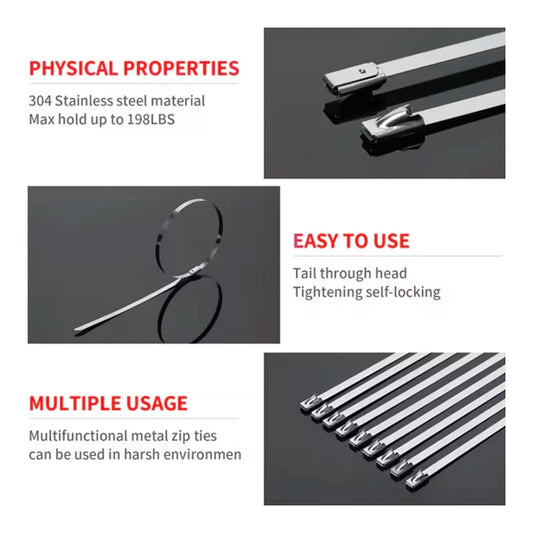
Locking metal cable ties operate on a mechanical self-locking ball bearing system housed within a sloped entry head. As the steel band enters the locking chamber, it displaces a hardened steel sphere. When reverse tension is applied, gravity and frictional force wedge the ball tightly against the band, locking it securely.
Material Origin and Metallurgy of 304 Stainless Steel
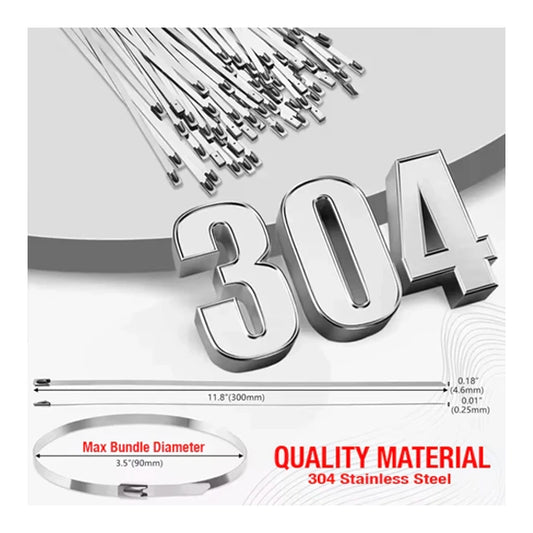
Austenitic 304 stainless steel forms the structural foundation of high-tensile metal fasteners. This specific metallurgical alloy contains 18% chromium and 8% nickel, creating a highly stable crystalline structure. When exposed to oxygen, the chromium reacts to form a microscopic, self-healing layer of chromium oxide across the surface of the metal strap.
This passive barrier blocks moisture and corrosive garage chemicals from contacting the internal iron core. Our laboratory testing confirms that this high-grade alloy withstands continuous exposure to extreme humidity and aggressive salt spray without experiencing structural oxidation. Under high thermal loads, the addition of nickel prevents the metal strap from becoming brittle, maintaining crucial physical integrity up to 538 degrees Celsius.
Anatomy Breakdown of Steel Ties
To understand how to tension and lock these heavy-duty fasteners, you must understand the internal components. High-tensile stainless steel ties consist of several precisely engineered parts working together to handle immense loads:
- Hardened Ball Bearing: A micro-spherical steel ball housed within the lock head that functions as a one-way mechanical check valve.
- Tapered Locking Chamber: A sloped housing that guides the ball bearing down a ramp to pinch the strap when reverse load is applied.
- Polished Band Strap: A flat, ultra-smooth steel band designed with rounded edges to protect delicate wire insulation from cuts.
- Pre-bent Entry Tip: A slightly curved strap tail that ensures rapid, hassle-free insertion into the narrow lock head during blind operations.
Operating Principle and Force Dynamics
The mechanical self-locking process operates on basic friction and gravity principles. When you insert the flat strap into the housing head, the band pushes the internal ball bearing up the sloped roof of the chamber. This action opens the passage, allowing the strap to glide through smoothly during tensioning.
As soon as the pulling force stops, the natural spring-back of the bundled material pulls the strap backward. This reverse movement drags the ball bearing down the tapered ramp, wedging it firmly against the steel strap. The greater the tension pulling against the loop, the tighter the ball wedges, preventing any slipping under heavy mechanical loads.
2. Comparing Mechanical Ties: Galixo 304 SS vs Nylon Plastic
Traditional nylon ties degrade quickly when exposed to automotive engine fluids or outdoor weather conditions. To understand why modern mechanics are switching to metal fastening systems, study this direct performance comparison between materials.
| Performance Criteria | Galixo 304 Stainless Solution | Traditional Nylon Solution |
|---|---|---|
| Tensile Strength Capacity | Exceeds 200 lbs to 500 lbs easily | Averages only 50 lbs before failure |
| Maximum Temperature Limit | Withstands up to 538 degrees Celsius | Melts or warps at 85 degrees Celsius |
| Chemical Resistance Profile | Impervious to fuel, acids, and oil | Weakens rapidly when exposed to gasoline |
| UV Radiation Exposure Lifespan | Virtually infinite outdoor lifespan | Becomes brittle and snaps within months |
| Mechanical Vibration Durability | Secures joints firmly under high RPM | Stretches and slips under vibrations |
| Moisture and Humidity Impact | Zero water absorption or rust damage | Absorbs water and loses structural strength |
| Installation Tension Control | Consistent tension via automatic tools | Inconsistent hand pulling leads to loose fit |
| Overall Long-Term Cost Value | One-time investment lasts for years | Requires constant removal and replacement |
Galixo 304 SS vs Nylon Plastic Ties
Standard nylon ties suffer from extreme thermal expansion and polymer degradation. When exposed to heat cycles inside engine bays, plastic compounds lose their flexible plasticizers, causing the material to harden, crack, and drop secured components onto hot engine parts. Ultraviolet light from outdoor sun exposure breaks the polymer chains, resulting in failure of the tie.
In contrast, Galixo 304 stainless ties maintain stable physical properties across extreme conditions. They do not stretch, soften, or degrade under direct sunlight or exposure to aggressive motor oils and road salts. When working in highly restricted engine compartments where specialized tensioners cannot fit, mechanics often learn how to fasten stainless ties without tool setups to secure heat wraps quickly.
Automatic Zip Tie Gun vs Manual Metal Snips
Tightening metal ties with standard workshop pliers often results in poor, loose connections. Manual pulling does not apply enough physical force to lock the ball bearing tightly, which can lead to slippage. In addition, using wire cutters to clip the remaining strap leaves sharp, jagged metal tails that can easily cut fingers during future maintenance.
An automatic tensioning tool solves this problem by using a mechanical ratcheting system. The tool pulls the strap tight to a precise tension level, then cuts the excess metal completely flush with the lock head. This creates a clean finish, leaving no dangerous sharp edges while saving significant time in tight garage spaces.

Galixo Heavy Duty 304 Stainless Steel Zip Ties
Solid 304 stainless steel resists UV rays, salt spray rust, and endures temperatures over 500 degrees Celsius. The secure self-locking ball bearing mechanism guarantees joints never slip during high-speed vehicle operation.
ABSOLUTE CORROSION RESISTANCE
VIEW PRODUCT DETAILS3. Tensioning and Load Specifications for Secure Fastening
Selecting the right size of metal tie is critical to prevent joint failure. Working with incorrect widths or load limits can cause ties to break or slip under the heavy vibration of off-road driving.
| Tie Size and Width | Tensile Strength Limit | Working Temperature Range | Recommended Application |
|---|---|---|---|
| 4.6mm x 100mm | 200 lbs / 90 kg | -80C to 538C | Small Wire Harness Management |
| 4.6mm x 150mm | 200 lbs / 90 kg | -80C to 538C | Fuel Line Routing Under Chassis |
| 4.6mm x 200mm | 200 lbs / 90 kg | -80C to 538C | Motorcycle Exhaust Wrap Securing |
| 4.6mm x 300mm | 200 lbs / 90 kg | -80C to 538C | Heavy Automotive Heat Shield Repair |
| 4.6mm x 360mm | 200 lbs / 90 kg | -80C to 538C | Drive Shaft CV Boot Fastening |
| 7.9mm x 200mm | 350 lbs / 158 kg | -80C to 538C | High Pressure Air Hose Coupling |
| 7.9mm x 300mm | 350 lbs / 158 kg | -80C to 538C | Heavy Duty Farm Fence Jointing |
| 7.9mm x 500mm | 350 lbs / 158 kg | -80C to 538C | Large Diameter Exhaust Pipe Shielding |
| 7.9mm x 1000mm | 350 lbs / 158 kg | -80C to 538C | Industrial Cable Tray Bundling |
| 12.0mm x 500mm | 500 lbs / 226 kg | -80C to 538C | Structural Column Bracing |
Core Specs Analysis
To match the physical limits of your project, look closely at the load capacity and maximum bundle size. Make sure to consult the bundle diameter sizing chart metal ties to find the correct length for your fuel lines or exhaust pipes. Additionally, using the cable tie length calculation guide prevents wasting high-tensile material on small bundles.
The width of the strap directly determines its ultimate breaking strength. Standard 4.6mm ties are ideal for securing motorcycle exhaust wraps and under-hood wiring looms. For heavy industrial installations or agricultural fences, the wider 7.9mm or 12.0mm options provide the necessary lateral support to handle high physical tension without stretching.
Budget-based Consulting
For standard home workshops or occasional DIY mechanics, purchasing a versatile starter kit with an assortment of 100 ties offers the best balance of value and utility. This provides multiple length options for basic automotive repairs without a large upfront cost.
For professional commercial repair shops, custom exhaust builders, or large agricultural operations, buying bulk combos of 500 to 1000 pieces is the most economical approach. Purchasing in volume reduces the cost per unit significantly and ensures a steady supply of high-grade hardware for daily operations.
Cost-per-Use Formula
Although high-grade stainless ties require a larger initial investment than standard plastic, they offer far better value over time. Standard nylon ties often require annual replacement due to weather wear and high engine temperatures. This means a single steel tie can replace ten plastic ties over a ten-year cycle.
When you factor in the labor time spent replacing broken plastic ties, along with the potential cost of engine damage from loose hoses, the real cost of nylon increases dramatically. Investing in premium 304 stainless steel hardware reduces maintenance expenses, making it five times more economical in the long run.
4. Comprehensive SOP: Safe Metal Tie Installation Step-by-Step
Before starting your project, gather the proper safety gear and tools. You must wear heavy-duty cut-resistant gloves and impact-resistant safety glasses to protect yourself from sharp metal edges. Keep your high-tensile 304 steel ties organized and ready on a clean workbench.
Step 1: Preparation and Safety Gear Alignment
Preparing your work area and safety equipment is critical to prevent slips and accidents during high-tension pull operations.
- Inspect the Tension Adjuster dial on your automatic tool to verify it is calibrated correctly.
- Clean all grease, motor oil, and dirt from the surface of the bundle to ensure solid contact.
- Wear heavy-duty cut-resistant work gloves to protect hands from potential slippage.
- Put on high-impact Safety Glasses before pulling or cutting high-tension steel bands.
Ensure the workspace has adequate lighting and keep all components dry before starting. Maintain a safe distance of 3 inches between your eyes and the tensioning head during the pull process to avoid injury from sudden strap snaps.
Check the surface of the metal strap for any deep scratches or manufacturing defects before wrapping. A completely smooth band is necessary for the internal ball bearing to slide and lock smoothly without binding.
Step 2: Feeding and Threading the Steel Band
Proper threading of the band ensures the ball lock engages correctly and prevents the loop from slipping under load.
- Wrap the smooth steel band around your bundle, keeping the flat side down to protect underlying hoses.
- Insert the pre-bent tail into the sloped inlet chamber of the Lock Head assembly.
- Pull the protruding Strap Tail through the head by hand until the loop is snug.
- Align the lock head parallel to the bundle to ensure the strap enters at a clean, flat angle.
The tail must protrude at least 1.5 inches beyond the housing to give the tensioning tool a secure grip. Keep the strap aligned at a 90-degree angle to the lock inlet during manual threading to avoid jam-ups.
Do not force the strap tail in at an awkward angle. If you feel resistance, tap the lock head gently against your workbench to free up the internal One-way Bearing before trying again.
Step 3: Tensioning and Pulling the Tie Securely
Using steady mechanical advantage guarantees consistent tension and prevents crushing delicate internal lines.
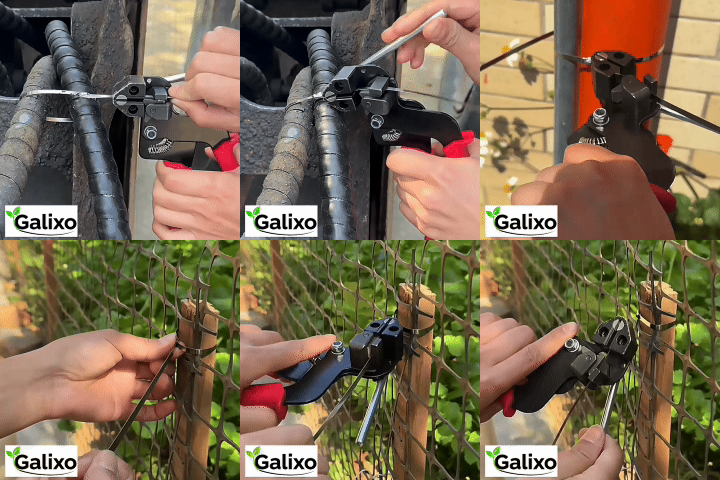
- Slide the protruding tail of the strap into the side-loading slot of the Galixo Zip Tie Gun.
- Push the metal nose of the gun completely flush against the lock head.
- Squeeze the Trigger Assembly smoothly to engage the internal ratcheting system.
- Continue pulling until the tool reaches the preset tension limit and stops clicking.
For standard wire harnesses, set the tension dial to level 3 or 4, which equates to roughly 35 lbs of pull force. For heavy-duty metal exhaust pipes or farm fences, increase the dial to level 5 for maximum hold. Learning how to prevent sharp edges metal zip ties can leave is essential to avoid cutting hazard spots.
Watch the bundle closely for any signs of crushing during tensioning. Squeeze the trigger slowly to avoid damage to delicate wire jackets or fuel lines.
Step 4: Cutting and Flushing the Excess Tail
A clean, flush cut eliminates sharp metal tails that can injure hands during future maintenance work.
- Ensure the Nose Piece of your tensioner is pushed flat against the lock head.
- Squeeze the separate Cutting Lever fully to activate the internal blade.
- Listen for the mechanical click that indicates the excess metal tail has been cleanly severed.
- Remove the cut-off metal tail from your work area immediately to keep your bench safe.
Keep the cutter nozzle at a perfect 90-degree angle to the lock head. The cut must leave less than 0.5 millimeters of tail sticking out from the head. For the safest technique, read about how to cut stainless steel zip ties safely before handling heavy-duty projects.
Run a gloved finger over the finished lock head to verify it is completely smooth. If you feel any sharp burrs, use a fine-grit metal file to smooth down the edge.
Step 5: Inspecting and Verifying Lock Integrity
A final visual and physical check confirms the tie is fully locked and ready for service under heavy vibration.
- Grasp the finished connection with pliers and apply moderate force to check for movement.
- Verify that the steel band sits flat against the bundled material around the entire loop.
- Use a flashlight to check that the internal Ball Bearing is wedged tight inside the lock.
- Confirm that the cut end of the strap has not slipped backward into the locking head.
The completed connection must remain secure and show zero slippage when pulled. Ensure there are no gaps between the metal strap and the bundle surface to maintain structural strength.
If the joint shifts or feels loose, the initial tension was not high enough. Cut the tie away safely and repeat the steps using a higher tension setting on your tool.
5. Installation Pitfalls: Troubleshooting and Safe Metal Tie Installation
Even experienced mechanics can make mistakes when installing metal ties. Understanding these common errors helps you avoid loose joints and protect your hands from sharp metal cuts.
Top 5 Fatal Beginner Mistakes
Avoiding these five common installation errors ensures strong, durable joints and prevents damage to your project:
- Using standard wire cutters to clip stainless ties. This deforms the lock head and leaves sharp, jagged edges. Read about how to remove metal cable ties safely to avoid this problem.
- Over-tightening ties on flexible fuel lines. Too much tension can pinch hoses, restricting flow or cutting through insulation.
- Under-tensioning ties on exhaust wraps. Loose ties allow the fiberglass wrap to vibrate and slip, leading to rapid wear.
- Mixing incompatible metals. Placing raw steel ties directly on copper pipes can cause galvanic corrosion, weakening both components.
- Bending the tail of the strap back and forth before cutting. This weakens the metal, which can lead to failure under load.
Hidden Traps Market Warning
Be cautious of low-cost bulk metal ties sold online. Many discount brands sell cheap, zinc-plated steel ties advertised as genuine 304 stainless steel. These low-grade imitations rust within a few weeks when exposed to road salt or moisture. Additionally, cheap tensioning tools often use soft carbon steel blades that dull quickly, leaving jagged edges on your ties.
Tool Unjamming SOP
If your tensioning tool jams during installation, do not force the trigger. First, pull back the tension release lever on the back of the handle. Use a small flathead screwdriver to slide the internal release pin forward, disengaging the ratcheting gear.
This releases the grip on the strap, allowing you to slide the tool off safely. To understand the limits of these fasteners and how they lock, you can research whether you can you retighten ball lock ties once the ball bearing has wedged the strap in place.

Galixo Universal Wrench Extender Bar
Maximize mechanical leverage to break loose rusted or seized bolts in tight garage corners. Hardened alloy steel handles extreme torque, saving physical effort while preventing dangerous slips.
MAXIMUM MECHANICAL LEVERAGE
VIEW PRODUCT DETAILS6. Frequently Asked Questions about how to use stainless steel zip ties (FAQs)
- Can you reuse stainless steel zip ties after cutting them? No, once a ball lock tie is cut and tensioned, the remaining strap is too short to re-engage the locking bearing. These heavy-duty metal ties are engineered as secure, single-use fastening solutions.
- Do you need a special tool to tighten metal ties? While you can snug them by hand using standard pliers, a dedicated tensioning gun is highly recommended. It ensures consistent tightening and cuts the excess strap flush to prevent cuts.
- Will 304 stainless steel ties rust in outdoor salt environments? Grade 304 stainless steel offers exceptional corrosion resistance under normal weather conditions. For marine or highly concentrated saltwater environments, 316-grade stainless steel is recommended for ultimate longevity.
- What temperatures can these metal ties withstand? Premium 304 stainless steel ties can withstand continuous temperatures up to 538 degrees Celsius, making them ideal for high-heat areas like engine bays and exhaust wraps.
- How do you remove a locked stainless steel zip tie safely? Use a pair of heavy-duty diagonal cutters or tin snips to cut the strap. Always wear safety glasses and cut-resistant work gloves to protect your hands and eyes from sharp edges.
7. Elevate Your Mechanical & DIY Garage Durability with Galixo Store Solutions
High-Performance Fastening Gear Built for Extreme Demands
Get professional-grade durability with specialized tools from Galixo Store. Our heavy-duty stainless steel zip ties and precision tensioning tools are engineered to handle high heat, extreme vibrations, and harsh environments. Stop wasting time with weak plastic ties that melt and snap. Equip your workshop with our rugged, reliable hardware solutions and finish your projects with absolute confidence.
Explore the Galixo Store Collection Today
*Disclaimer: All technical specifications and instructions in this article are based on the practical garage experience of the Galixo Store engineering team. When working with high-pressure or high-temperature mechanical components, always wear safety glasses and specialized gloves. Contact us for the most accurate technical consultation.