How to Fasten Stainless Steel Ties Without a Specialized Tool
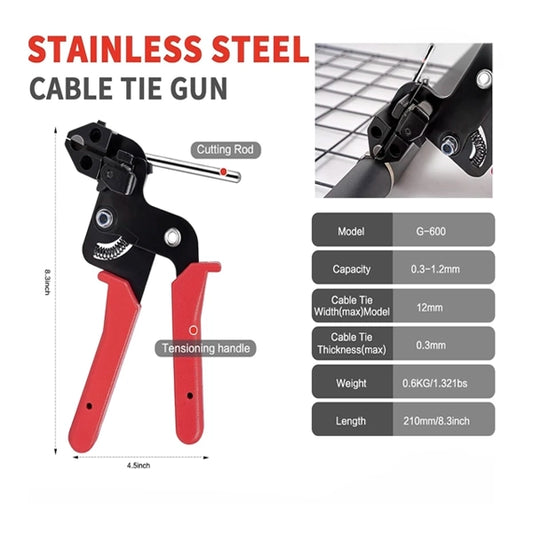
Fastening stainless ties without a tool requires specific manual techniques to ensure a secure hold in demanding environments. This in-depth guide on the manual and mechanical methods for securing metal ties will help you understand the essential balance between tension and material integrity. By visiting galixo.store, users gain access to specialized equipment that simplifies this process significantly. Mastering these steps prevents common installation errors that compromise structural safety in automotive or industrial settings.
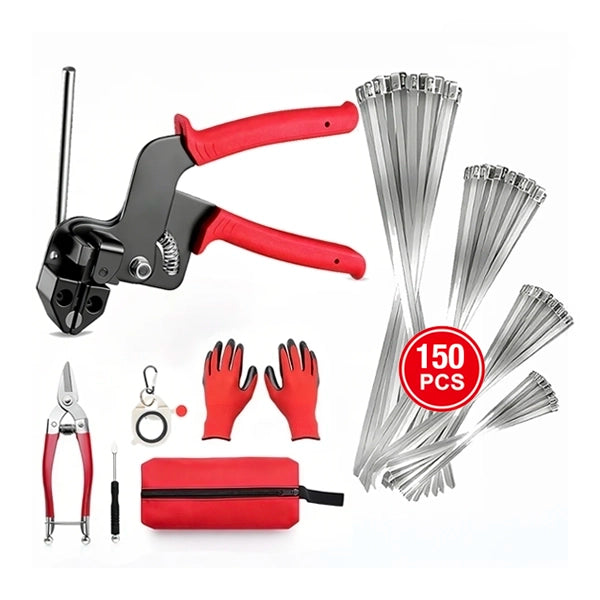
GALIXO Stainless Steel Zip Tie Tool Kit
This all-in-one kit features a professional-grade tensioning gun and 150 heavy-duty 304 stainless steel ties. Perfect for any task requiring a strong, durable, and clean fastening solution. Our team at Galixo store is ready to help you choose the right package for your needs.
Why Proper Fastening Stainless Ties Without a Tool is Crucial? A Direct Impact on Durability and Safety
Understanding the risks of improper installation is the first step toward achieving professional results. When you attempt fastening stainless ties without a tool, you often face challenges regarding consistent tension and safety. Metal cable ties are designed for high-stress applications, and failure to reach the required tensile strength can lead to catastrophic failure in automotive exhaust systems, electrical arrays, or structural fencing. At Galixo.store, we emphasize that while manual methods exist, they require extreme precision to avoid leaving dangerous sharp edges or loose connections that vibrate and degrade over time.

Using a stainless steel zip tie gun correctly ensures every fastening achieves optimal tension, delivering a professional finish and extending the project lifespan, instead of facing loose ties or material damage. Key risks of manual fastening include:
- Material Fatigue: Repeatedly bending the steel manually can weaken the 304 alloy structure.
- Inconsistent Tension: Without a tensioning mechanism, one tie might be tighter than the next, causing uneven load distribution.
- Laceration Hazards: Excess tail ends that are not cut flush become sharp enough to cut skin or damage nearby wiring.
- Corrosion Entry Points: Scratches on the surface of the tie from pliers can compromise the rust-proof layer.
Need Help Choosing the Right Fastening Solution? Galixo.store is Ready to Assist 24/7
In just 5 minutes, our expert team can provide a free consultation to find the perfect tool kit for your project.
A Detailed 3-Step Guide to Fastening Stainless Steel Ties for Beginners
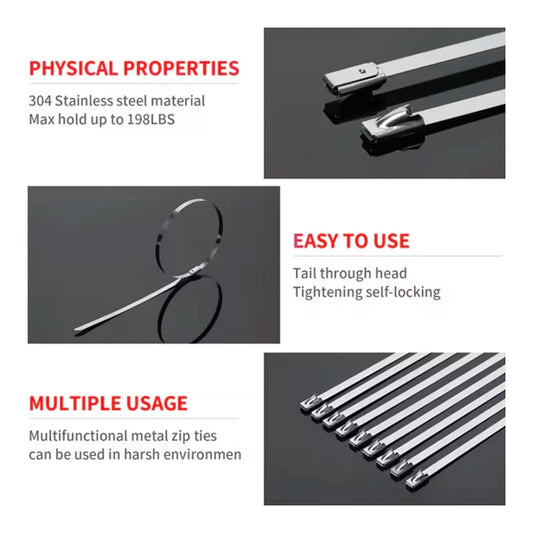
For those starting a DIY project, having a clear roadmap is essential for safety. While fastening stainless ties without a tool is possible in emergencies using pliers and a screwdriver, using the GALIXO tool kit streamlines the process into three efficient steps. This method ensures that the 200 lbs tensile strength of our 304 stainless steel ties is fully utilized. Each step focuses on maintaining the integrity of the self-locking mechanism which relies on a small ball bearing inside the head to grip the metal strap. Beginners must focus on the alignment of the tie to ensure the locking mechanism engages properly without slipping.

Step 1: Prepare and Thread the Stainless Steel Tie
First, select a tie with the appropriate length and width for your specific application. Thread the end of the tie through the self-locking head and wrap it around the object, ensuring the strap is flat against the surface. Pull it snug by hand to secure the initial position. At this stage, the tie should be tight enough to stay in place but loose enough to allow for final tool engagement. Avoid twisting the metal strap as this can interfere with the ball bearing lock inside the head of the tie.
Step 2: Engage the Tool and Apply Tension
Insert the excess tail of the tie into the front of the tensioning tool. Squeeze the handle repeatedly to apply force. You can adjust the tension control knob at the base of the handle to achieve the desired tightness. This mechanical advantage allows for levels of tension that are physically impossible to achieve when fastening stainless ties without a tool. The tool ensures the tie remains perpendicular to the head, which is vital for a secure lock. For heavy bundles, ensure the tool is held steady to avoid marring the finish of the 304 stainless steel material.
Step 3: Automatically Cut for a Clean Finish
Once the pre-set tension is reached, the tool automatic cut-off mechanism will activate. This cleanly severs the excess tie flush with the head, leaving a smooth, professional finish with no dangerous sharp edges. If you were fastening stainless ties without a tool, you would likely use side cutters, which often leave a jagged protrusion. The GALIXO tool eliminates this hazard, making the finished project safe for handling and resistant to snagging on clothing or other components. This flush cut is a hallmark of high-quality industrial work.
Advanced Techniques: Professional Methods for Enhanced Security
Professional contractors and mechanics often encounter scenarios that require more than basic installation. Understanding the nuances of material science and application environment is what separates a standard job from a long-lasting solution. When fastening stainless ties without a tool in high-vibration areas, such as engine bays, technicians might use a double-wrap method to increase surface area contact. However, the use of a dedicated tensioner remains the industry standard for ensuring the 200 lbs tensile rating is met consistently. Galixo.store provides tools designed to withstand thousands of cycles, making them indispensable for industrial maintenance and high-performance automotive upgrades.
Choosing Between 304 and 316 Stainless Steel
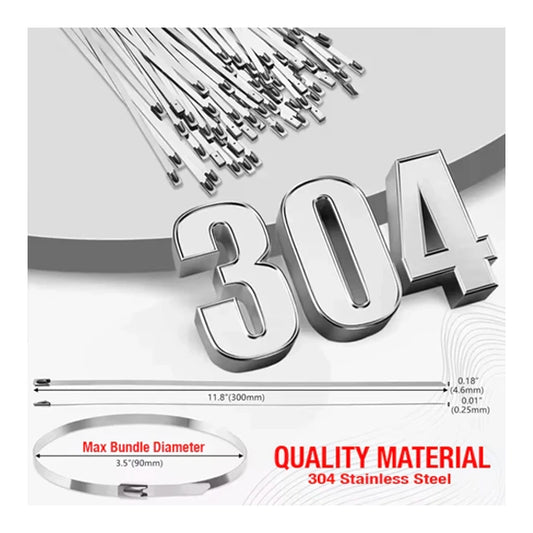
The 304 stainless steel ties included in the GALIXO kit offer excellent corrosion resistance for most indoor and outdoor applications. This material is ideal for general fencing, home repairs, and standard automotive use. For marine environments or exposure to harsh industrial chemicals, technicians might consider 316 stainless steel. Grade 316 contains molybdenum, which provides superior protection against saltwater pitting. Understanding these metallurgical differences ensures that your fastening solution survives the specific environmental stressors of your project site.
Automotive Applications: Securing Exhaust Wrap and Wiring Looms
In the garage, this tool is essential for securing exhaust heat wrap, which must withstand extreme temperatures up to 1000 degrees Fahrenheit. Proper tension is critical here; if the tie is too loose, the wrap will slip and lose its thermal insulating properties. Conversely, the tool is perfect for neatly bundling wiring looms in the engine bay. The precision tensioning prevents the ties from cutting into delicate wire insulation, a common mistake when fastening stainless ties without a tool. Using a gun allows for uniform pressure across the entire bundle.
| Fastening Method | Tension Consistency | Edge Safety | Recommended Use |
|---|---|---|---|
| GALIXO Tool Kit | Very High (Adjustable) | Flush / Smooth | Professional / Permanent |
| Manual Pliers | Low / Variable | Sharp / Jagged | Emergency Repairs Only |
| Screwdriver Twist | Medium | Not Applicable | Temporary Fix |
| Pro Kit (1 Gun) | Precision Control | Safe Finish | Home DIY Projects |
| Workshop Pack (2 Guns) | Industrial Level | Professional | Small Garages |
| Industrial Pack (3 Guns) | Maximum Efficiency | Perfect Flush Cut | Construction Teams |
| Standard 304 Ties | 200 lbs Rating | Corrosion Resistant | All-purpose Securement |
| High-Heat Exhaust | Requires Tool Tension | Vibration Resistant | Motorcycle / Car Custom |
Troubleshooting Common Issues with Fastening Stainless Steel Ties
Even with high-quality tools from Galixo.store, users may occasionally encounter technical hurdles. Experience shows that most issues stem from improper feeding of the tie or incorrect tension settings. Troubleshooting these problems quickly is vital for maintaining workflow efficiency. Whether you are fastening stainless ties without a tool in a pinch or using a full pro kit, knowing how to reset the mechanism and ensure the ball bearing lock is engaged will save hours of frustration. Here are the most common scenarios encountered by our technical support team:
- • Why is the tie slipping back through the head during tensioning? This usually indicates the tie was inserted upside down or the ball bearing is stuck. Ensure the smooth side is facing the bundle.
- • Why does the tool fail to cut the tail after reaching tension? You may need to increase the tension setting on the adjustment knob. If the setting is too low, the trigger force required to activate the blade is never reached.
- • Can the tie be reused if I make a mistake? No, the self-locking mechanism of 304 stainless steel ties is permanent. Once the ball bearing locks the strap, it cannot be safely released. You must cut the tie and start over.
- • Why are there scratches on the tie surface? If fastening stainless ties without a tool, pliers often mar the protective finish. Use a dedicated tool with a rubberized or polished gripper to protect the integrity of the steel.
- • Is it possible to overtighten a tie? Yes, especially on soft materials like silicone hoses. Always start with a lower tension setting and increase gradually to avoid crushing the substrate.
GALIXO Stainless Steel Zip Tie Tool Kit
This all-in-one kit features a professional-grade tensioning gun and 150 heavy-duty 304 stainless steel ties. Perfect for any task requiring a strong, durable, and clean fastening solution. Our team at Galixo.store is ready to help you choose the right package for your needs.
Which GALIXO Stainless Zip Tie Tool Kit is Right for You? Expert Advice from Galixo.store
Choosing the right equipment depends on the scale and frequency of your projects. While the manual route of fastening stainless ties without a tool might work for a single emergency repair, any recurring DIY or professional work demands a dedicated kit. At Galixo.store, we have optimized our product tiers to provide the most value for different user profiles. Our Pro Kit is the benchmark for home enthusiasts, while our multi-pack bundles cater to professional workshops where time is money and reliability is paramount. Every kit is backed by our 90-day guarantee and features free worldwide shipping.
For starting out with home DIY projects, the Pro Kit, with one gun and 150 ties, is a great choice. It provides everything you need to tackle fence repairs, garden projects, or general household fixes. If you are a frequent user or want a backup, the 2 Kits Pack is a popular choice, offering a 20 percent discount and making a thoughtful gift for a fellow DIYer. For professional garages, construction crews, or workshops, the 3 Kits Pack is an economical solution, providing a 30 percent discount and ensuring every team member is properly equipped. Every kit from Galixo.store includes our 90-Day Guarantee and Free Worldwide Shipping. Order today to elevate your work.
Quick FAQs on Stainless Steel Cable Ties
Understanding the technical specifications of your materials ensures project success and safety. Many users ask about the limits of 304 stainless steel and the mechanics of the tensioning gun. Whether you are fastening stainless ties without a tool or using our premium kits, these frequently asked questions provide the data needed for informed decisions. Our technical team at Galixo.store has compiled these answers based on rigorous testing and customer feedback from thousands of successful installations globally.
- • What is the maximum temperature for stainless steel zip ties? Standard 304 stainless steel zip ties can typically withstand continuous operating temperatures up to 1000 degrees Fahrenheit and intermittent exposure as high as 1600 degrees Fahrenheit.
- • How do you remove a stainless steel zip tie? Due to their high tensile strength, these ties cannot be unfastened. They must be cut off using heavy-duty diagonal cutters or a cutting wheel. Always wear safety glasses during removal.
- • What does a 200 lbs tensile strength mean? This means the zip tie can withstand up to 200 pounds of pulling force before it will break. This indicates a heavy-duty capacity suitable for pipes and demanding automotive environments.
- • Can this tool be used with plastic zip ties? No, the GALIXO tool is specifically designed for metal. Its tensioning and cutting mechanisms are engineered for the hardness of stainless steel and may damage plastic ties or provide poor results.
- • Are 304 stainless steel ties magnetic? Grade 304 is generally non-magnetic in its raw state. However, the cold-working process of manufacturing it into a tie can induce slight magnetism. It is functionally non-magnetic for most DIY uses.
Need Help Choosing the Right Fastening Solution? Galixo.store is Ready to Assist 24/7
In just 5 minutes, our expert team can provide a free consultation to find the perfect tool kit for your project.
Complete Any Project with Confidence and Professionalism from Galixo.store
At Galixo.store, we deliver a high-quality stainless steel zip tie tool kit that saves you time and ensures professional results. We are committed to durable, easy-to-use products and excellent customer support. Mastering the art of fastening, whether through manual techniques or specialized guns, ensures your work remains secure for years to come. Upgrade your toolkit and tackle any job with confidence. Call our support hotline now at +1 813-408-1627 or order directly from our website to get your discount and free shipping!
Disclaimer: The instructions in this article are based on practical experience with GALIXO STORE products. Always follow safety best practices when working with tools. Please contact contact@galixo.store for detailed support regarding your specific application. The guidance and prices in this article are for reference at the time of publishing and are subject to change. Please contact Galixo.store directly for the most current information.